Sharing is part of Chinese culture since ancient times







Editor's Note: Four decades of reform and opening-up have not only turned China into the world's second-largest economy but also changed its people's way of life. A veteran journalist with China Daily tries to find out why sharing is so deep-rooted in Chinese culture.
Sharing has been a virtue in Chinese society since Confucius recommended it 2,500 years ago. After visiting many kingdoms to study Chinese society, the ancient philosopher concluded that the Chinese "people don't worry about poverty, but rather about the uneven distribution of wealth".
Sharing wealth and whatever else is sharable with others is what Confucius prescribed to the government officials and heads of big families to maintain social stability. Looking back at China's long history, one sees that revolutions occurred when social wealth was not fairly distributed among the population.
The concept of sharing is so deep-rooted in Chinese culture that people share their belongings without even being aware of it.
When I was young, there was an acute shortage of housing, and it was common for several families to share one kitchen, one toilet or one well. In northeastern China, family members and visiting relatives and friends would share the only kang in the house-a bed made of brick and clay with a burning brick or earthen stove below-to survive the cold winters.
Even today, it is common for three or four young people to share a small apartment in big cities to save money. People welcome the concept of sharing today not only because it has become a part of Chinese culture but also because they realize it is economical and environmentally friendly.
In fact, China introduced office sharing soon after the model emerged in other countries. There are many such offices in Chinese cities and economic zones, bringing convenience to small companies and start-ups.
Also, China was the one of the first countries, perhaps the first country, to introduce bike-sharing. Today, millions of sharing bicycles are available in almost all Chinese cities. One can use such a bicycle by using an app and paying a small fee. The bike-sharing model has not only made life more convenient for people but also eased the pressure on public transport including buses and subways. Not to mention it is environmentally friendly.
Encouraged by the bike-sharing business' success, some cities are now promoting electric-powered bike sharing. The e-bikes, which can run at about 30 kilometers an hour, enable users to cover longer distances and save time. Some of my young colleagues have stopped driving their cars and instead are using e-bikes to commute to and from office.
Car-sharing is also emerging as a new business model in some cities such as Beijing. Unlike the old model, which required one to visit a car rental agency to hire a car, all one needs to do is to register as a member of a car-sharing club to unlock a car at a parking lot and drive to one's destination.
As sharing economy can make use of resources more convenient and cost-efficient, the approach has become popular in society. In Xi'an, Shaanxi province, for example, universities are sharing their libraries and laboratories as a win-win approach to upgrade their academic level. In Jiangsu province, companies operating in the economic zones are sharing not only computer servers but also office space to cut down costs.
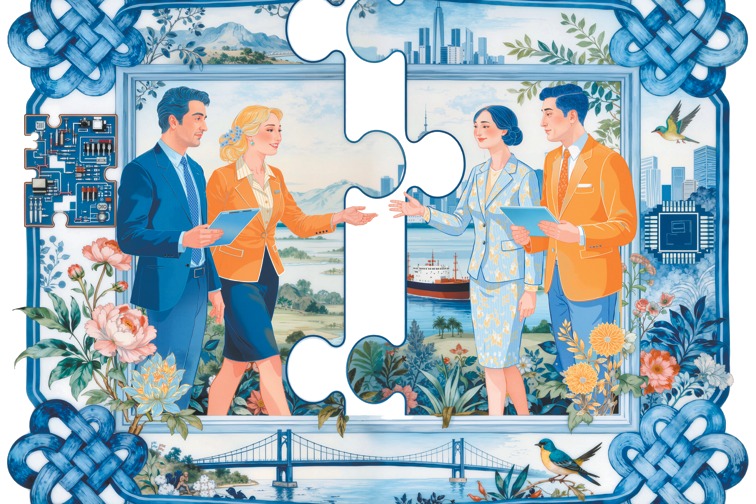
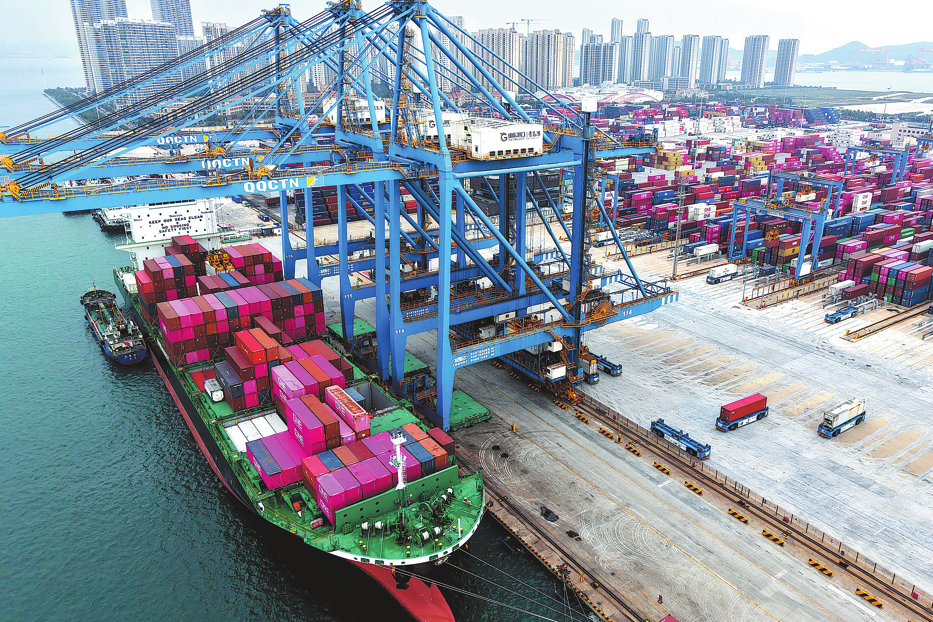
The most ambitious sharing project China has advocated is "a shared future for the mankind". And under the Belt and Road Initiative framework, China has joined hands with more than 140 countries to link them more closely with telecommunication networks, roads, railways and marine routes.
Improved connectivity will help boost local economies and expand the global market, and when the cake becomes bigger, the slices the beneficiary countries can share will become bigger too. No wonder the Belt and Road Initiative has been welcomed by all the participating countries.
But some Western media outlets and politicians don't believe in China's sharing culture, and accuse it of leading developing countries into a debt trap. Perhaps these Western media and politicians should try to get a better idea about China's sharing culture before pointing the finger at China.
The author is former deputy editor-in-chief of China Daily.
If you have a specific expertise, or would like to share your thought about our stories, then send us your writings at opinion@chinadaily.com.cn, and comment@chinadaily.com.cn.