How high is too high for the Fed?







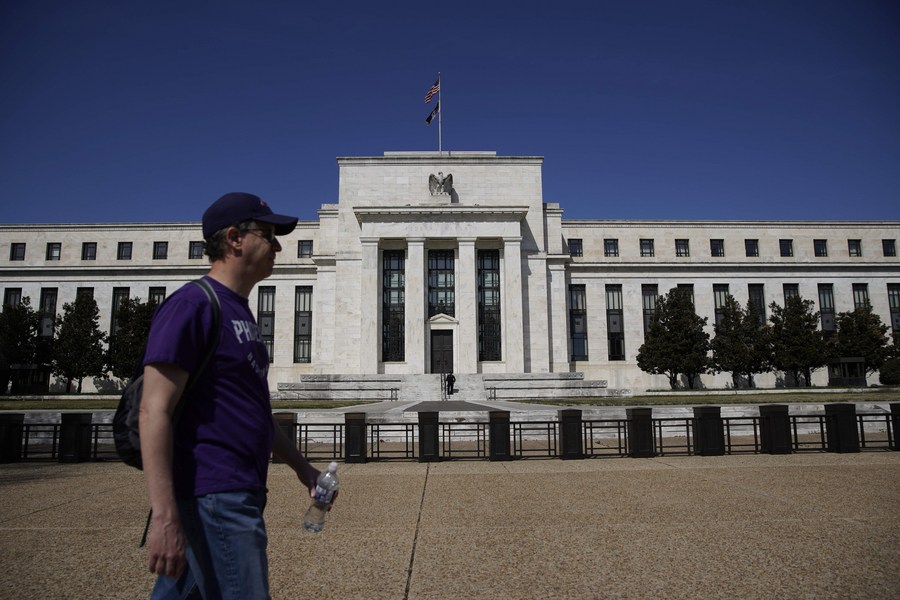
A lot has changed since December last year, as inflation, job growth and wages have roared ahead at a faster pace than the US Federal Reserve expected. Indeed, if not for the Russia-Ukraine conflict and its uncertain ramifications for the US economy, the first rate hike might have been 50 instead of 25 basis points.
Despite misgivings about the fallout from the Russia-Ukraine military conflict, the Fed has developed a decisive inflation fighting mindset. However, we caution that it is far too early to worry about the toll the Fed's planned rate hikes would take on the economy.
As long as interest rates are well below the inflation rate, there is a great incentive to borrow, and spend, as repayments would be made in cheaper dollars. By that standard, the time to worry about an overly restrictive policy is still a ways off. Following the quarter-point increase, the Fed's short-term policy rate remains nearly 8 percentage points below consumer price inflation-the widest gap on record.
While the rate of price increases is not keeling over anytime soon, consumer demand, fueled by excess savings and robust job growth, continues to race ahead of supply, and wages are increasing at a rapid clip. The Atlanta Fed's wage growth tracker shows that workers' pay increased by 5.8 percent in the year through February, the fastest pace since records began for this series in 1997.
As for the US Fed, its aim is to increase interest rates and slow growth enough to subdue demand-driven inflationary influences.
But forces beyond the Fed's control are impacting the other side of the equation-supply-as the goods and services available to meet the demand are being suppressed by the war in Ukraine (oil, wheat, nickel and a range of other commodities), the lingering impact of the COVID-19 pandemic in the US(labor supply) and the nascent resurgence of cases overseas, including in China (factory shutdowns) thanks to the emergence of more transmissible novel coronavirus variants.
Higher rates imposed by the Fed will not redress these supply disruptions, which are perpetuating the shortages that were already stoking inflation before the latest round of shocks appeared.
To be sure, the latest shocks to the system will fade at some point. The Ukraine crisis will eventually end, and energy as well as other commodity prices linked to the hostilities will enter a disinflationary stage. A key unknown is how long sanctions remain in place, which would influence the pace at which supply comes back on line.
Likewise, the pandemic's impact on the economy is easing, but rising cases overseas could spread to the US and cause another flare-up. The question then is: How the authorities respond via restrictions and how household behavior is affected? Unless the possible next wave turns out to be more severe than health officials expect, it should not spur a tough government response nor derail efforts by households and businesses to restore normal activities.
Given the shortcomings in correcting supply shortages, the Fed's emphasis on curbing demand is its only option. From the Fed's perspective, that's a better alternative than workers demanding bigger raises to compensate for higher prices, which would ignite an unwelcome wage-price spiral.
However, there is a wide divergence in opinion over how high interest rates should be lifted. Some believe the economy is not able to withstand a significant increase, much less the full brunt of the seven rate hikes the Fed envisions over the course of the year.
Consumer spending is being fueled in part by the huge savings amassed during the pandemic, but those funds are rapidly depleting as consumption is outpacing income growth. While wages are accelerating, they are still lagging inflation, and there are growing signs that the rapid climb in prices is discouraging some spending.
The notion that consumers are already feeling the squeeze from higher prices received some support in recent retail sales reports, which showed a distinct moderation in consumer goods purchases in February. Total sales edged up by a slim 0.3 percent in March, a sharp falloff from the 4.9 percent gain in January. The biggest sales gains, not surprisingly, were for goods whose prices are increasing the fastest, namely gasoline and food.
As Fed chair Jerome Powell noted at his post-meeting news conference, future moves will be highly data-driven. From our lens, the economy has enough forward momentum to withstand the series of rate increases indicated at the Fed's meeting, but we recognize the downside growth risks coming from the Russia-Ukraine conflict and the impact of the accelerated pace of inflation on consumer confidence.
However, we believe inflationary concerns outweigh worries over the potential hit to growth that higher rates would bring about. With energy and commodity prices still under pressure, inflation will get worse before it gets better. In fact, we expect the annual rate of consumer price inflation to soar from the current 7.9 percent to 8.7 percent in the spring.
But as the expression says, the best-laid plans often go astray, and there is a wide divergence of opinion on the Fed's strategy. The stock market has roared ahead since the Fed's meeting, which suggests a positive endorsement of the policy course set at the confab. However, the bond market is more skeptical about the Fed achieving its objectives without killing off growth.
Bob Schwartz is a senior economist of Oxford Economics. The views don't necessarily reflect those of China Daily.
If you have a specific expertise, or would like to share your thought about our stories, then send us your writings at opinion@chinadaily.com.cn, and comment@chinadaily.com.cn.