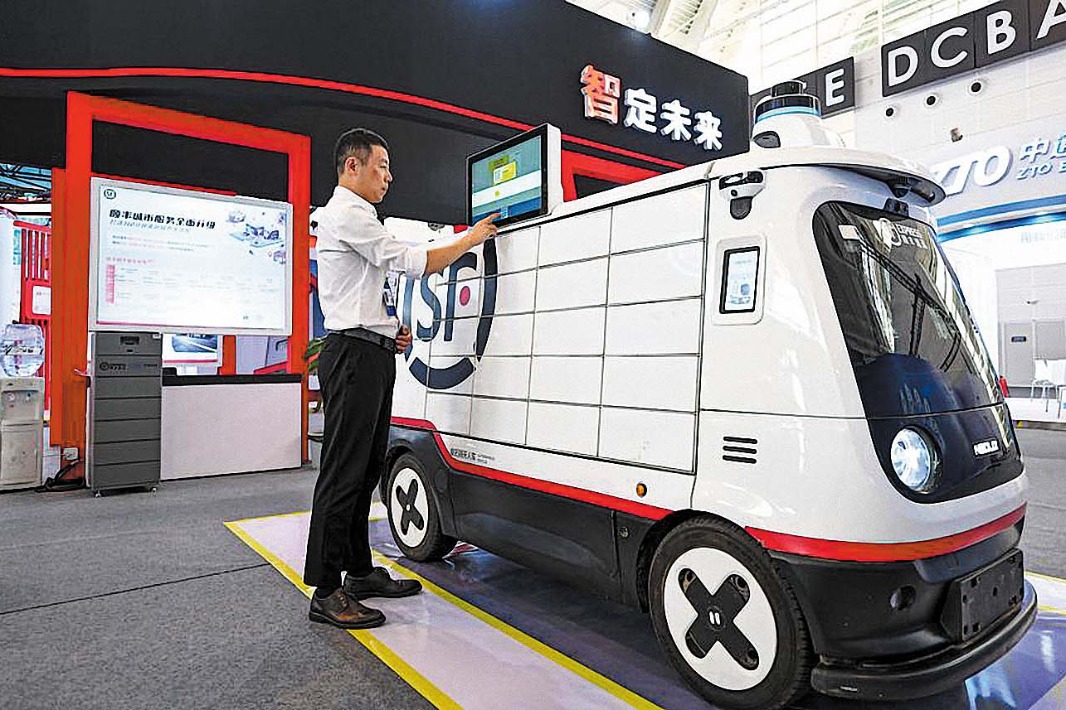
Online sellers also like brick, mortar as high-tech helps capture preferences







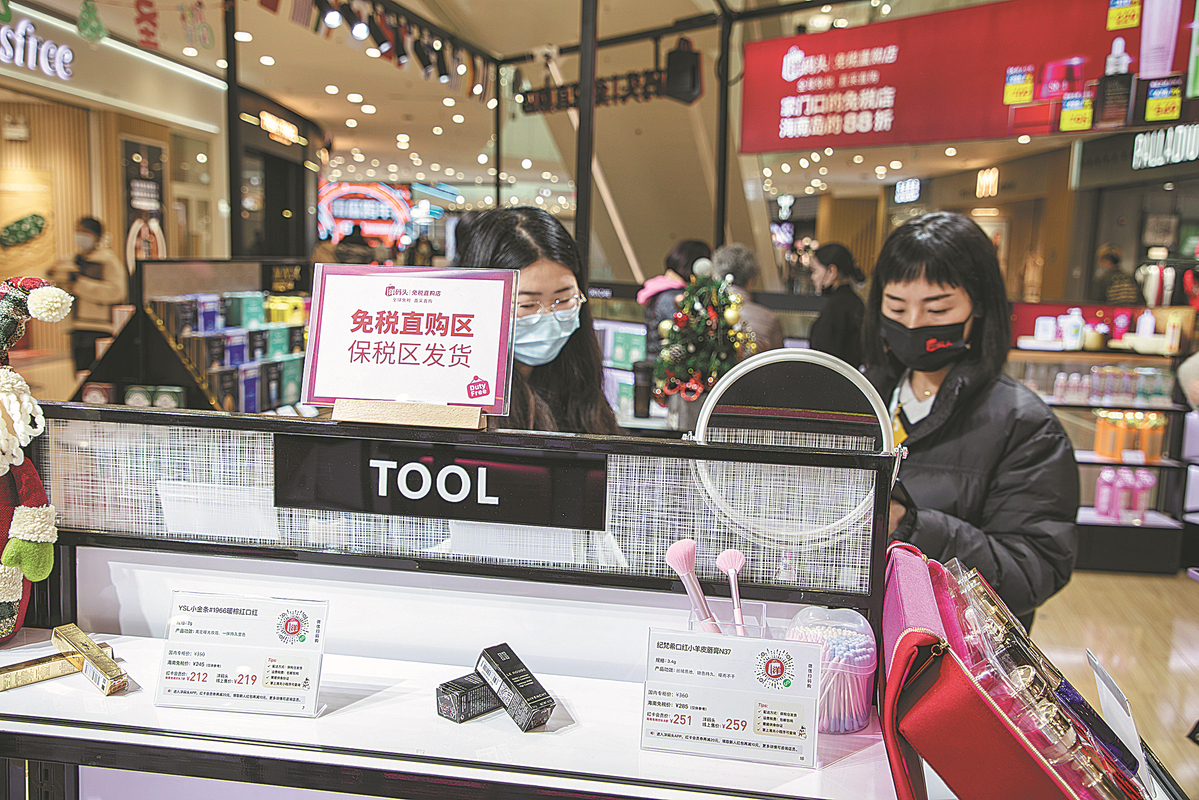
Chinese cross-border e-commerce platforms are hurrying to open brick-and-mortar stores, hoping to cash in on the growing demand from middle and high-income consumers for premium brands and high-quality imported products, industry experts said.
Shanghai-based Ymatou, one such site, has recently opened its sixth offline duty-free store in a shopping mall in Chongqing through a strategic partnership with commercial property developer Sincere Group.
The store covers 300 square meters and has products such as high-end cosmetics and red wine. Maternal and infant products and other daily necessities will also be sold in the store, the company said.
Zeng Bibo, founder and CEO of Ymatou, said it plans to open 1,000 offline stores in 100 cities in the next three years. "We consider the shopping experience at offline stores to be of great importance. The products displayed at these stores are just a part of the total offerings on our platform, given that there is a great variety and quantity of commodities on our online marketplaces to meet rising consumer demand," Zeng said.
The company has opened physical stores in communities, supermarkets and cultural and tourist attractions as part of an effort to integrate online and offline cross-border consumer sales.
Ymatou, founded in 2010, defines itself as a consumer-to-consumer marketplace engaged in cross-border e-commerce.
Generally, C2C businesses facilitate commerce between individuals, allowing consumers to buy products and services from other consumers. The site has about 116 million users and more than 80,000 overseas sellers on the platform. They are located in 83 countries, including the United States, the United Kingdom, Japan, South Korea and Australia.
Chen Tao, an analyst with internet consultancy Analysys in Beijing, said an increasing number of cross-border e-commerce platforms have opened offline stores in an attempt to capture opportunities arising from Chinese shoppers looking for higher-quality goods.
Chen said offline stores play a complementary role in boosting sales of online retailers and offering help in analyzing the buying habits of consumers and recommending related products.
"With the use of big data and artificial intelligence, the offline stores will better capture consumers' shopping habits and preferences, and make accurate recommendations," Chen added.
JD Worldwide, the cross-border e-commerce marketplace of Chinese e-commerce giant JD, recently opened a third store of the type it calls a physical experience center for cross-border products. The center, which blends offline and online marketing and sales, is in Xi'an, capital of Shaanxi province, and was created as a cooperation project with the Joy City shopping mall.
The two previous centers opened by JD Worldwide were in Yantai, Shandong province, and Sanya, Hainan province. The products that the 360-square-meter Xi'an center showcases include food and wine, nutritional supplements and daily necessities.
The center has five experience areas with different themes, and offers customers the chance to check out the displayed products before they make purchases online by scanning a code on product labels. All goods are supplied by JD Worldwide from domestic bonded warehouses directly to customers to ensure their authenticity.
Sun Yong, head of the duty-free business of JD Worldwide, said by promoting the integration of online and offline shopping, the company has assisted brands and partners who aim to provide a seamless experience across all the ways to shop, such as in physical stores, mobile and online. It helps them take advantage of digitalization covering the entire chain as well as multiple users and scenarios across different categories.
Alibaba Group's cross-border e-commerce platform, Kaola, is aiming to accelerate its offline presence in Hainan province, where it plans to roll out more physical stores in Haikou, Sanya, Wanning and Danzhou to serve tourists and local residents. Kaola opened its first flagship store in Hangzhou, Zhejiang province, in January 2019.
Offline stores will present a new opportunity for major online retailers to expand their retail channels, said Mo Daiqing, a senior analyst at the Internet Economy Institute, a domestic consultancy.
Chinese consumers have shown an increasing demand for personalized and differentiated products, and the competition among cross-border e-retailers is mainly a matter of the quality of products, services and supply chains, Mo said. She estimated more and more cross-border e-commerce platforms will ramp up efforts to open offline stores.
"With the expansion of domestic demand and advances in emerging retail technologies, China has introduced preferential policies, such as lowering import taxes and expanding the range of goods allowed to be imported," said Zhang Tianbing, head of consumer products and retail industry at Deloitte Asia-Pacific.
All of these have prompted a surge in cross-border e-commerce imports despite the COVID-19 pandemic, Zhang said, adding that the internet-savvy post-1990 generations make up the largest segment of customers for imports.