Renewed momentum








Mainstreaming South-South and Triangular Cooperation can help build sustainable, inclusive and healthy agrifood systems
Countries in the Global South have offered countless development solutions, in the forms of knowledge, good practices, innovative policies, technologies and resources.
How can we facilitate the effective transfer and upscaling of these new practices from one country to another?
This is where South-South and Triangular Cooperation comes in. It has an important role to play in upscaling best practices and new technologies. By promoting and facilitating the sharing of effective approaches, it is establishing more sustainable and inclusive agrifood systems.
SSTC projects and programs support the strengthening of the capacity of the member states in raising the profile of food security and nutrition on national and regional agendas, especially through facilitating policy dialogues, peer-to-peer learning, exchange of knowledge transfer and technologies, upscaling and replicating best practices.
The Food and Agriculture Organization of the United Nations has been spearheading cooperation among countries of the Global South for more than 40 years, working through its extensive country-level presence.
SSTC is at the heart of the FAO's operations.
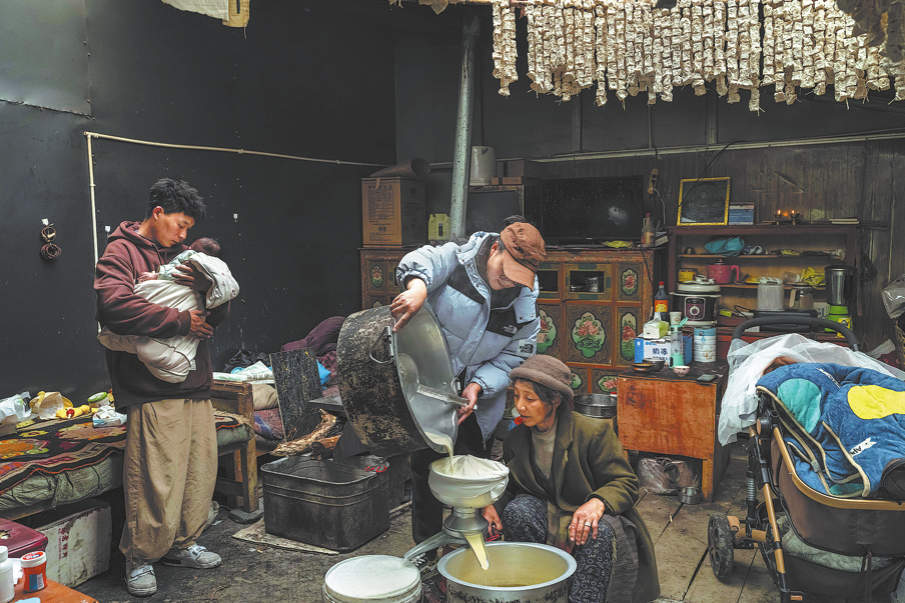
By virtue of SSTC, women-owned businesses thrive. As a typical example, Loyda Twinomujuni, a female farmer in Uganda, was supported by the FAO-China South-South Cooperation Programme. It helped Twinomujuni increase her milk production, run a farm where she rears cattle and pigs and has improved her livelihood overall.
Since 2020, the FAO has also joined forces with the Republic of Korea and is implementing an SSTC project to enhance rice value chains in Cote d'Ivoire, the United Republic of Tanzania and the Philippines.
South-South and South-North sharing of knowledge, ideas and strategies for addressing development issues remains a valuable reservoir for potential change and an incentive to sustainable development.
We are also witnessing a strong willingness of beneficiary countries to financially engage in SSTC, which is testimony of the concrete results achieved by agricultural SSTC to date at the field level and that SSTC is becoming the most effective delivery mechanism for transformation of the agrifood systems.
One of the most recent financial contributions received has been from the government of the Republic of Uganda for the sum of more than $9.6 million through a Unilateral Trust Fund, in addition to more than $2.4 million which was already contributed by China to Phase III of the FAO-China SSC Programme.
Undoubtedly, constraints imposed by the COVID-19 pandemic have highlighted the necessity for flexible and diverse knowledge exchange modalities. Nonetheless, the rapid adoption of virtual training methods has enabled most of the planned SSTC trainings and projects to go ahead despite the limitations of the last few years.
The agrifood sector also remains a key source of food, income and employment, and reactivation and transformation of agrifood systems is critical to ensure food and livelihood security and a sustainable recovery from the food security crisis in the Global South.
For this reason, the FAO recognizes the importance of engaging with the private sector and other non-state actors, to promote the spread and uptake of new technologies and innovations in the Global South and to strengthen market-related measures, including policies, to support these efforts.
A good example can be found in the collaboration between the FAO and the Ningxia Yanbao Charity Foundation to foster the development of agriculture talents.
We celebrate the UN Day for South-South Cooperation, which is an important reminder that SSTC is also an essential mechanism to advance the attainment of the United Nations Sustainable Development Goals.
Countries in the Global South are still facing a range of challenges in achieving the SDGs, including SDG1, no poverty, and SDG2, zero hunger. However, these countries are also reservoirs of home-grown development solutions in the areas of agriculture and food security, that could be further replicated and scaled up through SSTC.
A good example of how SSTC is bringing tangible changes and results, and advancing the realization of the SDGs and improving agrifood systems in Mongolia, can be found in a new report by the FAO on the FAO-China SSC Project in Mongolia (Phases I and II), the first national project implemented in Asia under the FAO-China SSC Programme.
The support rendered through the SSC Project in Mongolia between 2010 and 2016 has had an enduring impact on local people's lives and livelihoods. The numerous benefits gained by the project stakeholders represent the building blocks of stronger agrifood systems in the country, and of a more sustainable future based on better production, better nutrition, a better environment and a better life-leaving no one behind.
I strongly believe that we are experiencing a renewed SSTC momentum, which foresees brighter and stronger cooperation between countries of the Global South and potential new partners. The FAO and other agencies and international development partners will participate in a major Global South-South Development EXPO with a theme "Toward a smart and resilient future" in Bangkok, Thailand, in September.
We must, therefore, seize these moments and join forces with other development partners, to further mainstream SSTC, for the greater good of humanity and to build sustainable, inclusive and healthy agrifood systems.
The author is director of the South-South and Triangular Cooperation Division at the Food and Agriculture Organization of the United Nations. The author contributed this article to China Watch, a think tank powered by China Daily. The views do not necessarily reflect those of China Daily.
Contact the editor at editor@chinawatch.cn