Coming of age
Window of opportunity to adapt to the rapidly aging population







Window of opportunity to adapt to the rapidly aging population

China became an aged society in 2021 and its population aging will continue to deepen. In the initial stage of China's 14th Five-Year Plan (2021-25) period, regions with different economic development levels vary significantly in terms of the degree and pace of aging.
Using the 70,000 yuan ($9,982) per capita GDP as the dividing line between economically developed and underdeveloped regions, the six economically developed provincial-level regions — Shanghai, Jiangsu province, Tianjin, Chongqing, Hubei province and Shandong province — are capable of coping with the challenges emanating from population aging with sufficient reserves of wealth. In contrast, the six underdeveloped provinces of Liaoning, Sichuan, Jilin, Heilongjiang, Hunan and Anhui are faced with multiple challenges including a high degree of population aging, slow economic growth, and a sustained outflow of their young population, which will further drag down their economic growth rate.
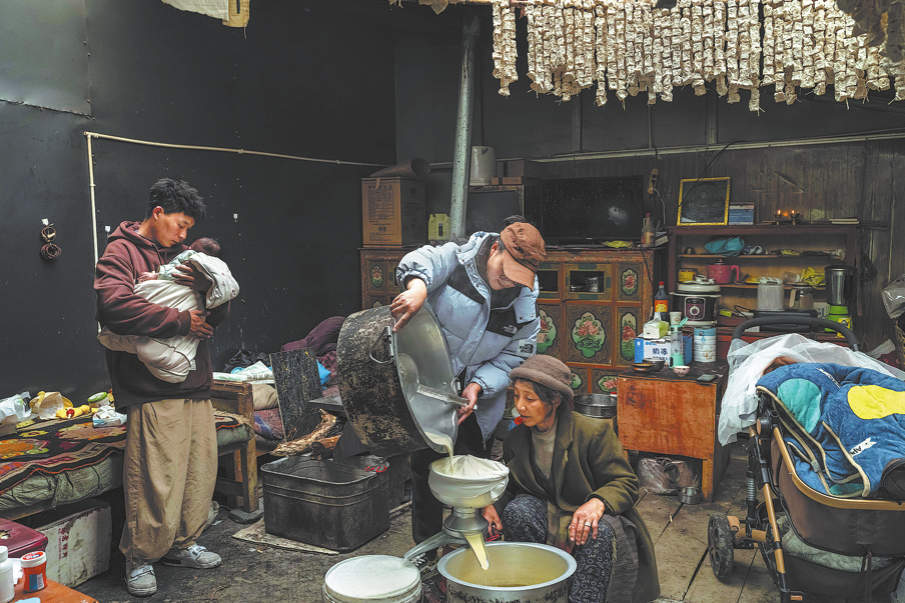
Compared with urban areas, China's rural areas face even greater risks brought about by the rapid population aging. In rural areas, the aging population is larger than that in urban areas. In 2020, for instance, 23.81 percent of rural residents, or 120 million people, were 60 years old or older, 7.99 percentage points higher than that in urban areas.
In addition, the share of older adults unable to perform basic tasks without assistance, empty nesters and the "oldest-old" are growing fast in rural areas, and there is a serious shortage of elderly care service in those areas. In 2020, there were less than 2 million elderly care beds in China's rural areas, equivalent of 16 beds per 1,000 older persons, less than half of the national average.
A shrinking workforce is one of the features of an aging society. China's working age population peaked in 2013, and is set to decline 77 million by 2035 and 180 million by 2050 respectively compared with the working age population today. However, a large amount of the human resources of the elderly population has been left unused or wasted. In particular, the elderly population in urban areas — with great intellectual resources and wealth of life and work experience — would like to continue to work after retirement, but lack employment opportunities. On top of that, a large number of the senior persons that are capable of taking care of themselves are seen as the object of elderly care services and assumed to be frail or dependent, which gives rise to stereotyping and age discrimination against the elderly population from the sociocultural aspect, exacerbates panic over population aging in the society, and to a certain extent adds an unnecessary burden on the society.
The exploration of regions that have entered an advanced stage of population aging could provide precious experience that others can draw on. For instance, Shanghai has carried out pilot projects for home-based or community elderly care services and palliative care for senior persons for many years, creating successful experiences that can be replicated elsewhere. In the meantime, regional differences in terms of the degree and pace of aging have provided a window of opportunity to tackle the aging problem. The central government should give targeted guidance to different localities, and prioritize regions with the most urgent and severe aging problems.
Improving elderly care services in rural areas should be a priority of public financial input. Furthermore, innovations should be made in eldercare service models in rural areas by supporting and encouraging mutual assistance between friends and relatives, promoting new models such as the "time bank", and building a multilayer supply system for eldercare services in rural areas that encompass nursing homes, social organizations and professional social workers.
The central government should fully exert macro-control over resource allocation in basic public services. For example, transfer payments from the central government should be increased, preferential tax and land use policies should be further improved, and safety-net guarantees should be provided to places struggling with serious pension fund deficits, particularly where the revenues for the pension fund cannot cover the expenditures.
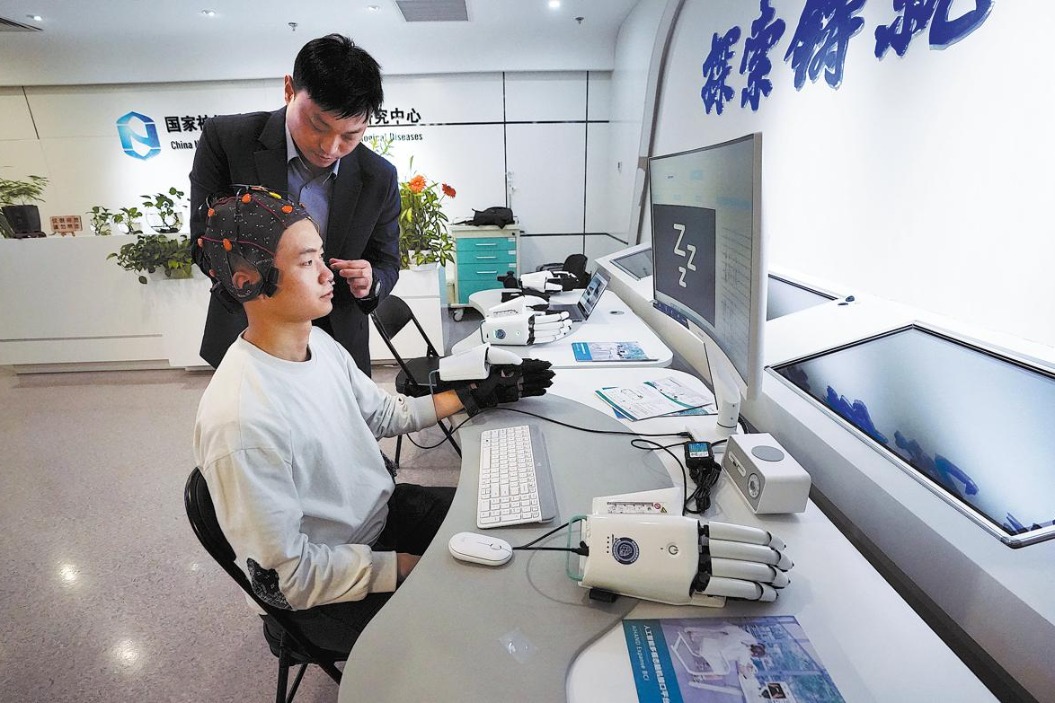
Technological innovations targeted at meeting senior persons' needs should be promoted. We should also accelerate the wide application of the new generation of information technologies — such as big data, artificial intelligence, blockchain and 5G technology — in the eldercare service industry. We need to quicken the digital, smart and intellectualized transformation of the elderly healthcare industry with better offering of safe and diversified products and services including telemedicine, long-distance care, intelligent service robots and intelligent nursing beds. The humanized and emotional functions of intelligent products and services should be strengthened to give senior persons emotional comfort and care.
It is vital for the society to stop using physiological age as a sole criterion for defining a senior person. Health status too can be a valid criterion. This could guide the society at large to better accept, respect and help senior persons, so as to build a society friendly to all ages and forge a favorable environment that respects, loves and helps the elderly. Also, fully tapping the older population as a human resource should be included in China's top-level design. Different localities should, based on local conditions, formulate plans of their own, unveil specific policies to encourage the employment of the elderly and improve the safeguard mechanism for the employment of senior persons.
Last, postponed retirement or cancelation of mandatory retirement should be implemented at an early date to solve the problem of a soaring older population. We could effectively solve the employment difficulties of the delayed retirement group through education; unveil a new pension system with greater financial incentives for those that pay more and for more years; and establish a new mechanism in which pension benefits increase along with economic growth.

Zeng Hongying is a member of the Pangoal Institution academic committee and a researcher at the Chinese Academy of Macroeconomic Research. Zhao Yufeng is an associate researcher with the division. The author contributed this article to China Watch, a think tank powered by China Daily.
Contact the editor at editor@chinawatch.cn