Oil on water
Gulf nations want to be equal partners not pawns in power games







Gulf nations want to be equal partners not pawns in power games
The world is going through a major transformation. There is a clear recognition globally and regionally that the world order is changing, and that while the United States and the West are losing relative power and influence, Asia and the rest are rising and gaining relative power.
The Gulf region is going through massive changes of its own; its security, economic and social landscape are experiencing rapid changes. Dynamic Gulf nations such as the United Arab Emirates and Saudi Arabia are gradually rebalancing and diversifying their strategic relations, going beyond the energy trade to include security, space exploration, technology and science.
The current changes underway in the global system present many opportunities and risks to the Gulf region. Now is the right time to accelerate their integration plans to strengthen the Gulf Cooperation Council, especially in security, monetary and economic areas.
The Gulf countries have been trying to proactively handle the regional challenges, supported by non-regional powers from the West and the East.
Solutions to the Yemen, Syria and Libya conflicts are being worked out and many Arabs are confident that they will be settled sooner rather than later, mainly through regional efforts and dialogue.
The Gulf nations are trying to redefine how the world views their security. Gone are the days when the relations of the Gulf nations were defined by the "oil for security" perspective. They see their region thriving and prospering free of conflict, focused on regional economic integration and social development.
The Gulf region's security is becoming an important subject to the world, especially to Asia, not only because of the recent Houthi attacks on Saudi Arabia and the UAE, but more importantly because it is one of the largest oil and gas exporting regions. It is geographically, strategically located in the heart of global trade — energy and otherwise, overlooking important maritime waterways such as the Strait of Hormuz.
To understand the increasing significance of the Gulf's security, one has to see the big picture of the rapidly evolving world order and the shift of the economic center of gravity from the West to the East. It is estimated in the Pricewaterhouse-Coopers report The World in 2050 that by that year three of the world's top four economies will be in Asia, namely China, India and Indonesia.
Until then, and until alternatives are found for oil and gas, which is a long, long way from now, the Gulf region will continue to be a major supplier of oil and gas to the world and thus the emerging powers of Asia, especially China and India.
China is already the largest importer of oil from the Gulf region; five out of six GCC countries are almost always among the top oil and gas suppliers to China. Before the middle of the next decade, India is expected to become the largest oil and gas importer from the region, further solidifying the Gulf's position as an important supplier of energy to the world, especially to the rapidly growing economies in Asia.
Some regional cities such as Dubai and Abu Dhabi have taken advantage of the region's strategic location and have become a logistics hub for global trade and a bridge between the East and the West.
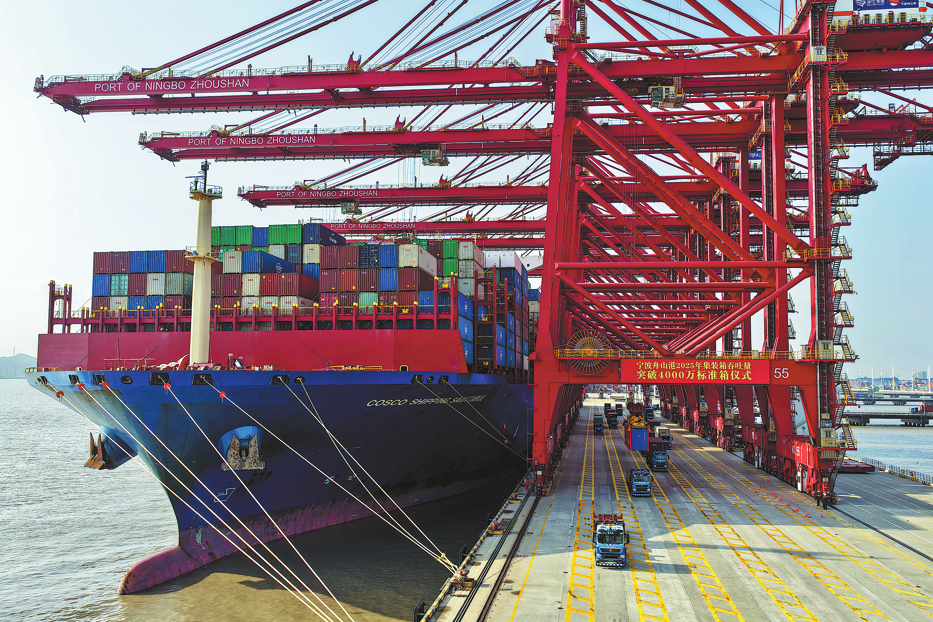
In 2020, China replaced the European Union as the GCC's largest trading partner, and last year the trade between the two sides increased substantially. Similar trends have been observed with some other Asian nations, making the security of their trade and maritime shipping lines ever more important.
As Asia continues to take a larger share of the global GDP, the Gulf nations will continue their economic integration with the rising Asian giants. The Gulf nations are already increasing their dialogue with Asian nations bilaterally and multilaterally, as has been demonstrated recently when some Gulf delegates attended the most recent meeting of the Association of Southeast Asian Nations.
The Gulf countries are closely monitoring the progress of the Regional Comprehensive Economic Partnership and the Comprehensive and Progressive Agreement for Trans-Pacific Partnership.
As the Gulf nations plug into the massive trade blocs emerging in Asia, trade between the Gulf region and other parts of Asia is expected to expand enormously in the next 30 years.
Now that Asia, led by China, is moving center stage economically and politically, one hopes that the trade and the vulnerabilities in maritime routes connecting the two sides will not be used as a source of blackmail. Therefore, establishing a clear security framework within the region and between the two sides is critically important.
In a world that is becoming increasingly multipolar, the Gulf region should not be "stuck" with one single security partner or one single bloc of partners; the Gulf nations should diversify their security partners to include those who have capacity and share their interests of ensuring regional stability and prosperity.
Because of huge synergies and complementarities between the two sides, the economic integration between the Gulf region and Asia, especially China and India, is expected to deepen further in the coming years. To protect their rapidly growing trade and economic ties, both sides should invest in protecting their trade.
In March 2021, China's State Councilor and Foreign Minister Wang Yi proposed an unprecedented five-point initiative for security and stability in the Middle East. The initiative included the important point of "jointly fostering collective security".
The Gulf nations should seriously consider all initiatives and proposals, by both traditional and nontraditional partners, and try to come up with a framework that works best for them. They can also examine successful organizations such as the Shanghai Cooperation Organization, to which some Gulf nations have applied for observer/dialogue partner status.
The SCO's Charter and Treaty on Long-Term Good-Neighborliness, Friendship and Cooperation, and its principles of political trust, win-win cooperation, equality between nations, openness and inclusiveness, equity and justice, are worth incorporating into any framework established for the Gulf region.
The Gulf nations should avoid becoming a battleground or a playground for the rapidly intensifying great power competition. They have to establish common understanding and ground, and ensure regional security and prosperity. To do that, they should accelerate the process of establishing their own security principles and framework.
The author is former strategy adviser to the chairman of the Abu Dhabi Executive Office and an Asia global fellow at the University of Hong Kong's Asia Global Institute. The author contributed this article to China Watch, a think tank powered by China Daily.?The views do not necessarily reflect those of China Daily.
Contact the editor at editor@chinawatch.cn