Pulling together in common cause








Ministerial-level dialogues would help foster strategic alignment between China and Brazil
From the 26th United Nations Climate Change Conference (COP 26) in Glasgow, Scotland, last year, to the 27th Conference of the Parties of the United Nations Framework Convention on Climate Change (COP 27) in Sharm el-Sheikh, Egypt, this month, multiple stakeholders from China and Brazil have gathered on several occasions at different levels and with different scopes to seize the opportunity for climate change cooperation after both sides made fresh climate-related commitments at the COP 26 in Glasgow, namely China's subscription to the Leaders' Declaration on Forests and Land Use and Brazil's national emissions reduction and zero illegal deforestation targets.
The leaders of Brazil and China have met at the G20 Leaders' Summit and the BRICS Summit and other multilateral platforms. The Beijing Declaration of the 14th BRICS Summit highlighted that the five countries are forging a quality partnership in the era of globalization. The 2022 Belt and Road Infrastructure Development Index Report ranks Brazil at the top for its infrastructure modernization and investment potential among all the Portuguese-speaking countries.
China is helping Brazil to green and decarbonize its economy by building a cross-sea cloud rail in Salvador, installing a wind power plant in Lagoa-do Baru and an ultra high voltage direct current transmission electric expressway in Brazil's mountain areas. China is also investing in Brazil's soft infrastructure. After Huawei, Tencent is building a second database center there.
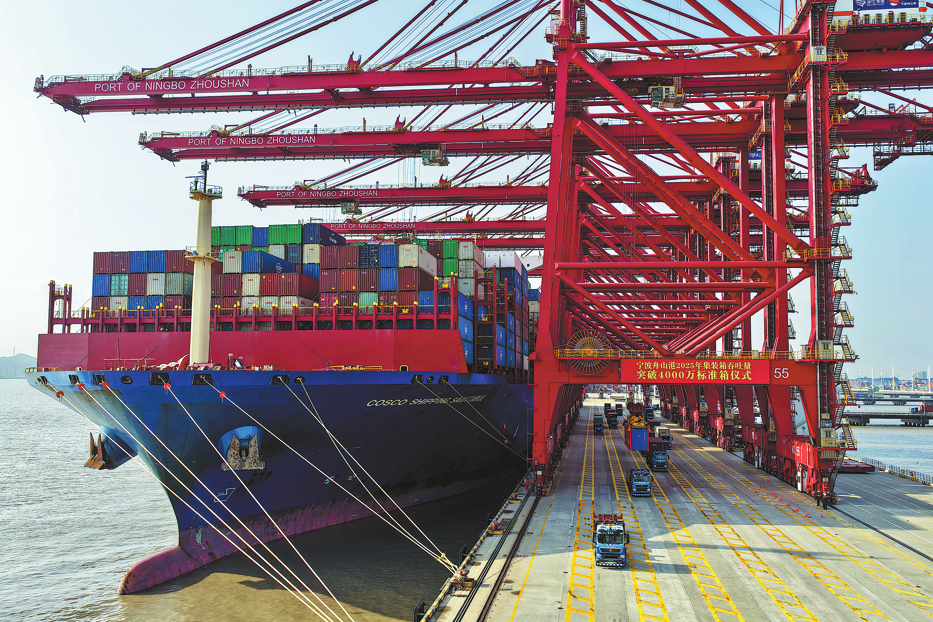
The close interdependent trade relationship between the two countries fosters institutional discussions and partnerships in agribusiness. Stakeholders, including industry associations, businesses, financial institutions and R&D institutions, have formed research networks and made recommendations for improving Brazil's infrastructure, science and technology, innovation capacity and financial mechanisms to better serve Sino-Brazilian agricultural trade.
Indeed, these fully demonstrate that industry experts and professionals have realized the barriers hindering sustainable trade between the two sides. These include deficiencies in financial mechanisms to support sustainable production, exports and imports; lack of mature decarbonization and carbon-neutral agricultural technologies and approaches; and the need to safeguard policies, such as sustainability certification schemes and compensation for smallholders. There is an urgent need to embrace common interests and talk in one language on these issues at the national level.
To implement the suggestions put forward by industry experts and researchers, NGOs are taking the first-mover step, organizing pilots and establishing partnerships with Brazilian government agencies. This can be witnessed by a leading Chinese NGO — Global Environmental Institute — signing a memorandum of understanding with four parties, including the state government of Mato Grosso. This promotes the distribution of aggregated, valuable, sustainably produced beef products from Mato Grosso to China, which is being backed up with a pilot traceability system to improve supply-chain visibility and transparency.
In a few days, during the COP 27, GEI is going to sign a new MoU with a nine-state-involved supra-level governmental entity — the Legal Amazonia Consortium. This exciting collaboration will promote pragmatic pilots and experiments in the fields of food and agriculture, sustainable energy, science and technology, life quality and city infrastructure.
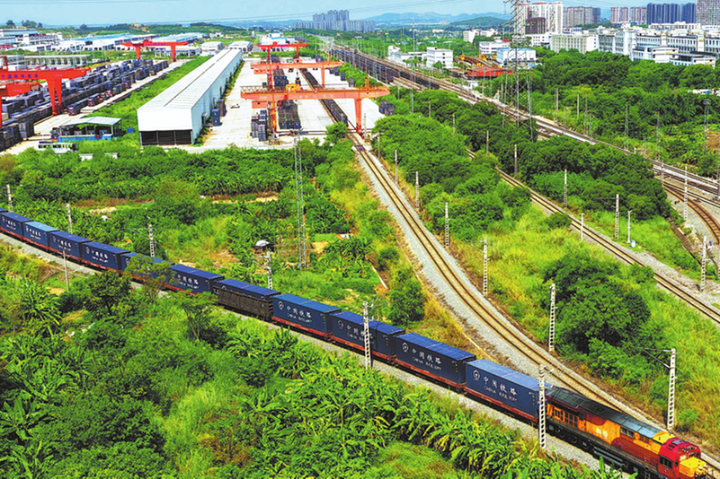
Why Amazonia? China and Brazilian states in the Amazon region are interlinked in both direct and indirect ways in matters related to agribusiness. China's investment in infrastructure projects for transporting agricultural produce including building a railway connecting the state of Mato Grosso with the ports on the Amazon River exemplifies direct and pragmatic cooperation. The indirect relations are through the trading of key soft commodities, which is now well-established and has been further consolidated in recent years since the 2018 Sino-US trade dispute.
In addition, the Legal Amazonia Consortium has enacted its Green Recovery Plan and received support from the French government from 2021 on strengthening the axis to stop illegal deforestation. The two parties have produced an Integrated Plan of the Interstate Consortium of the Legal Amazon for the control of deforestation, which makes the articulation of command and control policies of the nine Amazonian states more robust.
The Consortium has also signed an MoU in 2022 with the United Nations to jointly develop initiatives and accelerate sustainable development in Amazonia. It promotes the exchange of information and adherence to the UN Sustainable Development Goals, including a proposal to create an Observatory of SDG Indicators in the Legal Amazon.
The communication at different levels illustrates the receptiveness of stakeholders from both sides on the issues of agricultural deforestation, carbon neutrality and sustainable trade. Initiatives launched by local civil society organizations are also key to engaging with public officials and advancing national goals set by both China and Brazil. Many different actors are therefore consolidating and sustaining the bilateral trade relationship in resource-intensive industries.
Nonetheless, it is still extremely important to establish ministerial-level dialogues between both sides and to foster a strategic alignment on issues such as biodiversity conservation and scientific innovations, similar to the Consortium-France concrete road map. Financial, scientific-technological and environmental decision-makers from both sides should identify common interests and joint goals for green and sustainable trade interdependency.
Yan Tian is a consultant for the Global Environmental Institute. Zhang Jingwei is the senior programme officer for the Global Environmental Institute. Ariana Oliveira is the international affairs advisor for Asia, Economic Development Secretariat of Mato Grosso in Brazil. The authors contributed this article to China Watch, a think tank powered by China Daily. The views do not necessarily reflect those of China Daily.
Contact the editor at editor@chinawatch.cn