Need to boost ties between China and Southeast Asia








The 20th National Congress of the Communist Party of China took place at a time when the regional and global communities are experiencing extreme turbulence due to rapid developments, some good and some bad.
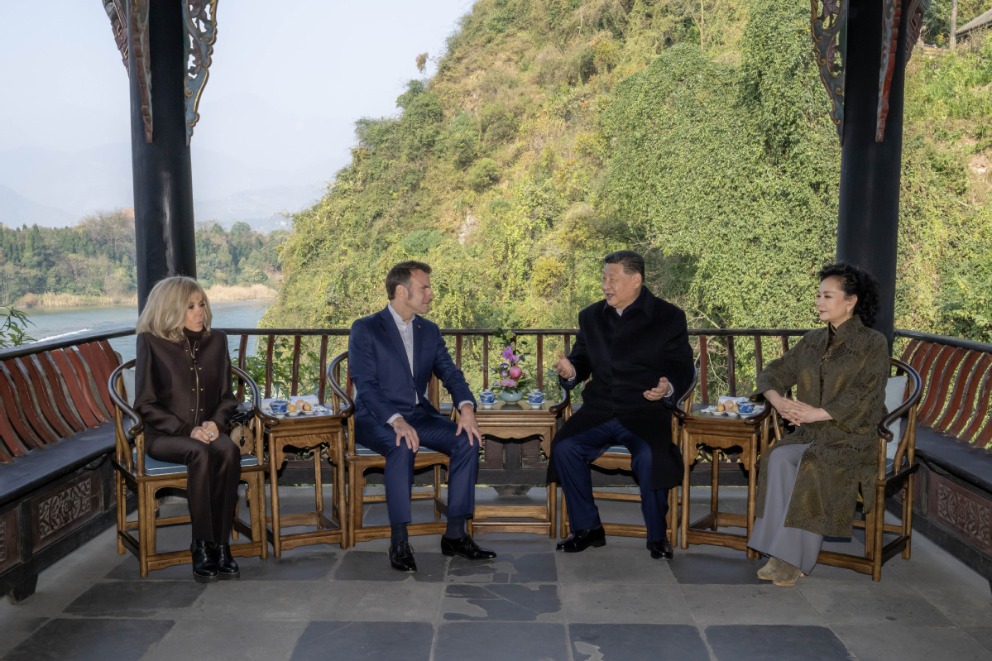
And the frequent interactions between China and ASEAN countries after the 20th Party Congress have indicated the warming up of ties between China and its Southeast Asian neighbors.
The most significant development in recent years has been the gradual replacement of a unipolar world order by multipolarism. Since the beginning of the 1990s and the end of the Cold War, the world order had been built around a structure that had the United States as the global superpower. That, however, is beginning to change.
The new world order is reorganizing around the US-China competition. This distinct bipolarity might lead to more prominent multipolarism as more geopolitical conflicts, such as the ongoing conflict between Russia and Ukraine, spread to other parts of the world, creating geopolitical divisions in the world order.
At a time when the world order is facing such significant disruptions, it has become imperative for countries and regional bodies to work together for maintaining regional and global stability.
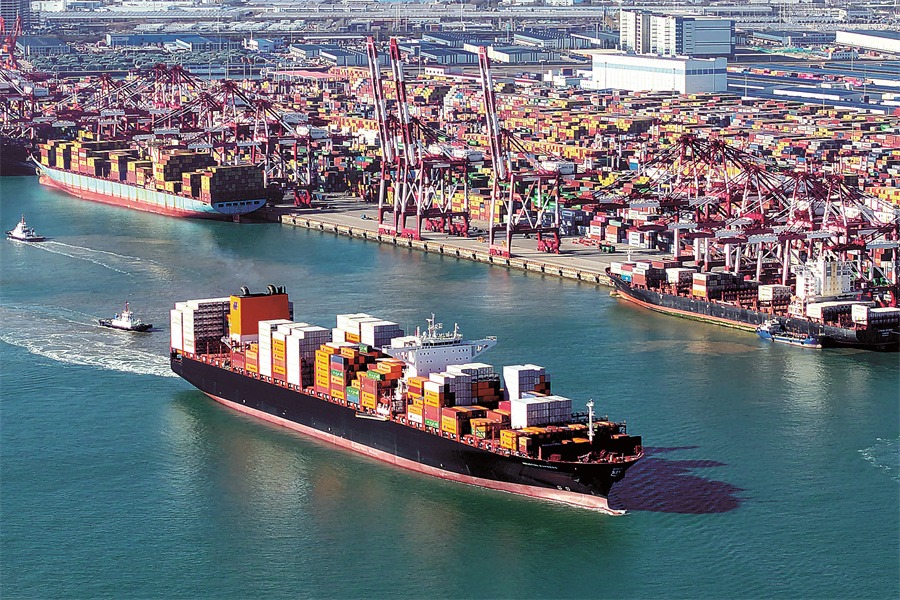
China and Southeast Asia have a long history of cooperation, which has progressed on the basis of mutually beneficial exchanges. These exchanges have significantly been in the area of trade in goods. But China and several Southeast Asian countries are also parts of several major global supply chains.
China's ability to assemble both high-tech and low-cost, labor-intensive manufacturing items on large scales has enabled Southeast Asian economies to supply large amounts of intermediate and semi-finished products to it for final production.
This integration through supply chains is reflected in China being the largest trade partner of several Southeast Asian countries. It is also visible through the cross-border capital flows and investments that have brought production networks across China and Southeast Asia closer to each other over the years.
China-Southeast Asia economic ties have, however, extended well beyond trade into other areas. One of the most important of these is people-to-people connectivity. And strong and expanding business ties have facilitated rapid movements of people between China and Southeast Asia.
Robust cultural exchanges, too, have multiplied over the years with the increase in transport connectivity between China and Southeast Asia. Also, air and sea connectivity between China and Southeast Asia has expanded manifold, increasing tourist flow between the two sides, as well as facilitating family reunions.
People-to-people exchanges have grown rapidly also because of the movement of students between the two sides. Students from Southeast Asia have been travelling in large numbers to study in China. At the same time, Southeast Asian countries such as Singapore and Malaysia, which are the region's main higher education hubs, have been attracting large numbers of Chinese students.
However, the shifts in the global political and economic landscapes have raised some concerns over whether China and Southeast Asia will be able to maintain their exchanges as smoothly as they have in the past. Geopolitical flare-ups in different parts of the world give rise to questions over whether maritime territorial differences between China and some Southeast Asian countries can create awkward conditions for deepening their cooperation.
One of the best ways of overcoming these concerns is to work through established institutional mechanisms that have bound China and Southeast Asia. One of these is the Regional Comprehensive Economic Partnership. Established as an ASEAN-plus economic architecture, the RCEP came into force on Jan 1, 2022.
As a matter of fact, the RCEP can help China and Southeast Asia take forward their existing cooperation to the next level. It is a modern and contemporary trade and investment cooperation agreement, which all sides can use to engage in new areas of economic cooperation, such as in digital trade, infrastructure and a variety of services.
The RCEP has several provisions that have been introduced specifically for addressing the needs of small and medium-sized enterprises. This would enable SMEs from both China and Southeast Asian countries to explore various new prospects as collaborative startups. The RCEP may also be the best option for China and Southeast Asia to work together for reorganizing and/or bolstering some of the major supply chains that have been heavily disrupted by the COVID-19 pandemic.
The conclusion of the 20th Party Congress gives both China and Southeast Asia the opportunity to reflect on the trajectories of their past association and how they can continue to engage closely in view of the challenges that have emerged. In the light of these challenges, they can look afresh at mechanisms such as the RCEP for new collaborations. China's latest moves to fine-tune the "dynamic clearing" anti-pandemic policy might mark a new beginning in this regard, by facilitating greater trade and travel.
The views don't necessarily reflect those of China Daily.
The author is a senior research fellow and research lead (trade and economics) at the Institute of South Asian Studies in the National University of Singapore.
If you have a specific expertise, or would like to share your thought about our stories, then send us your writings at opinion@chinadaily.com.cn, and comment@chinadaily.com.cn.