Powering Africa







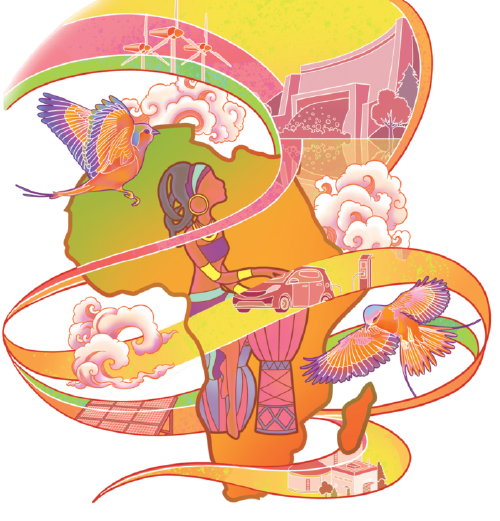
China's pivotal role in promoting the green transformation and sustainable development of the continent is commendable
The COVID-19 pandemic and climate change have demonstrated how the world, as well as the challenges it faces, is interconnected. Sustainable global governance is needed now more than ever before to synergize the development strategies of different states and to address common challenges.
Working with the G20 and other international organizations to promote multilateral efforts, China has been playing a pivotal role in containing the global recession and promoting sustainable development by coordinating national development policies, and drawing up general principles for strengthening environmental regulation and supervision.
China's understanding of sustainable development emphasizes the need for a holistic, integrated approach to policy and practice. This approach is embedded in China's own domestic processes of economic reform and restructuring, rebalancing of its energy sourcing and climate change mitigation. China's potential contribution to sub-Saharan Africa's green transformation and sustainable development is complex and multifaceted, involving significant issues about access to energy, energy poverty and equity, the linkage of energy, particularly renewable energy resources, to inclusive green growth, transformation and development, and implications for pro-poor strategies. As US economist Joseph E. Stieglitz argued over a decade ago: "Development is about transforming the lives of people, not just transforming economies".
The specific importance of renewable energy for sustainable and equitable development has long been recognized. This linkage is central to achieving the UN's 2030 Sustainable Development Goals and the African Union's Agenda 2063. The implementation of the policy goals and targets of the SDGs and the Agenda 2063 should be effectively synchronized. As the UN's Economic Commission for Africa has argued: "Green technologies offer Africa a chance to 'leapfrog' from carbon-intensive development characterized by wasteful and unsustainable technologies and systems as used by developed countries, by directly transitioning to cleaner and renewable energy sources needed to achieve sustainable development".
In response to these arguments and as renewable energy technology has continued to advance, there has been a significant policy focus on the linkages between energy, green growth and transformation in Africa. Despite being rich in renewable energy resources, Africa is yet to generate sufficient electricity for its growing population and economies; currently, about 568 million Africans have no access to electricity. Even among those with grid access to electricity, supply is often unreliable due to poor transmission and distribution networks, resulting in excessive costs to businesses and households. Significant progress has been made to increase investment and improve access but, since the COVID-19 pandemic, investment has dropped by around 30 percent.
This threatens to reverse the progress being made to improve access to electricity across Africa. Tackling energy supply to improve access to electricity is a defined objective of many African governments and the African Union in order to enhance economic development, improve livelihoods, and ensure environmental sustainability. Simultaneously, the ambition is to meet global commitments, including SDG 7 — ensuring access to affordable, reliable, sustainable and modern energy for all — and the Paris Agreement objective to limit global warming to well below 2 C, preferably to 1.5 C, compared to pre-industrial levels.
China is prominent in the global renewable industry, particularly the solar photovoltaic sector. It has unparalleled manufacturing capacity of solar panels — eight of the top 10 world suppliers are Chinese — while its domestic annual installment on solar capacity reached over 30 gigawatts in 2019. In 2017, Chinese ministries, led by the newly restructured and empowered Ministry of Ecology and Environment, announced guidelines to develop a green Belt and Road Initiative.
Across sub-Saharan Africa, China's renewable energy involvement has been growing. For example, the China-Africa Renewable Energy Cooperation and Innovation Alliance has signed a memorandum of understanding to cooperate with the Africa Renewable Energy Initiative for renewable energy generation in Africa to combat climate change and promote sustainable development. A range of pilot projects are being developed, including construction of micro-grids in some African households and villages, in combination with large-scale power construction. The Aysha wind power project, under the China-proposed Belt and Road Initiative, broke ground in May 2018. With a projected total installed capacity of 120 megawatts and an energy output of 467 gigawatt hours per year, the $257 million project is expected to boost the national energy output of Ethiopia, meeting the rising demand for local power grid construction and upgrading.
An OECD/IEA 2016 analysis concluded that "a substantial proportion of Chinese power projects in Sub-Saharan Africa are aimed at expanding access to electricity". The study also concludes that in 2010-2020, a total of 120 million people would gain access to electricity through the power grid, enabled by grid development and increasing power generation capacity, of which Chinese contractors are responsible for 30 percent. China also provides rural off-grid solutions by donating solar energy kits to countries such as Rwanda and Comoros. In Rwanda, some 2,000 villagers gained access to electricity through the solar kits provided by China. In addition, distribution projects undertaken by Chinese firms have supported networks and connections. For example, in Angola, Sinohydro has powered homes of about 5,000 people by installing lines and substations.
China's contributions are in keeping with China's commitments to the COP 27 and the SDG goals through wider South-South cooperation. China can act as an important catalyst and facilitator to reinforce existing African initiatives, for example, working with its African partners to strengthen existing infrastructures and help develop new energy pools, provide additional impetus for regional and sub-regional integration and help lower energy costs, increase household access and cut energy poverty. Together with other G20 countries, China has an important role to play in finding the requisite finance to support the complex range of policy interventions to meet Africa's energy gap and change the region's energy mix.
From a people-centered development perspective, the key requirement of energy programs is to ensure that the pro-poor aims of the multiple policy strands of climate mitigation, green growth, energy access, and renewable energy are mainstreamed and prioritized.
The author is a senior research fellow and director of the Centre for Rising Powers and Global Development at the Institute of Development Studies in the United Kingdom. The author contributed this article to China Watch, a think tank powered by China Daily. The views do not necessarily reflect those of China Daily.
Contact the editor at editor@chinawatch.cn