Modernization and tradition







China's exploration of its own development path offers inspiration for other developing countries
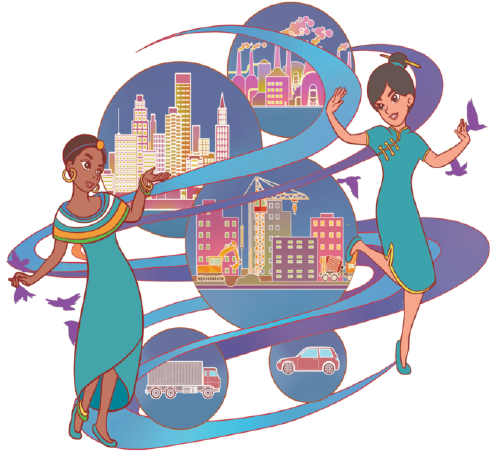
Most developing countries are undertaking different kinds of reforms as a path to modernization and economic development. As we are all aware, modernization, in social sciences is defined as the process by which a country moves from a traditional, agrarian, rural society to a more secular, urbanized, industrialized society. However, the path to modernization is not an easy journey, particularly for developing countries, such as Africa. Modernization requires a link to technological innovation and cultural development that inevitably brings changes in people's moral values.
This concept is different from tradition in the sense that it does not accept the existence of certain aspects that the traditional world acknowledges, for instance, the supernatural realm and certain core values of tradition and cultures. From the onset, modernity diverges from the path of tradition although the two can at times agree in certain areas. Modernity embraces the issues of individualism and competition, among other things, which go against most African traditions.
There are many reasons that can be mentioned as serious challenges to the modernization paths of many African countries.
Modernization in Africa does not originate with Africans themselves. It is imposed by developed countries as a requirement to get aid. And many in Africa believe that the developed countries' concept of modernization impoverishes Africa because it fails to recognize the cultures and values of the African countries. Instead, it places value on externally sourced aid without attending to the inhibiting conditionalities attached to such aid.
Culture and values as defined as the ideas, customs and social behavior of a particular people or society have been largely affected by modernization. However, many African people are not willing to realize modernization at the expense of their culture and values.
Moreover, wars, conflict and natural disasters may also force African countries to move back and forth on their way to development. The recent devastating political conflicts in Ethiopia, Libya and Yemen have had a negative impact on the modernization and development of those countries. The above challenges have shown that the path to modernization is not always smooth for developing countries.
However, China as a developing nation has succeeded in achieving modernization using a unique approach. The following are some of the reasons for its success.
The first is the commitment of its leadership and social mobilization. The leadership has scientifically formulated short- and medium-term modernization goals, sticking to the long-term goal of building a modern socialist country. And during this process, the Communist Party of China has played a big role in demonstrating its foresight, strong political commitment and social mobilization capabilities.
The second is the modernizing of the national governance system and capacity. Modernizing the national governance system is important for overall modernization because modernizing the national governance system means adapting to changing times and reforming institutions, laws and regulations which are unsuited to the needs of modernization and development, while at the same time constantly establishing new institutions, laws, and regulations. In addition, it also gives more emphasis to governance capacity building, effectively improving the use of the institutions and laws.
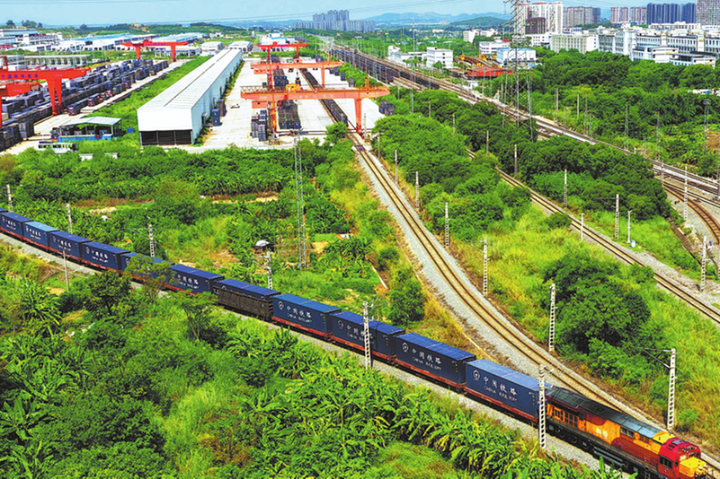
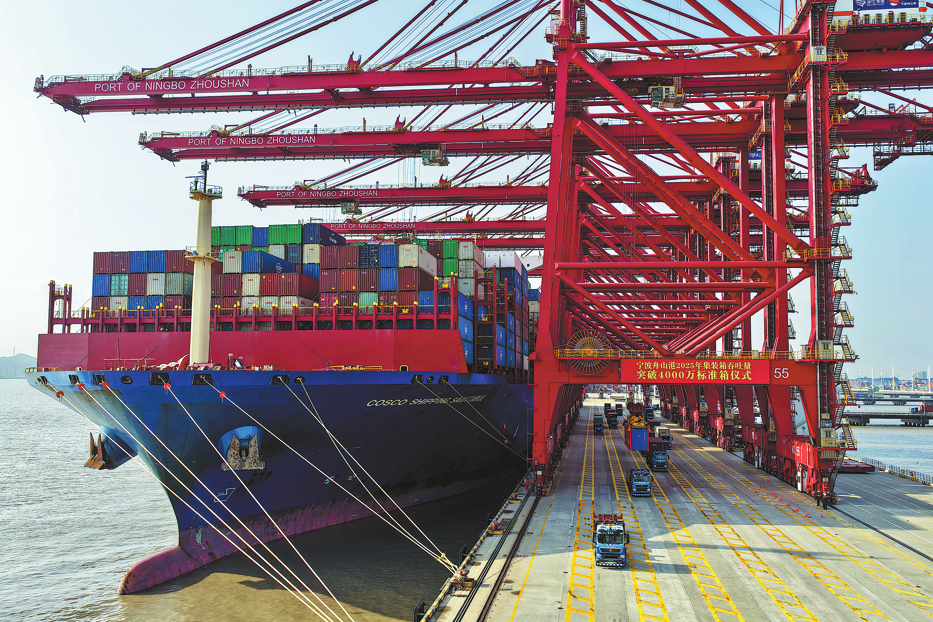
The third reason is better infrastructure. Another approach is to develop better infrastructure for industrial development. As the Chinese proverb says: "To get rich, build roads first." Better infrastructure lays the foundation for industrial development, which then leads and ensures economic development and modernization. Without better infrastructure the development of industry is inconceivable. Industrialization has always been the main basis and driving force for China's modernization.
Fourth, China has given due attention to the human dimension and traditional culture. Another important lesson from Chinese modernization is that it takes into consideration the human dimension and the country's traditional culture. The uniquely Chinese path to modernization is in tune with China's national conditions and realities. The uniquely Chinese path to modernization proves that there is no fixed path toward modernization, showing that whichever path best suits the national conditions of an individual country is the best path forward, as the Chinese say "cutting one's feet to fit the shoes" will lead nowhere.
Fifth, China has maintained an international outlook. China gives attention to the modernization of the world. The aim is to build a community with a shared future and to develop a new type of human civilization through international cooperation, calling for and promoting the joint construction of the Belt and Road Initiative, and pledging to reduce carbon emissions. China has acted as a responsible and broad-minded major country.
However, the question is: Are the leaders and people of developing countries committed to ensuring a successful modernization path? Are they ready to learn to implement what has been learned from the Chinese path to modernization? And, based on the Chinese path to modernization, can developing countries come up with a new approach suited to their development?
I hope we will come up with a new philosophy and practice for the developing countries' path to modernization.
The article is a keynote speech at the the Third Think-Tanks Forum on National Governance in Developing Countries.
The author is former state minister of the Ministry of Trade and Industry of Ethiopia. The author contributed this article to China Watch, a think tank powered by China Daily. The views do not necessarily reflect those of China Daily.
Contact the editor at editor@chinawatch.cn.