Tanshishan relics prove pluralistic origin of Chinese civilization







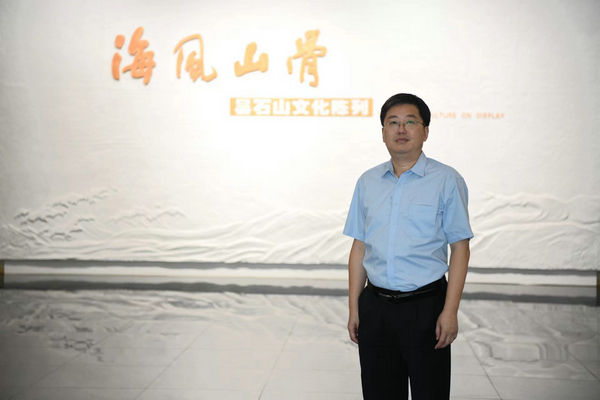
CNS: How to strengthen the archaeology of Tanshishan site, promote Tanshishan culture and deepen the study of the origin of Chinese civilization?
Dong Ping: The Tanshishan site is the cradle of ancient Fujian marine culture and the Min nationality in the pre-Qin period, as well as the epitome of early humans' production and life on the southeast coast. The rich history and culture here is essential to the historical development process for the southeast coastal region, and for the ancient Chinese maritime civilization. From the production tools and living utensils unearthed, we can see the creation of a very marine culture characterized by the Min-Yue ancestors who were here more than 5,000 years ago. There are pottery kettles that have a profound influence on the food culture of Fujian today, as well as stone production tools and living customs similar to those people of the Austronesian family, reflecting the cultural exchange between Fujian and Taiwan.
The Tanshishan site shoulders the responsibility for research on the ancient culture of Fujian during the Neolithic period and is important for the study of prehistoric navigation technology, the origin and spread of the Austronesian family, etc. It is hoped the Tanshishan site will become an important medium for communicating history and culture across the Taiwan Strait, and a historical and cultural platform for linking Fujian and Taiwan.
First, joint multidisciplinary research to promote more achievements at the Tanshishan site needs to be strengthened. The Museum of Tanshishan Historical Relics uses digital technology to explore the protection and display of the site. Through data collection, we digitally retained 1,050 square meters of archaeological excavation sites in the Tanshishan Site Exhibition Hall and 370 specimens of excavated artifacts, laying the foundation for the next archaeological excavation of the site.
Second, the creative transformation and innovative development of outstanding Chinese traditional culture should be promoted. Since 2014, the museum has put forward the development idea of "exploring culture beyond the sites," focusing on Tanshishan culture and carrying out in-depth research on its origin and distribution. In 2018, it independently completed the project "Research on Prehistoric Sites in the Lower Reaches of the Minjiang River Basin," involving 10 counties (cities and districts), completely covering the entire lower Minjiang River basin and the Gutian Creek basin in the middle reaches, basically mapping the distribution of prehistoric cultural sites in the region and filling a longstanding academic gap. Now the museum has discovered the site of Shangpan Village, the base of the Austronesian family in Pingtan, providing firsthand information for archaeological exploration and research on the Austronesian family.
Third, the protection and use of Tanshishan site and inheritance of cultural heritage need to be promoted, and the multiple values of Tanshishan cultural heritage explored. This includes disseminating more value symbols and cultural products bearing Tanshishan culture to tell the story of prehistoric maritime culture in Fujian. Research ideas also need to be expanded. We will take Tanshishan culture as the cornerstone of our research and explore its relationship with other important archaeological sites, such as Wanshouyan Paleolithic Site, Pingtan Group, strengthening the foundation of Fujian civilization and marine culture research, and scientifically playing a role in research on Chinese civilization.