Attracting foreign funds a common call







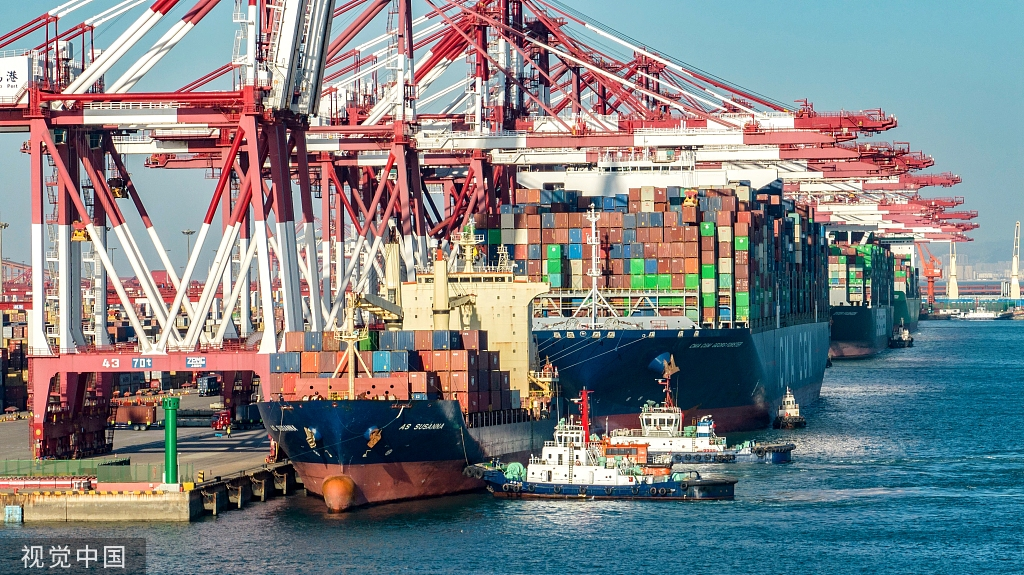
With China expanding programs to boost foreign trade and attract foreign capital to mitigate the impact of the COVID-19 pandemic, slowing global demand, geoeconomic shocks and fierce competition from the likes of Vietnam and India over the past three years, the idea of widening and making opening-up more effective has gathered steam during the two sessions this year.
As China's economy recovers, many national legislators and political advisers — especially those who are economists, mayors, executives at multinationals and members of private and State-owned enterprises — believe that higher levels of overseas investment are likely, and Chinese exporters are working to shore up the growth of foreign trade while optimizing and improving their product offerings.
Delegates have spent more time discussing topics related to the subject this year, impressing business reporters like myself.
Representing the voices of people and businesses across the country, delegates have pointed out that without orders, export-oriented companies will lose revenue. As a result, they will not be able to invest in research and development, and this could lead their businesses to dead ends.
Consequently, many experts — including Gu Xueming, a member of the 14th National Committee of the Chinese People's Political Consultative Conference and president of the Chinese Academy of International Trade and Economic Cooperation in Beijing, and Li Kuiwen, a deputy to the National People's Congress and head of the Guangdong Office of the General Administration of Customs — have repeatedly said that strengthening efforts to expand high-level opening-up will create a more enabling environment for trade and investment.
They have stressed that optimized COVID-19 controls will help curb surging global inflation, as the normalization of economic activities will stabilize supply chains and allow them to function more effectively.
In the course of interviews and conversations, I have found that many deputies acknowledge that China's labor cost advantage is shrinking, but that this doesn't necessarily mean it has become more expensive to innovate and manufacture here.
The cost of labor is determined by a country's endowment of resources, but this is only one component of overall costs. The supply of raw materials, the abundance of capital resources and the proportion of skilled labor also determine production costs.
Apart from resources, a number of factors such as technological progress, economic scale and industrial agglomeration are also able to drive production costs down. Compared with other emerging market countries, China still has clear advantages in these aspects. This means that if Chinese companies are excluded from the supply chain, there is no space for substantial reduction in the overall cost of manufacturing for businesses around the world.
Pushed by the accelerated restructuring of the global value chain, China may lose its comparative advantage in terms of certain products or industries, but as a whole, its production capacity and consumption potential are still hugely attractive to multinational companies. After all, it is hard to ignore the fast-growing Chinese market and its huge consumer base.
Moreover, I believe that at a time when multinational corporations are suffering from low cash flows as the global economy recovers, raising more money to rebuild supply chains outside China is both unwise and costly, because China's infrastructure for foreign trade is mature and has been tested by time.
According to the Government Work Report submitted to the National People's Congress for deliberation on Sunday, China will further efforts to attract more foreign investment this year.
The report recommended several measures to achieve this goal, including expanding market access, opening up the modern services sector, ensuring that foreign companies enjoy the same treatment as domestic, improving services for foreign-funded companies and facilitating the launch of landmark foreign-funded projects.
Based on my observation of the comments made by national legislators and political advisers this week, although China's high-energy consumption and carbon-intensive businesses may be affected by industrial upgrading or external challenges, its fast-growing service sector, green technology, and industrial and financial markets will help ease the pressure during transformation.






- Xi to attend opening ceremony of National Games, declare Games open
- Rare bird spotted for second time in Hainan county
- Deep-sea AI tool powers up marine research, poised for global use
- Tech and sports unite at National Games
- CNS Fujian's home base is the Sanya Military Port, the Chinese Navy says
- Xi urges deepening reform, opening-up during Guangdong inspection tour