Time for acceptance
US discourse needs to move on from decoupling, de-risking and denial







US discourse needs to move on from decoupling, de-risking and denial
Editor's note: The world has undergone many changes and shocks in recent years. Enhanced dialogue between scholars from China and overseas is needed to build mutual understanding on many problems the world faces. For this purpose, the China Watch Institute of China Daily and the National Institute for Global Strategy, Chinese Academy of Social Sciences, jointly present this special column: The Global Strategy Dialogue, in which experts from China and abroad will offer insightful views, analysis and fresh perspectives on long-term strategic issues of global importance.
An unavoidable fact of international relations is the way in which the powerful mold speeches and actions according to their own interests. What yesterday was an ironclad principle, such as the upholding of globalization and neoliberalism, today is replaced by an open defense of protectionism, the creation of industrial policies, and the defense of jobs and economic resilience.
We can verify this change of posture when following the discourse of the US National Security Advisor Jake Sullivan on Renewing American Economic Leadership, speaking on April 27, at the Brookings Institution. He said that the vision of public investment that had energized the US project in the postwar years had faded, giving way to a set of ideas that championed tax cutting and deregulation, privatization over public action, and trade liberalization as an end in itself. "But in the name of oversimplified market efficiency, entire supply chains of strategic goods — along with the industries and jobs that made them — moved overseas. And the postulate that deep trade liberalization would help America export goods, not jobs and capacity, was a promise made but not kept."
A little over 40 years ago, the main industrialized countries faced the inflationary impacts of the second oil shock and the recessive effects of the brutal interest rate shock adopted by then Fed president Paul Volcker. At that time, the profitability of Western companies was at a low ebb, labor productivity was stagnant, and Japanese companies were leading innovation in many industrial segments.
At that moment, Japan's flexible production model began to be studied worldwide. Its innovation was in the so-called Toyotism, which consisted of high levels of outsourcing and innovative logistics known as "just in time". Thus, liberal reforms began to be implemented worldwide to restore profit rates and the competitiveness of multinational companies, mainly US ones, by creating an international environment for the search for comparative and competitive advantages through outsourcing and the creation of vast value chains. This process, known as globalization, was an extrapolation of the Toyotism model worldwide.
The Western elites imagined that countries and companies would remain tight in their previously defined roles: industrialized countries with brand name companies would specialize in segments with higher added value, such as innovation, R&D, design, marketing, finance and commercialization. Countries with lower per capita income, with no brand name companies, would specialize in sectors that are intensive in labor and natural resources.
However, China subverted this model of globalization. After entering global value chains in the most basic segments, the country managed to build a complex production structure, absorbed and developed cutting-edge technologies, created world-class companies, and today rivals Western countries regarding quality, technology and price. China has become an unavoidable actor in international economic relations and the world's largest trader and the main trading partner of dozens of countries on all continents.
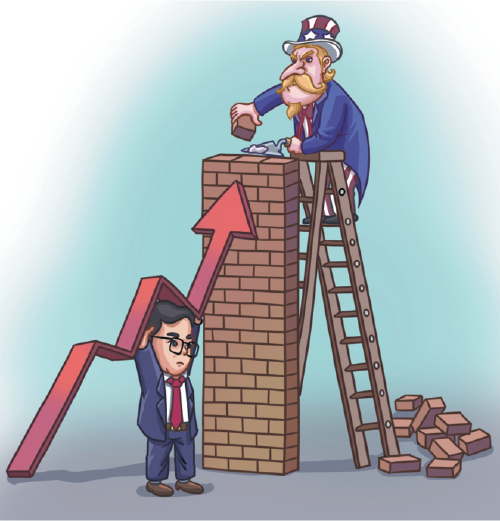
When China could compete on an equal footing with advanced countries in several industrial sectors, playing within the rules created by the United States and other Western countries, the Washington government initiated a series of measures to curb Chinese development. It is worth mentioning the pivot to Asia, the Trans-Pacific Partnership, the imposition of indiscriminate tariffs against "Made in China 2025"goods, the embargo on the sale of state-of-the-art semiconductors to China, the pressure put on third countries to avoid the presence of Huawei in their 5G networks and the proposed decoupling of China from industry chains.
Furthermore, the Washington government has torn up its liberal bible and maintains the principle of "America First". In addition to halting the activities of the World Trade Organization, it has initiated a series of industrial policies, such as reshoring, nearshoring, advanced manufacturing, biopharmaceuticals and biomanufacturing, the production of advanced chips, and renewable energy products. US actions are even damaging its relations with its European allies. It is worth remembering that when the United States began its industrial policies during the 2010 decade, the European Union's combined GDP was greater than that of the United States. In 2008, according to World Bank data, the EU GDP accounted for 113 percent of the US' GDP. In 2022, the European Union accounted for only 65 percent of the US' GDP. The principle of "America First" has alienated even its NATO partners.
Returning to the logic of the US discourse, it is worth noting that it has recently changed its discourse regarding China, seeking to ease the level of contention. The word "decoupling" has been replaced by the word "de-risking". The shift in tone began with Sullivan's speech mentioned above.
This change in discourse reflects the growing perception that the US economy cannot disengage from China without harming its own interests, whether in commercial or financial terms. This move also demonstrates the impossibility of the US imposing a policy of decoupling on its closest partners. Countries such as the United Kingdom, France, and Germany, among others, have their own interests to consider and will not adopt a policy that exclusively benefits the US.
Finally, it is worth emphasizing that political discourse can do much but can't do everything. While the hegemonic power tries to adjust its narrative to contain China, the world is moving toward a less centralized political and economic framework. In 2008, China accounted for 31 percent of the US' GDP. In 2020, it rose to over 70 percent in current US dollars. Change is part and parcel of the world, and nothing can stop it.


The author is a professor of international political economy at the Sao Paulo State University. The author contributed this article to China Watch, a think tank powered by China Daily.
Contact the editor at editor@chinawatch.cn.