Growing public participation in 'carbon inclusion' empowers China's green development







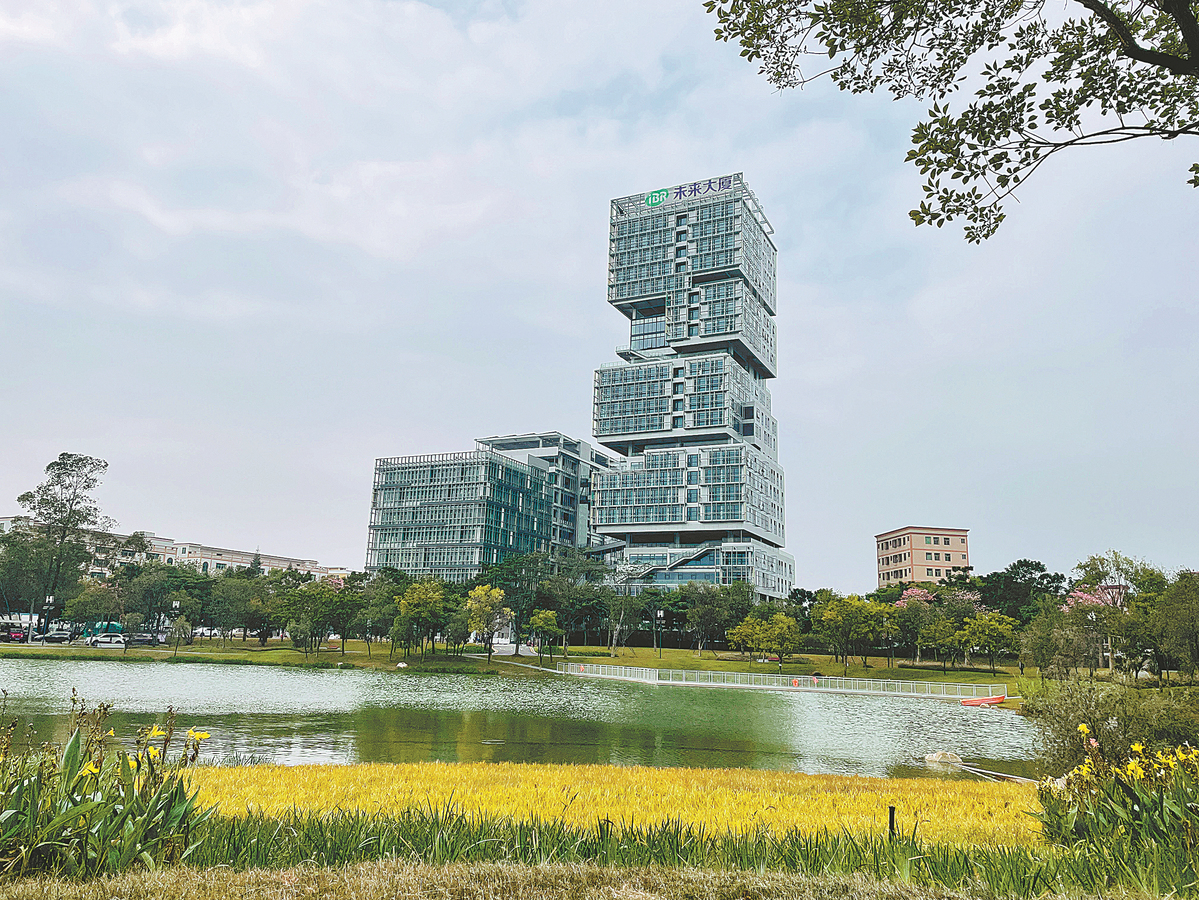
SHENZHEN - Ms Liu, living in Shenzhen of South China's Guangdong province, has adopted a "green" lifestyle to reduce her carbon footprint. By setting her air conditioner to 26 degrees Celsius and utilizing energy-saving modes on electrical appliances, her family managed to cut down 620 kg of carbon dioxide emissions from electricity consumption last year.
The details are shown on an app on her mobile phone, which not only facilitates electricity bill payments but also displays information about her household's daily carbon emission reduction, cumulative carbon reduction, and her ranking among all users. Liu has even earned the title of "carbon reduction expert" on the app due to her eco-conscious choices.
In Shenzhen, over a quarter of its power users, or around 805,000 households, have signed up for carbon accounts on the app, which was jointly launched by the Shenzhen municipal bureau of ecological environment, the Shenzhen power supply bureau under China Southern Power Grid and China Emissions Exchange (Shenzhen) in 2022.
The platform has recorded a cumulative carbon emission reduction of about 12,000 tons, equivalent to approximately 4,516 tons of standard coal.
Liu is part of a growing population in China participating in "carbon inclusion," an incentive mechanism that values environmentally-friendly practices of the public, communities and micro, small and medium-sized enterprises in daily consumption.
Under this mechanism, the emission reduction generated by the low-carbon behavior of individuals and entities can be used to offset their own carbon emissions, participate in carbon trading or be converted into other more diversified incentives.
Since China has set ambitious goals of peaking its carbon dioxide emissions by 2030 and achieving carbon neutrality by 2060, the concept of green and low-carbon no longer solely applies to industrial emissions but encompasses various aspects of ordinary people's daily activities, such as consumption and transportation.
According to a review report on the development and practice of China's carbon inclusion released in February, the establishment of carbon-inclusive platforms and personal carbon accounts is expected to promote the green and low-carbon transformation on the consumption side in China.
Similar platforms have also emerged in many other cities. In Beijing, users of a WeChat mini program called "green season of life" can earn carbon credits by purchasing environmentally friendly household appliances and new energy vehicles and riding shared bicycles. These credits can be exchanged for rewards such as bike riding cards, movie vouchers, and parking coupons.
Shanghai resident Han Yifan exchanged his six-month carbon emission reduction points for an "exclusive green travel card," granting him three months of free rides on the city's buses, subways and ferries through the "Suishenxing" app.
Major commercial banks in China are actively developing individual carbon accounts, providing personalized services based on customers' carbon credit status.
Private enterprises such as JD.com and Meituan are also actively involved in the green initiative. In the first half of this year, the Meituan app offered personal carbon accounts for approximately 40 million active users of its shared bicycle service.
Experts believe that although individual contributions to carbon emission reduction may seem small, the collective actions of China's 1.4 billion population can have a significant impact.
Looking ahead, it is essential to explore the integration of carbon-inclusive emission reductions into the national carbon market, which will facilitate a linkage between individual carbon accounts and the government, manufacturers and financial enterprises, said Chang Jiwen, a researcher on resources and environmental policies with the Development Research Center of the State Council.
Chang added that this integration will transform individual carbon accounts into valuable green assets and establish an effective commercial model for carbon inclusion.