Japan threatens planet with radioactive water







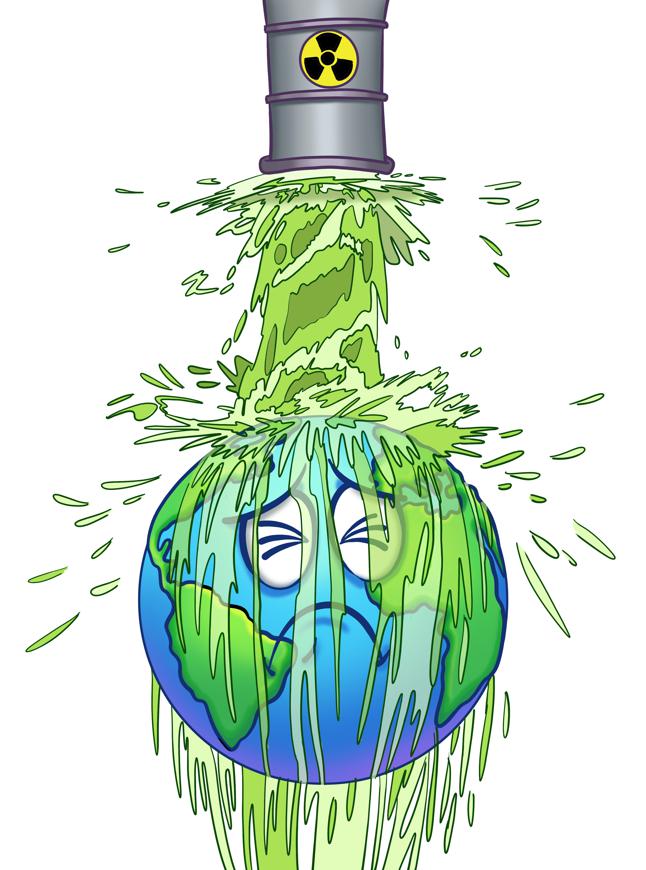
Editor's note: The Japanese government, disregarding the safety of its own citizens and people in neighboring countries, has decided to begin discharging nuclear-contaminated water from the damaged Fukushima Daiichi Nuclear Power Plant into the sea from Thursday. Five experts share their views on this issue with China Daily's Zhang Xi and Liu Jianna. Excerpts follow:
Japan has no right to contaminate oceans
According to Tokyo Electric Power Company (TEPCO), it plans to carry out the first round of release over 17 days to discharge 7,800 tons of the radioactive wastewater. The water is collected and partly recycled as cooling water after treatment, with the rest stored in around 1,000 tanks, which is close to 1.37-million-ton capacity.
Japan's decision to release the nuclear-contaminated water from the damaged Fukushima Daiichi Nuclear Power Plant into the Pacific Ocean from Thursday, to put it simply, is reprehensible. Its decision lacks scientific basis and transparency, and could cause untold damage to the marine environment and ecology and thus human health.
To begin with, the Japanese government has not released all the data on the scientific methods and technologies it used to treat the radioactive water to claim it's safe to be dumped into the sea. The sample data cannot prove the safety of all the treated water and can hardly be convincing. The scary fact is that the treated water still contains tritium and other radioactive isotopes such as cesium and strontium that could cause cancer if ingested.
But Japan is using the review report of the International Atomic Energy Agency on July 4 as a "green light" to its plan to discharge the radioactive water into the sea, claiming the treated water is harmless to marine life and humans. By doing so, Japan is trying to shift the responsibility to the IAEA which may cause the agency to bear legal liabilities for Japan's decision.
However, the IAEA report neither supports nor opposes Japan's radioactive water discharge plan; it only says that water discharge plan is the decision of the Japanese government. Also, the Advanced Liquid Processing System which Japan claims to have used to treat the radioactive water cannot remove all the nuclides, which means the radioactive water will contaminate marine life thereby affecting Japan's food exports.
The release of the nuclear-contaminated water into the sea is a threat to the marine environment and ecology, and will damage Japan's international image. And the amount of money Japan would need to spend on efforts to restore its international image will far exceed that required to solve the problem in an eco-friendly ways.
According to general international law and the provisions of the United Nations Convention on the Law of the Sea, Japan should take all possible measures to prevent polluting the marine environment, inform and consult countries that may be affected by its actions, assess and monitor the environmental impact of its actions, and cooperate with the international community to address any sea- or ocean-related problems.
Japan has no right to unilaterally change international law, and create trouble for the international community, especially its neighboring countries. Instead, it should listen to the opinions and suggestions of people both at home and abroad, and desist from contaminating the oceans.
Liu Jiangyong, a professor in the Department of International Relations, Tsinghua University