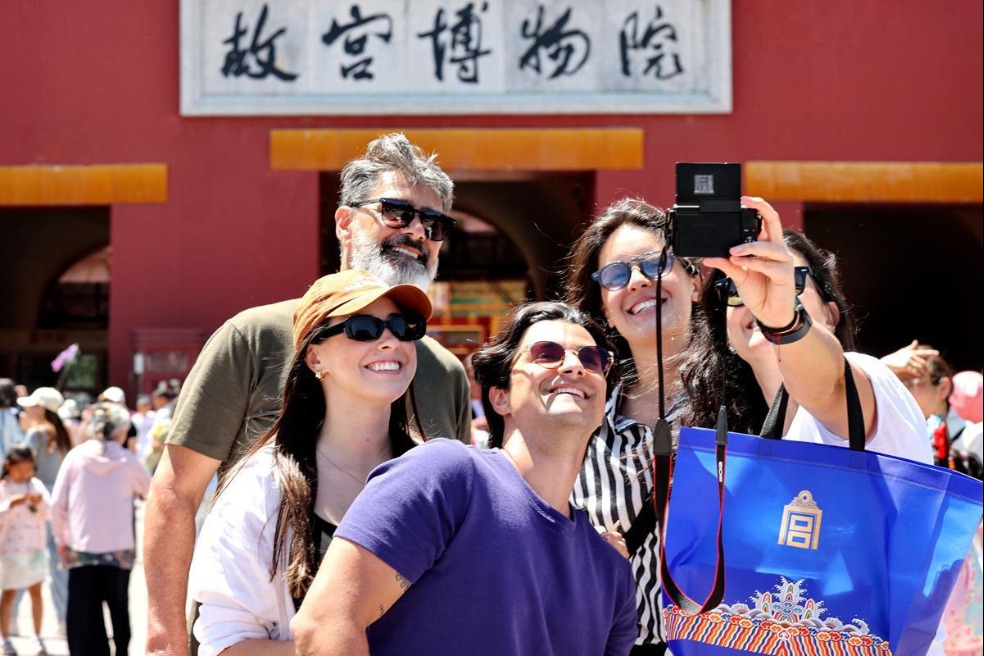
Highlighting local specialties can attract more tourists








The boom the tourism industry experienced during the eight-day Mid-Autumn Festival and National Day holiday will add new momentum to the recovery of the tourism and consumer markets.
Scenic spots were the major attraction for the tourists during the holiday, with the development of the scenic sites reflecting the competitiveness of the tourism industry.
Thanks to the overall sustainable development over the past decades, China's abundant natural and cultural tourist spots have attracted large amounts of investment and become a major pillar of the tourism industry.
Proper maintenance of tourist attractions and improvement of public utilities in and around them are essential to meeting the ever-growing needs of and drawing more tourists, and boosting the growth of the local tourism industry and economy. However, the development of scenic spots in many areas has not been up to the mark. The other problems include homogenization of the cultural and local products on offer in shops in and around tourist spots, the profit-oriented business model of local businesses, lack of quality services and businesslike atmosphere at tourist spots.
Therefore, efforts should be made to promote the long-term, high-quality development of tourist destinations in order to promote their growth. Although tourist spots cannot adopt the same or universal standard business and service model due to the difference in their locations, topography, weather, local conditions and resources, they can still follow four principles to chart their unique development paths.
First, natural and cultural tourist spots should sell only local specialties to travelers. And maintenance officials should embellish public utilities and structures in and around the tourist spots with local features and architectural design, and provide unique products for consumption for tourists.
Second, the tourism industry should take measures to enhance tourists' experience, because by providing tourists with high-quality, unique services, they will not only enhance the experience of tourists, but also boost their earnings and thus contribute more to the local economy. The idea is to respect and meet the diverse demands of tourists.
Third, developers should focus more on planning and design of scenic spots in the early phase of construction of facilities. They need to understand tourists' consumption habits in advance, promote innovation and pay greater attention to the needs and demands of their target consumers so as to lay a solid foundation for the development of scenic spots.
And fourth, high-tech facilities should be introduced at tourist spots to accelerate the development of tourist attractions. More specifically, the special features of scenic spots should be reflected in the services, cultural products and the local landscape.
Specialty services at tourist attractions include catering, hotels, transportation, consumption, travel and entertainment. For example, local catering services should be improved to meet the diversified demands of tourists, and electric vehicles should be used at scenic spots to reduce carbon emissions. And tourism-related information should be easily available to make tourist movement more convenient and security systems strengthened to ensure tourists feel safe.
In ancient towns, for example, shops should sell cultural products with strong local features, and local government and tourism officials should take measures to preserve both tangible and intangible cultural heritages. Also, local governments should implement favorable policies to promote the growth of local businesses and the local economy.
Besides, since traditional static exhibits hardly attract tourists anymore, high-tech facilities should be introduced to museums and galleries to help tourists better understand local history and culture, and provide an immersive experience for visitors.
Also, with the integration of culture and tourism, cultural products should reflect local features to attract tourists. Fortunately, high-quality cultural products sold in many museums have been welcomed by tourists in recent years. In other words, tourist attractions should provide diversified facilities, products and services to attract more tourists and boost their own development.
The author is director of the Tourism Research Center, Chinese Academy of Social Sciences.
The views don't necessarily reflect those of China Daily.