Stable RMB conducive to high quality development







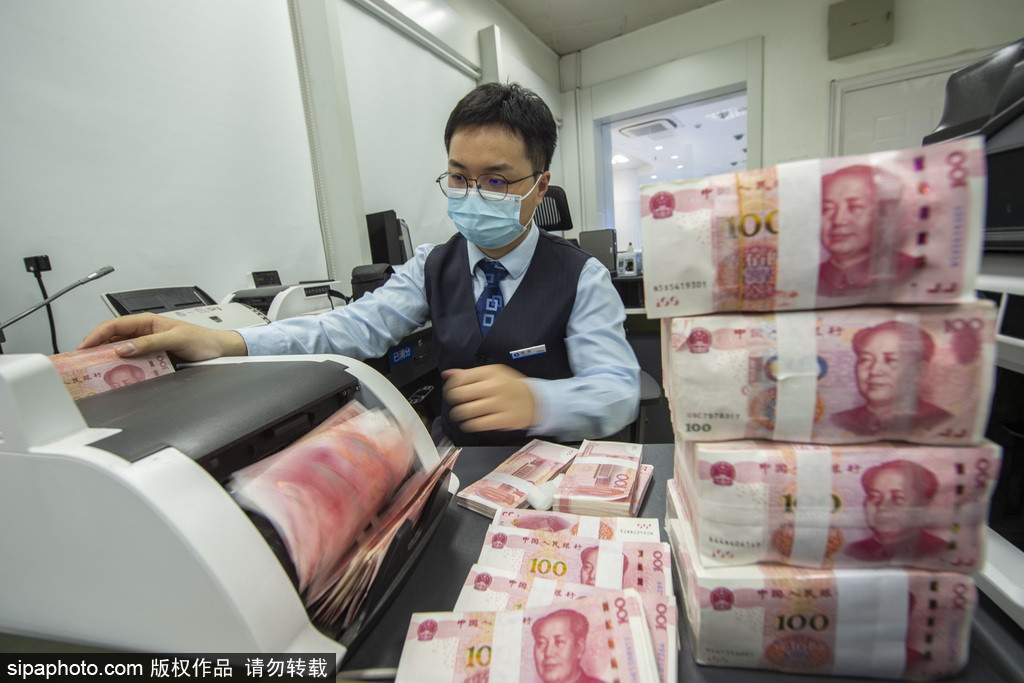
To build a modern socialist country in all respects, China has been pursuing high-quality development.
The rules and transparency of the renminbi's exchange rate formation mechanism have become an important guarantee for promoting high-quality development and high-level opening-up, as well as a key tool for China to promote the reform of the global governance system, uphold economic globalization and improve the well-being of the people.
To push for the foreign exchange system reform, China has made significant strides including helping improve the market-oriented mechanism of the renminbi's exchange rate and making the process even more transparent. The transformation from a dual-track system to a single-rate system in 1994, and milestone events such as the "July 21 Exchange Rate Reform" in 2005 and the "Aug 11 Exchange Rate Reform" in 2015, are all crucial steps in market-driven reforms.
Plus, dynamic policy adjustments and the nurturing of market mechanisms have led to a clear and transparent regulatory framework for the renminbi's mid-point rate against the US dollar.
Making the renminbi's exchange rate more transparent has facilitated the coordinated development of both domestic and global factors, and will promote high-level openness, which will be chiefly reflected in the following:
Making the renminbi's exchange rate more transparent has boosted the confidence of market participants. When market participants have a clear understanding of the factors influencing the exchange rate causing fluctuations in the rate, they are better equipped to assess risks and make informed investment and trading decisions.
For instance, in the face of significant challenges such as the China-US trade tensions, the three-year-long COVID-19 pandemic, and the turbulent international political and economic environments, the flexibility of the renminbi's exchange rate has allowed market participants to swiftly adapt to the changes. They can make timely adjustments and stabilize their expectations, underscoring the renminbi's resilience in the face of shocks and maintaining its fundamental stability.
The priorities of security and development are balanced. A transparent exchange rate mechanism helps in the early detection of potential financial risks. For micro-level participants such as businesses and investors, having access to accurate and timely exchange rate information allows for better evaluation of currency risks. This enables them to make informed decisions on cross-border transactions, investments, and risk mitigation measures. Simultaneously, it facilitates international trade and capital flows, while reducing vulnerabilities in the financial system.
For macro-level stakeholders, including the government and central bank, a transparent exchange rate mechanism paves the way for a more accurate assessment of the economic impact of exchange rate fluctuations. This, in turn, enables the adjustment of monetary policies and macroeconomic measures, which helps maintain economic stability and sustainable development.
A more transparent renminbi exchange rate supports China's cooperation and engagement with other countries and international organizations, further propelling financial openness and the internationalization of the renminbi. For instance, against the backdrop of a flawed international monetary system based on the US dollar and ongoing efforts to reshape the international financial landscape, the enhanced transparency of the renminbi's exchange rate can boost China's involvement in global governance reform.
Transparency of the renminbi's exchange rate also boosts China's international reputation and helps it counter a series of unfounded Western allegations.
The transparency and clarity of the renminbi's exchange rate have been instrumental in facilitating China's high-quality development and high-level opening-up. Through sustained and deepening reforms, China's foreign exchange market mechanisms have significantly improved. But certain international entities continue to turn blind to the achievements of China's foreign exchange system reform and market-driven development, while occasionally disparaging the transparency of the renminbi's exchange rate.
China's foreign exchange market has undergone progressive reforms, with the supply and demand factors increasingly influencing the determination of the exchange rate, with the fluctuations in the renminbi's exchange rate being primarily shaped by market dynamics, rather than government manipulation.
China possesses substantial foreign exchange reserves, which allows the People's Bank of China (the country's central bank) to maintain the stability of the renminbi's exchange rate. This makes market investors more confident about the Chinese currency's stability.
The renminbi's exchange rate is affected also by the global economic environment, including international trade dynamics and interest rate differentials. Thus, the fluctuations of the renminbi's exchange rate are mainly caused by the demand and supply in the market, and so-called "manipulation" by the Chinese government is a baseless accusation.
The renminbi's exchange rate serves as a vital link connecting domestic and international entities across the economic and financial sectors, making the foreign exchange market a critical domain for achieving a high-level of openness. In recent years, China's central bank has bolstered international communication efforts, disseminating information about the reforms and achievements of China's foreign exchange market.
These initiatives have enhanced global understanding of the transparency of the renminbi's exchange rate, elucidated China's commitment to reforming the foreign exchange market rules and regulations, and promoted high-level of openness. These efforts have dispelled misconceptions about China's exchange rate policies.
Moreover, through strengthened cooperation with other countries and regions, China's central bank has been instrumental in driving reforms and facilitating the improvement of the international monetary system.
The PBOC has also intensified collaboration with other countries, international organizations, and market regulatory bodies in the foreign exchange market. This cooperative approach facilitates information sharing and collectively promotes greater transparency and stability in the global foreign exchange market.
The author is vice-president of the Central University of Finance and Economics.
The views don't necessarily represent those of China Daily.