



Canada barking up wrong tree in AIIB case







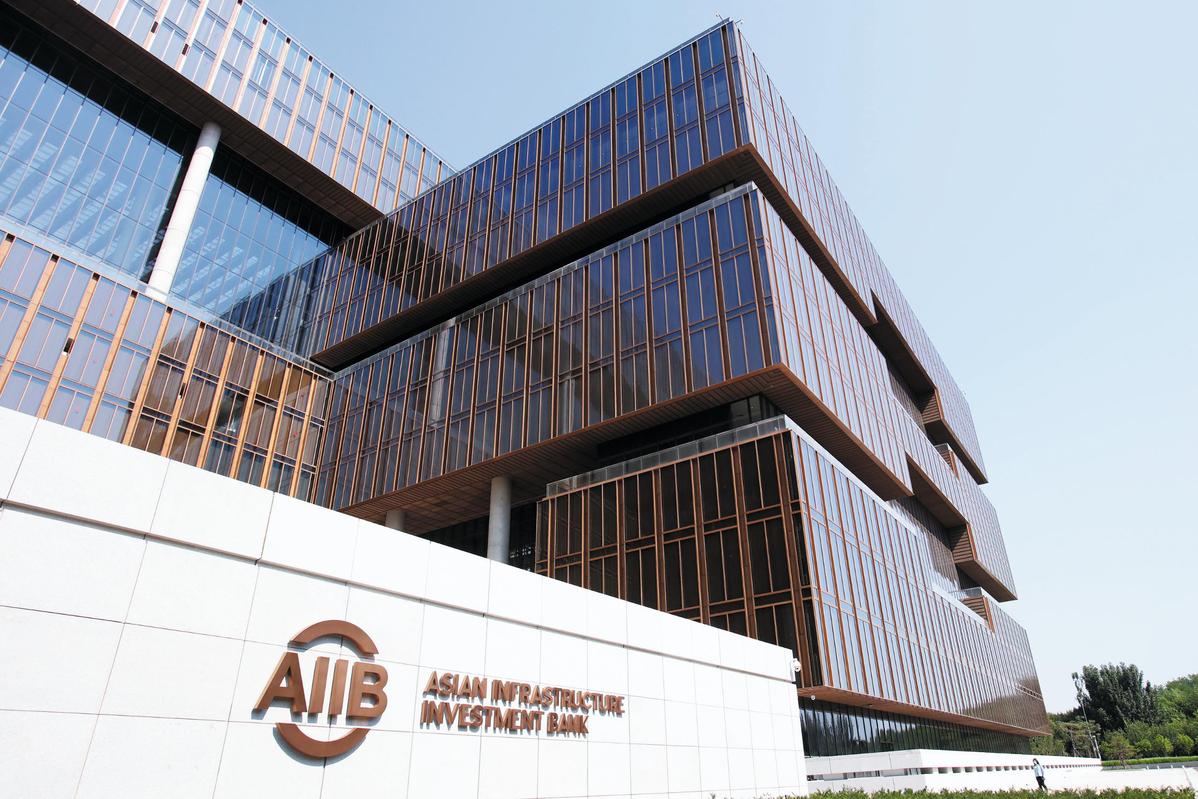
Canada has decided to broaden a probe into the Asian Infrastructure Investment Bank and indefinitely freeze its participation in the multilateral bank, according to a statement issued by the Canadian government on Dec 8.
Canada temporarily suspended its participation in the AIIB in June after a "whistleblower" claimed on the internet that some Communist Party of China members pull the strings at the bank. The claim, it seems, was driven by Canada's ideological concerns and its domestic politics.
Since then, the Canadian government has been conducting intergovernmental reviews of both the allegation and Canada's involvement in the AIIB, although the AIIB has refuted the allegation saying it is baseless. The AIIB has also welcomed Canada's reviews while initiating its own internal inquiry.
But the issue is now moving in another direction. Besides intergovernmental reviews, Canada has begun to discuss the issue with many other AIIB member states, and Canadian officials have discussed it with senior officials of international organizations such as the World Bank and the International Monetary Fund. From Canada's perspective, the fight is now to win over "friends" to support Canada's allegation, while from China's perspective, it's a fight to maintain the sanctity of law and truth, and to protect its reputation.
As a multilateral development bank, the AIIB's mission is to offer financing for infrastructure projects in Asia in a bid to bridge the financing gap created by the shortage of funds in other global lending institutions such as the IMF, the World Bank and the Asian Development Bank.
Since its establishment, the AIIB has been investing real resources to try and narrow the development deficit. To date, the AIIB has approved loans for 248 projects and financing of $48.48 billion. The number of AIIB members has grown to 109 after El Salvador, the Solomon Islands and Tanzania joined it in September, and its member states account for 81 percent of the world's population and 65 percent of global GDP.
That's why the bank's popularity has not lessened despite Canada temporarily freezing its participation in it. Some analysts say the AIIB is a competitor to the World Bank and helps diminish the West's political influence in the developing world.
However, over the past seven years, the AIIB has established its credibility as a responsible and accepted member of the multilateral development bank community by actively partnering with established multilateral development banks, such as the World Bank, the Asian Development Bank and the European Bank for Reconstruction and Development. The AIIB enjoyed an AAA rating by Fitch Ratings up to October. In light of Fitch's AAA rating of the AIIB, Canada's allegations sound hollow, especially because the AIIB has been setting new examples as a multilateral development bank with its high operational standards.
Curiously, Canada, as a United States ally, chose to review the AIIB issue despite China and the US both trying to stabilize relations amid strategic competition.
In the statement it has issued, the Canadian government has listed governance and management, environmental, social and corporate governance, and work culture as the key domains that require further review. One reason why Canada has done so is that Canada has special advantages in those domains, which it can use to forge the "prevailing" international narratives.
Geopolitical tensions are undermining the resolve for promoting multilateral cooperation. And Canada has chosen to not directly interact with China or to trust the findings of the AIIB's internal review, and instead rely more on its trusted partners to address its claims. Canada's decision to limit the lines of communication is condemnable. Plus, it should not have used a multilateral institution as a tool to gain advantage in geopolitical competition.
Multilateralism has its own rationale and importance. It means the willingness of sovereign states to agree on the cooperative structured measures to address common challenges. And China should not be criticized just because it follows a different political system and has been championing a different economic development model. After all, effective multilateralism needs unbiased balance.
The author is an associate professor at the National Institute of International Strategy, Chinese Academy of Social Sciences. The views don't necessarily reflect those of China Daily.
If you have a specific expertise, or would like to share your thought about our stories, then send us your writings at opinion@chinadaily.com.cn, and comment@chinadaily.com.cn.
















