Empower youths to bridge rural digital divide







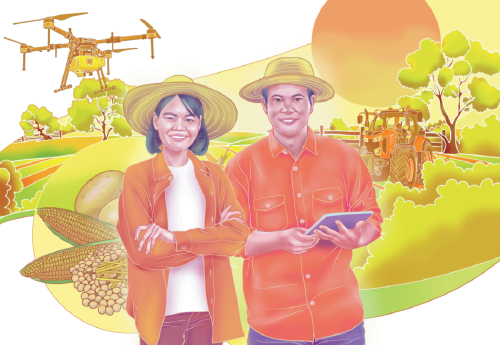
Safeguarding the livelihood of China's smallholder farmers, who account for 90 percent of the agricultural workforce, remains paramount for ensuring China's food security in the future. In recent years, online retail sales in rural China have surged from 180 billion yuan ($25.26 billion) in 2014 to 2.17 trillion yuan in 2022, a faster growth than the national average, aiding in poverty alleviation. Despite this, the disparity in agricultural development persists.
Despite a narrowing digital divide between the rural and urban youth, the benefits of technological advancements have not sufficiently permeated the agrifood system to profit smallholder farmers. Due to less opportunity for economic development in rural areas, more than 60 percent of rural youths aged 15-30 have left their homes to seek employment and better income in urban areas. This has left rural areas with an aging and vulnerable population that engages in limited economic activity, a situation that further exacerbates the urban-rural inequality.
However, the situation is not all that gloomy. I have also observed how a significant number of young and digitally adept farmers and operators along the value chains are reshaping traditional agriculture in China by leveraging innovative technologies. According to the white paper, Youth of China in the New Era (2022), by 2021 about 470,000 young people were involved in implementing China's Rural Revitalization Strategy at the grassroots level, including the agricultural sector. Platforms like Pinduoduo have helped these youth farmers to connect with diverse markets and engage with a broader consumer base.
I am optimistic that these ambitious youths can bridge the gap in agricultural development by playing a pivotal role in digitally transforming small agrifood systems. To enable us to harness their full potential, we must equip rural youths who are often constrained by access to land, resources, finance, technology and information among other things.
Toward this goal, the International Fund for Agricultural Development places young people at the forefront of its development actions globally and will continue to ensure their access to resources and services and increase their representation in decision-making roles through its joint programs undertaken in line with governments. For example, in China, the Sustaining Poverty Reduction through Agribusiness Development in South Shaanxi project has provided funds and resources for rural youths to start up e-commerce businesses. Many of the rural youths returned to their hometown after years of working in urban areas as they found untapped potential in their hometown's agricultural development. These opportunities ranged from utilizing digital farming techniques to selling agricultural products on e-commerce platforms.
Digital empowerment of youths must happen along with a concerted effort to promote digital literacy among young women and those with disabilities, groups that are disproportionately disadvantaged compared to their urban counterparts. We must recognize their individual agencies and enhance their skills with digital technologies. For instance, the IFAD is collaborating with UN women in the Hunan Rural Revitalization Demonstration Project, to provide entrepreneurship and e-commerce classes for young rural mothers. Similarly, in Shaanxi province, IFAD invested in local kiwi growers who have disabilities and enhanced their multimedia production and e-commerce skills.
It is a shared view that the modernization of agriculture to benefit the over 1.4 billion population is a key part of the overall Chinese modernization process. Agricultural modernization will, however, foster innovation and drive technological advancement. It will also open new arenas for rural development and job creation, diversifying income sources and enhancing the shared prosperity agenda. This is where the youth thrive, and IFAD's projects have demonstrated that. I therefore urge all stakeholders in China to invest in rural youths, empowering them to modernize local agriculture and reduce urban-rural disparities. Leveraging the potential of youth and digital technologies will push us closer toward achieving the Sustainable Development Goals of eradicating hunger and poverty by 2030.
The author is IFAD's China country director and representative of IFAD Multi Country Office. The views don't necessarily represent those of China Daily.
If you have a specific expertise, or would like to share your thought about our stories, then send us your writings at opinion@chinadaily.com.cn, and comment@chinadaily.com.cn.