US measures put tech ties under strain







Washington's containment attempts raise concerns over stifled innovation
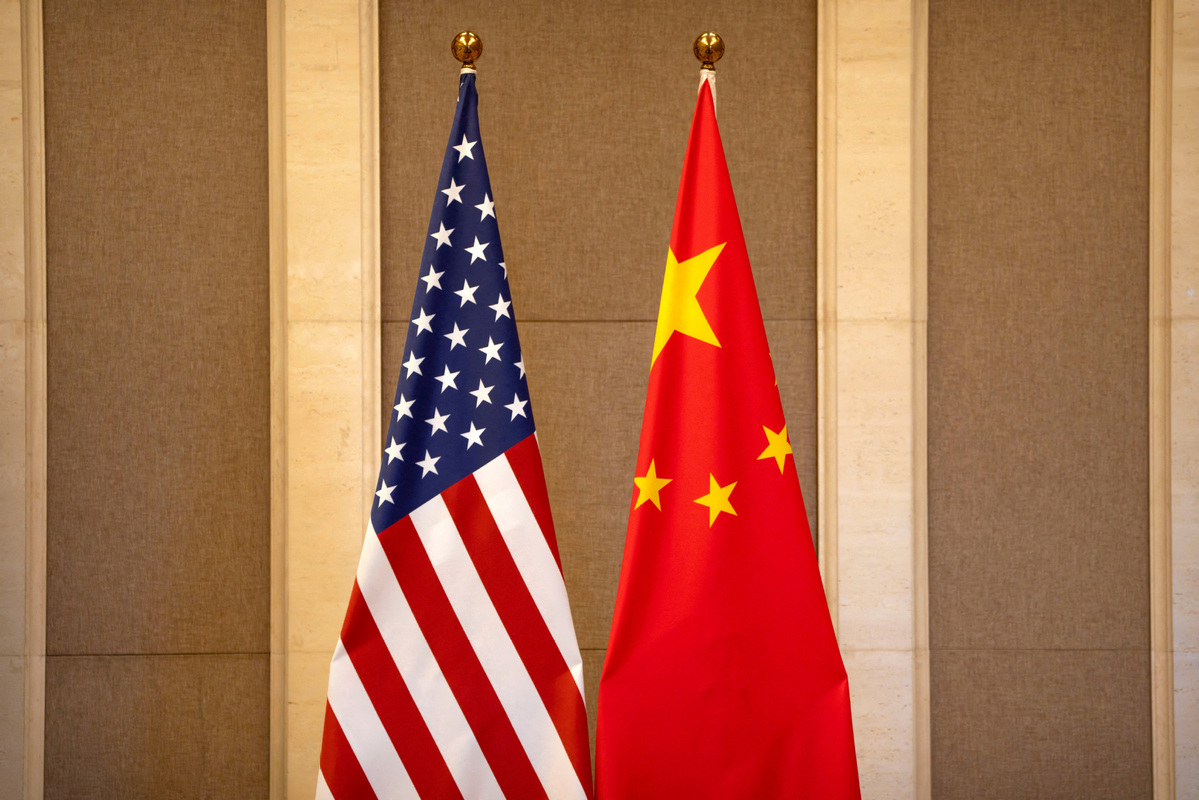
As 2023 draws to a close, the US-China technology relationship remains strained. This year witnessed intensified efforts by the United States to curb China's technological rise, deepening concerns over stifled innovation and a fragmented tech ecosystem.
The centerpiece of the US containment strategy is a series of measures aimed at curtailing China's technological advancements, including export controls and restrictions on Chinese tech firms, to target critical technologies like semiconductors, artificial intelligence and quantum computing.
The US has long sought to limit the development of China's semiconductor industry by placing Chinese companies on a blacklist. In October, the US Commerce Department expanded export controls to further restrict China's access to high-end chips and the equipment to manufacture them.
The goal, Commerce Secretary Gina Raimondo said, was to prevent China from getting "advanced semiconductors that could fuel breakthroughs in artificial intelligence and sophisticated computers".
"China represents at least 30 percent of the market for American chips and semiconductor-equipment companies. With escalated export controls, the China market becomes lost sales for American companies. Lost sales mean unrealized revenue that could have been reinvested in R&D to develop new innovations," said George Koo, a retired international business adviser in Silicon Valley.
"Thus, the American companies experience losses from opportunity costs due to the export restrictions. Such losses are irretrievable," he said.
The toll on US chip companies is evident in the data. The restrictions led to a drop in US semiconductor exports by 50.7 percent in the first eight months of 2023 relative to the same period in 2022, down to $3.1 billion from $6.4 billion, according to an annual report by the US-China Economic and Security Review Commission.
The disruptions also have affected research and development collaborations between the two countries. The US-China Science and Technology Agreement, which was signed in 1979 and has been renewed routinely since, became the subject of controversy this year amid a growing push to cut research ties with China.
Scientists warned that cutting ties with China would risk slowing US research progress. Under pressure, the US announced a six-month extension of the agreement just before it was to lapse in late August.
The US also ramped up scrutiny of Chinese tech companies such as Huawei and TikTok, citing "national security" and "data privacy" concerns. Despite the sweeping US sanctions, Huawei came back into the smartphone market with a new phone powered by an advanced chip.
Fragmented ecosystem
Decoupling has raised concerns over the fragmentation of the global tech ecosystem. Technologies like 5G, artificial intelligence, and semiconductor manufacturing involve a complex web of collaborations.
"Decoupling is inherently inefficient because such a strategy mandates the duplication of supply chains and replication of suppliers," said Koo.
"Heretofore, a global supply chain is optimal, and every stop on the chain is the most efficient and cost-effective," he said. "Forcing duplication means creating new parts and component suppliers where supporting infrastructure does not exist. Everything will cost more, and quality will suffer."
Industry experts also warned that the isolationist approach threatens the synergies that have driven innovation and progress in these fields. This fragmentation not only hinders the efficient development of cutting-edge technologies but also diminishes the potential for shared global solutions to common challenges.