Cultural industry can better tell China story







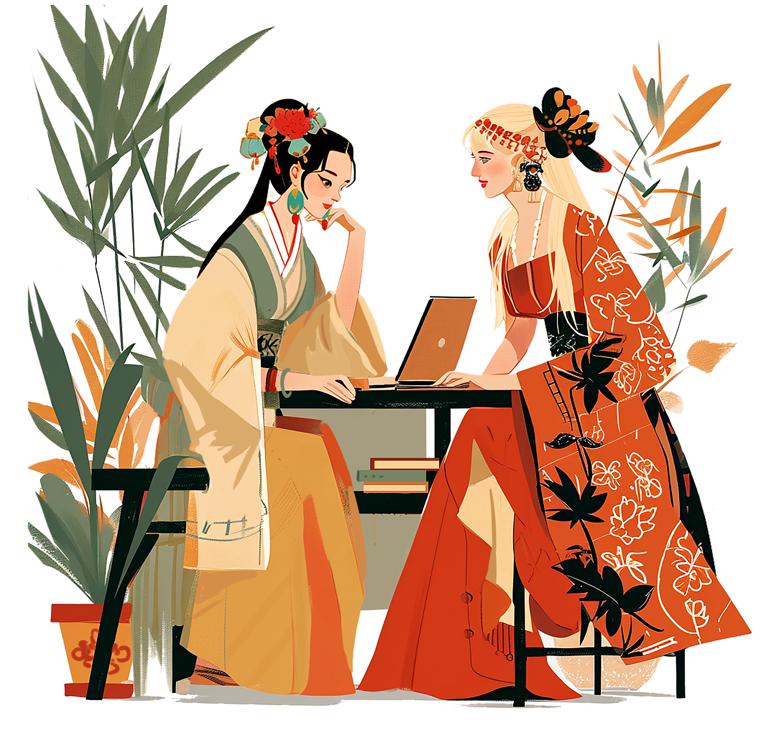
Editor's note: Chinese culture has a long history and is different from the cultures of other countries. In recent years, with rapid economic development and increasing trade and people-to-people exchanges, Chinese culture has caught the imagination of people in Western countries. Four experts share their views on the issue with China Daily.
China's cultural industry has unprecedented opportunities to advance its development thanks to the country's high-quality economic development, the evolution of the principal contradiction between unbalanced and inadequate development and the people's ever-growing needs for a better life, and the gradual advancement of reform and opening-up.
To begin with, the quality and competitiveness of China's cultural industry have improved, developing from spontaneous movement to proactive promotion to make remarkable achievements over the past decades.
Also, the scale of the cultural industry has been expanding. National Bureau of Statistics data show that the added value of China's national cultural and related industries in 2022 was 5.37 trillion yuan ($753.5 billion), accounting for 4.46 percent of GDP — the figure was only 1.10 trillion yuan in 2010. According to a nationwide survey, the operating revenue of 69,000 cultural and related industrial enterprises above designated size in 2022 was 12.18 trillion yuan, up 0.9 percent year-on-year. The quality of the cultural sector, too, has been improving.
Besides, new types of cultural industries including digital publishing, entertainment drones and wearable devices have seen double-digit growth. Plus, the country is increasing cultural exports and adopting a more open approach to culture to promote cultural trade and investment.
It is clear therefore that the cultural industry has new development opportunities, with booming consumption having the potential to drive the supply of high-quality cultural products. The evolved principal contradiction in Chinese society also reflects the people's demand for better cultural products and services. High-quality development has boosted consumption demand as people are spending more on education, and cultural and entertainment products and services.
In particular, people's demand for cultural and tourism products are increasing significantly. As such, industries need to undergo structural reform to be able to meet people's new demands for cultural and tourism products and services.
As an economy achieves higher-quality development, it tends to shift its focus from primary to secondary and tertiary sectors. Accordingly, the industrial structure, too, shifts its focus to the service sector.
According to statistical bulletins of the Ministry of Human Resources and Social Security, at the end of 2022, the number of people employed in China was 733.51 million. With 459.31 million employed people, urban areas accounted for 62.6 percent of the total. Notably, 24.1 percent of the people were employed in the primary sector, 28.8 percent in the secondary sector and 47.1 percent in the tertiary sector. In 2012, the secondary and tertiary sectors accounted for 30.3 percent and 36.1 percent, respectively, of the total workforce, reflecting the country's shifting emphasis from the primary and secondary sectors to the tertiary sector, which is becoming a major driver of economic growth.
And as part of the tertiary sector, the cultural industry can promote common prosperity and the well-being of the people. In fact, the development of the cultural industry can meet the intellectual and cultural needs of the people, as well as provide flexible employment opportunities for the people, with the digital transformation prompting young people to start their own business.
As a matter of fact, China's cultural industry can now act as a bridge for cultural exchanges. Normally, a country with a higher-quality and unique cultural industry has stronger cultural influence and competitiveness in the global markets.
It should be mentioned here that China's cultural industry has been helping boost cultural exports in recent years, with Chinese cultural products becoming an important part of the country's cultural trade, which in 2022 reached $220 billion, up about 11 percent year-on-year, according to the Ministry of Commerce.
China's export of TV dramas, internet literature, audio and video clips, and other creative products are growing at a fast pace, with high-quality cultural products and services better meeting society's diversified demands. According to the China Game Industry Report, the country's actual sales revenue from self-developed games in the overseas market in 2022 totaled $17.3 billion.
Besides, China Writers Association report showed that more than 10,000 Chinese internet literature works had been released overseas by 2020, becoming the biggest source of intellectual property for Chinese cultural works introduced abroad. The works included more than 4,000 authorized and printed books and over 3,000 online translation works, while related websites and apps have attracted more than 100 million subscribers from across the world, according to the report.
And China-based new media platforms, along with competitive cultural enterprises and products, can better spread Chinese culture and stories abroad, as their tailor-made contents can meet the demand of foreign users, and make China's voice heard on the global stage.

The author is a professor of culture at the National Academy of Governance.
The views don't necessarily reflect those of China Daily.