Making Huabobo for Chinese Lunar New Year







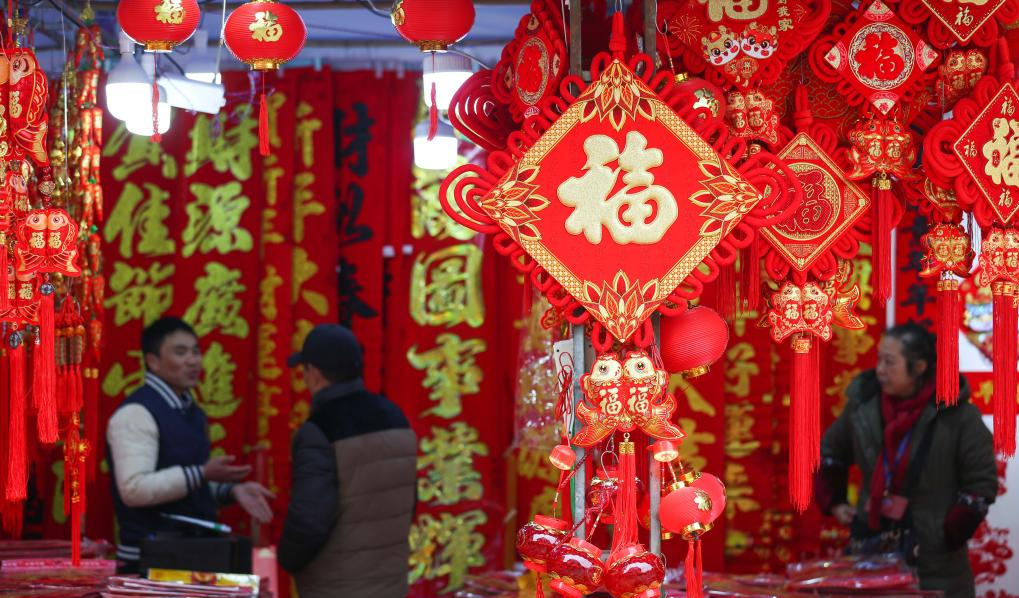
As the Spring Festival approaches, the atmosphere of the new year is getting stronger all over the country. The people are busy buying special purchases and preparing food for the celebration. In my hometown Weihai, a city of Shandong province, one of the New Year's customs is to steam Huabobo. During the Spring Festival, every family in Weihai makes or orders Huabobo to welcome the coming year. In Chinese, the word "steam" implies that the days in the future will be hopeful and thriving. Therefore, the manufacturing process and appearance of Huabobo all carry the joy of the Spring Festival and wishes for a better year. Huabobo is made of flour with different pure natural pigments. It can be kneaded into vivid people in plenty of poses and with multitudinous expressions, lifelike animals of diverse species, or beautiful flowers and trees with sole characters via utilizing simple instruments. To ensure a good taste, a proper amount of milk, eggs and sugar are added to the dough. To ensure nutritive value, only high-quality flour and fresh fruits and vegetables can be used without any added colorants when making it. To complete particular shapes, the skills of kneading the dough are highly required because the dough's hardness or softness will influence the shapes. The entire process includes seven steps: making, leavening, kneading, shaping, carving, steaming and coloring. Many tools are utilized to make it more exquisite, like knives, scissors and brushes. The making process is not only cooking but also an artistic creation, providing an opportunity for family members to enjoy the warmth and happiness of reunification with their relatives.
As a provincial intangible cultural heritage of Shandong, Huabobo enjoys a history of more than three hundred years. In the past, the laboring people only dared to steam buns with white flour during the Spring Festival, making it become a fixed ritual, which was regarded as a reward to people who toiled laboriously for the whole year. After the reform and opening up, people's living standards have continued to improve with material becoming abundant. Wheat flour is no longer a luxury for the Chinese people, so they have more energy and interest in making their Huabobo more delicate. Hence, Huabobo becomes bigger and more varied in design, gradually becoming an indispensable part of celebrating the Spring Festival. At the same time, this cultural heritage left by our ancestors grants deep emotional connections and a new outlet for economic development. In recent years, Weihai has taken a series of measures to promote the standardized operation and high-quality development of the Huabobo industry, such as constructing a Huabobo Incubation Industrial Park and cultivating benchmark enterprises. These measures have provided residents with employment opportunities and opened up new employment prospects. The cultural value and economic value of "Huabobo" bring a strong sense of felicity to the residents of Weihai.
In addition, as the trend of globalization accelerates, cultural confidence has a great impact across the country. The people of Weihai are increasingly attaching importance to the cultural significance of Huabobo and use them to pray for blessings and for mourning in festivals, weddings, funerals and other events. In recent years, the industry chain of Huabobo has become more mature, and its exquisite and varied designs have attracted many people overseas. To expand its sales, SF Express in Weihai has tackled the customs clearance process in advance, allowing Huabobo to be received in just 48 hours by taking international flights for the first time. The measure allows foreign friends to taste this delicacy and can comfort the homesickness of the Chinese people overseas to some extent. This cultural product has been regarded as a conspicuous city card of Weihai. Huabobo shows the cultural deposits of Weihai and highlights the overall prosperity of the Chinese culture for the past five thousand years.
The author is Wang Yihan from Shandong University.
The views do not necessarily reflect those of China Daily.
If you have a specific expertise, or would like to share your thought about our stories, then send us your writings at opinion@chinadaily.com.cn, and comment@chinadaily.com.cn.