Water conservancy, instead of vanity projects, will boost food security







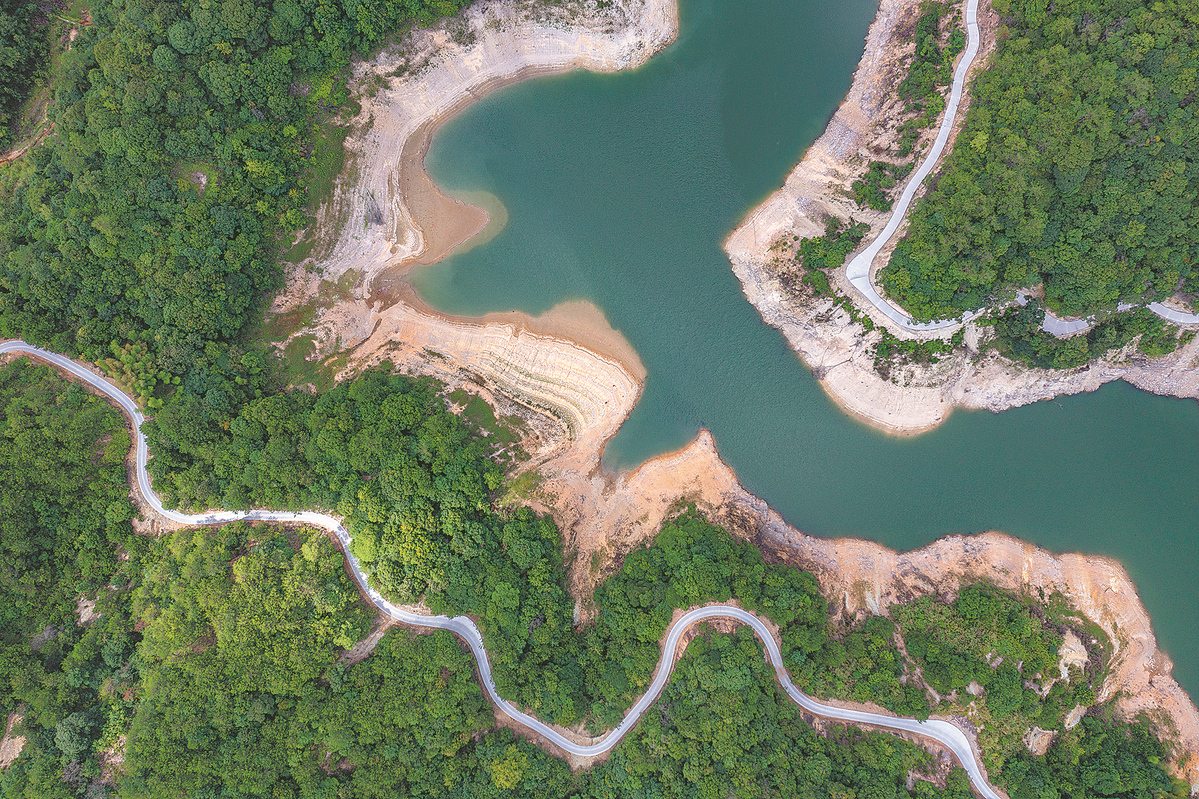
The Ministry of Water Resources recently said the country invested over 1.19 trillion yuan ($165.44 billion) in water conservancy projects last year. The figure, a new high, was 10.1 percent more than the previous year.
The double-digit increase is remarkable, especially given a slowing national economy and budget cuts for most other ministries due to the huge expenditure on COVID-19 prevention and control measures in the previous three years. The increase in investment also shows the importance the central authorities attach to water conservancy — an issue that concerns not only the livelihoods of the people but also food security.
China's 5,000-year history is also a history of fighting against floods and droughts. Every Chinese national is familiar with the legend of Dayu trying to divert water from a river to control floods. And the Chinese people are grateful to Li Bing, a local official in Chengdu who designed and helped build the Dujiangyan irrigation and flood control system over 2,000 years ago. The irrigation and flood control system is still operational, benefiting millions of local farmers even today.
Water conservancy usually refers to efforts to control floods, provide irrigation, supply water to households, industries and other establishments, generating hydropower and preserving water bodies.
Since the founding of the People's Republic of China about 75 years ago, more than 98,000 reservoirs of different sizes have been built in the country. In the 1950s, top Chinese leaders spearheaded the water conservancy efforts by working with local workers and farmers to build the Shisanling Reservoir in the suburbs of Beijing.
With older generation leaders laying a solid foundation for water conservancy, a big part of the present investment today is used to strengthen the existing dams — most of which are at least 50 years old and need repair. Last year, officials inspected and strengthened more than 10,000 reservoirs. As a result, not a single dam collapsed, according to the Ministry of Water Resources.
Besides, the investments have boosted water security in rural areas, where the more than 6.78 million water supply projects that have been completed are capable of providing clean water to 870 million people. Residents of more than 90 percent of China's villages now get tap water, with the water supply projects not only providing villagers with clean water but also enabling them to develop local food processing industries and thus increase their incomes as part of the rural vitalization program.
The rising investments in water conservancy projects have helped China increase the total area of irrigated farmlands — by the end of last year, China boasted 1.05 billion mu (70.33 million hectares) of irrigated land, the highest in the world. Making up 55 percent of the country's farmlands, the irrigated farmlands contribute 77 percent of China's total crop output and over 90 percent of cash crop such as vegetables and fruits.
China's goal is to gradually increase its irrigated land to a level that would ensure food security. China feeds nearly 20 percent of the world's population with just 9 percent of the world's cultivable land, as it has made "holding the rice bowl solidly in our own hands" its strategic food security target.
The increasing investments in water conservancy projects have also helped China to build three water diversion projects that channel water from water-rich South China to drought-prone North China. Two of the projects have been completed, and the third is under construction. Costing billions of yuan each and taking more than a decade to build, the projects will boost China's development in the long run.
Continuously increasing investments in water conservancy projects remains a challenge. The lack of direct economic returns — even if there are such returns, they take time to realize — makes water conservancy projects less attractive to many investors. No wonder central government funds make up about half of the total investment in water conservancy with the rest coming from local governments.
Some officials invest in office buildings and new stadiums instead of water conservancy projects whose economic returns they may not see in their life time. Therefore, reins should be tightened on such officials and local governments through legislation and strict central orders to make water conservancy one of their priorities, as it is for the central authorities.
kangbing@chinadaily.com.cn
The author is former deputy editor-in-chief of China Daily.