


Museums in rural China preserve culture as nation rapidly modernizes







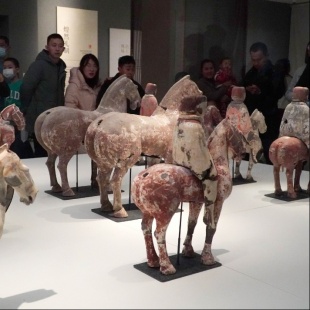
Museums are usually associated with gigantic buildings, eye-catching spotlights and a massive number of collections in bustling downtown areas. However, many museums demonstrating the unique local culture can now be found in China's vast rural areas.
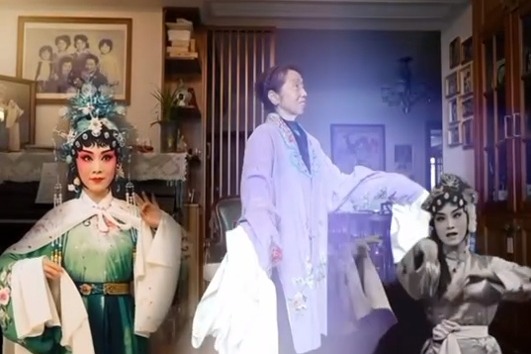
Located near a wide stretch of cornfields in Xinjia village is a museum focusing on Mahu Opera, a traditional art of the Manchu ethnic group in Northeast China.
Developed on a site formerly used as a primary school, this museum has five exhibition rooms with nearly 2,000 objects on display, including manuscripts, masks, costumes, instruments and books, most of which were donated by Wang Songlin, a local inheritor of intangible cultural heritage.
"By exhibiting them in the village, I hope to let more people know about this fading ancient form of art originating in the region, while also helping boost the aesthetic interest of more farmers," said Wang.
Besides cultural artifacts related to Mahu Opera, other old objects in the museum collected from the local populace, such as traditional farming implements, also reflect the history of this village situated in Shuangyang district in the city of Changchun, Northeast China's Jilin province.
"I never thought these obsolete items could be utilized. If not in the museum, they may have been discarded already," said a villager in Xinjia.
In Xinjia village, with a population of only about 2,800, there are now five museums built near local dwellings.
Museums not only function as cultural centers for villagers in rural regions, helping them know more about the past and record local history, but can also encourage tourists from cities to visit such regions.
"Through the construction of museums, we hope to promote the development of cultural tourism in our village. We aim to deliver a better living environment and also higher incomes to villagers," said Sun Ying, Party chief of Xinjia village.
Shuangyang District, with more than 300 years of history in the field of deer breeding, has a "sika deer museum." Wandering through the 7,200-square-meter building, people can learn in detail about this local history and tradition of raising deer, and its industry development process.
"We intend to preserve the cultural roots of Shuangyang and let people know about its splendid civilization. People here have gone through hardships in developing the deer industry, and we need to pass on this spirit to our future generations through the museum," said Lu Junsen, a founder of the museum.
The Mahu Opera and sika deer museums are among the achievements of a project of rural museum construction in Jilin province, which was initiated in 2016. So far, 91 museums have been built in rural areas in the province.
In 2021, China started to develop Jilin, Zhejiang and Shandong into pilot provinces for constructing rural museums.
East China's Zhejiang province issued a guideline for the construction of rural museums in April 2022. It provides standards for rural museum construction, operation and management, and also calls for cultural heritage administrative departments and state-owned museums to strengthen management and support for the construction of rural museums.
According to the guideline, Zhejiang plans to build 1,000 rural museums from 2021 to 2025. As of Sept. 30, 2023, a total of 692 rural museums had been built in the province, said the provincial cultural heritage administration.
While modernizing its rural regions, China is also seeking solutions to preserve the distinct history and vibrant culture of different regions, with the building of rural museums being an important part of this strategy.
Rural museums, integrated into the daily lives of rural residents, provide a space for leisure and entertainment, and can help enhance understanding of local history and identity, said Hao Dayong, director of Shuangyang District's cultural heritage administration.