Putting diversity to work







Yunnan pioneers an inspiring path toward sustainable development
Yunnan province, a jewel nestled in Southwest China, is a place I have called home since 2013. My journey to this unique part of the world began when I was posted to Beijing as the ambassador of Belgium. It was in 2010 that I decided to retire in Yunnan, captivated by its unparalleled beauty and diversity. This decision stemmed from a profound appreciation for a region that, to me, represents the essence of diversity within China and across the globe.
Most people outside China hold the misconception that the country is homogeneous. However, this couldn't be further from the truth. Among China's many provinces, Yunnan, which covers an area of approximately 394,100 square kilometers, stands out as a beacon of diversity. France spans 551,700 sq km, and in many ways, I consider France and Yunnan to bear similar significance to their respective regions; as both are champions of diversity.
Traveling through Yunnan, one experiences a dramatic shift in landscapes and climates. The south boasts elephants, tropical weather, and the Lancang River. Venture north, and you find yourself amid the Tibetan highlands. The province's terrain varies wildly in between, from lush valleys to towering mountains, placing Yunnan at the pinnacle of global biodiversity. This natural diversity is mirrored by the human mosaic that inhabits the region. Yunnan is home to 25 ethnic groups, most of which speak their own languages. The Yunnan language differs from standard Mandarin to a point that Beijing visitors barely understand what is said. This Yunnan language is reflected in a mosaic of local languages across the province. Minority ethnic groups make up 33.12 percent of Yunnan's population, and they all have their distinct languages. Yunnan is a vibrant tapestry of cultures, languages and traditions. The Yi people, constituting 11 percent of the population, are among the largest of these well-protected minority groups.
I am a Belgian French speaker, and we are very close to France and its unique culture. Yunnan and France share not only a similarity in terms of their diverse landscapes but also in population dynamics. With Yunnan hosting slightly more than 47 million inhabitants and France around 68.5 million, both regions have a relatively low density of approximately 120 residents per sq km. Both have a lot of empty spaces too. These parallels draw me closer to Yunnan. Yunnan also reminds me of Africa, where I was born. But this is the topic for another time.
France and Yunnan also have a special history which stems back to the French colonization of Indochina. This is part of China's colonial history. The railway from Hanoi to Kunming built by the French heralded the destiny of Kunming as the gateway to China for Southeast Asia.
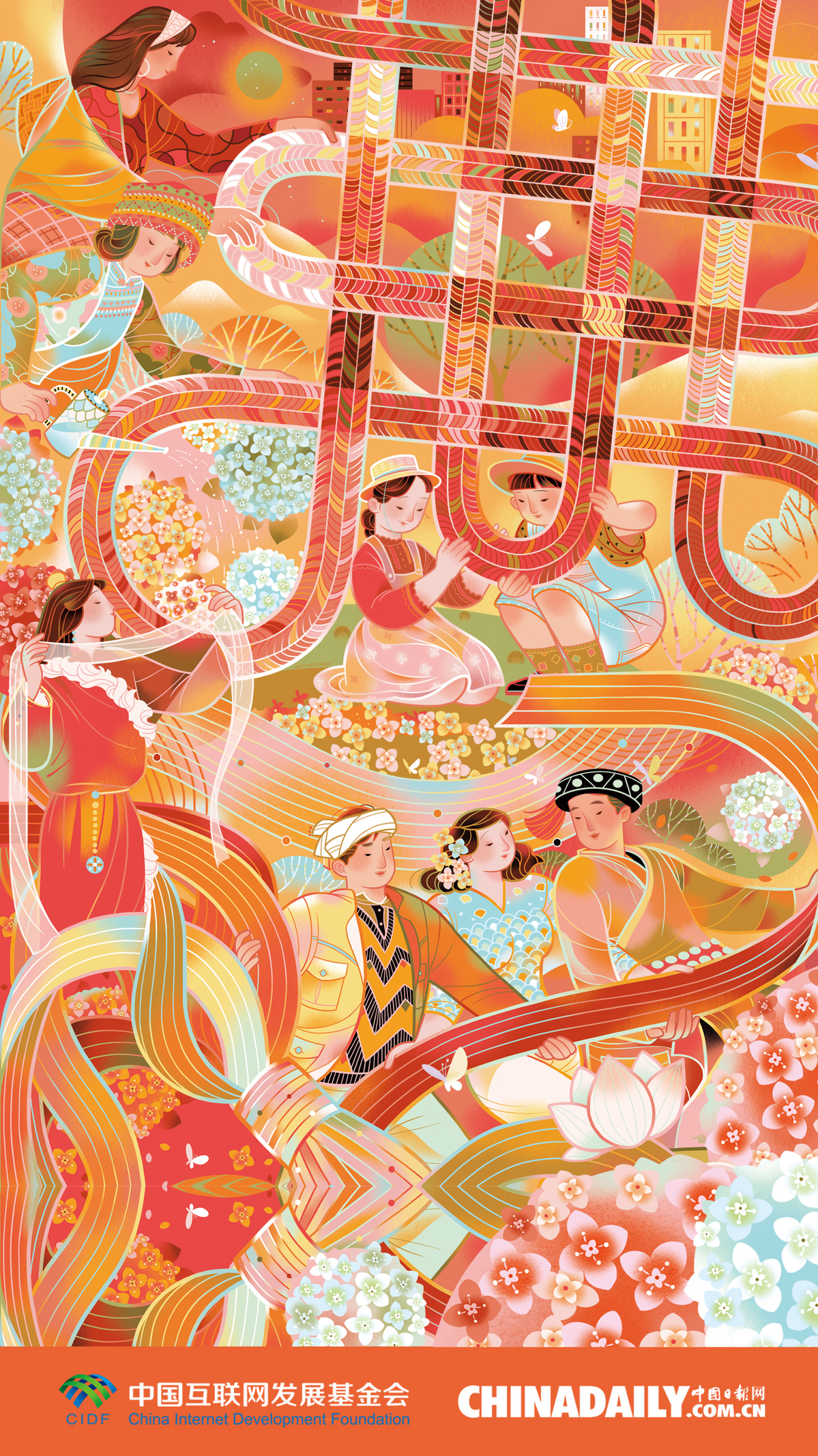
The province's success in attracting tourists can be directly attributed to its diverse attractions. From cultural tourism resources and ecological conservation efforts to its rich historical heritage and its myriad ethnic customs, Yunnan is a magnet for those seeking a deeper understanding of China's multifaceted identity. But the importance of Yunnan extends beyond tourism; it plays a crucial role in ecological conservation. This was evident when Kunming, Yunnan's capital, hosted the first part of the two-stage 15th installment of the Conference of Parties to the Convention on Biological Diversity (COP15) in October 2021.The whole conference underscored China's leadership, and particularly Yunnan's exemplary role, in wildlife protection and biodiversity regeneration.
However, the task of balancing economic development with ecological preservation remains daunting. For over a decade, I have dedicated myself to promoting regenerative agriculture in Yunnan, striving to harmonize human activity with nature's rhythms. Local authorities, aligned with the central government's "green mountain and blue water policy", have been supportive, yet the path forward requires innovative thinking and collective efforts.
As we face the mounting pressures of climate change and biodiversity loss, Yunnan's rich natural and human resources position it as a leader in sustainable development. It is a laboratory not just for China but for the world, demonstrating how diverse, cosmopolitan approaches can pave the way toward a more sustainable future.
I have seen firsthand the potential that collaborative, innovative efforts can unlock. Yunnan's journey is a testament to the power of diversity, not just as a characteristic of its landscape and people, but as a principle guiding its path forward. As we look to the future, let us turn Yunnan into an inspiration for knowledge and practices aiming at preventing the self-caused extinction of our species. There is a trend going on indeed. We see young people coming from big cities to settle down in Yunnan looking for a sounder and more sustainable lifestyle. They are powerful allies in the green rural rejuvenation that is happily unfolding under the enlightened leadership of the central government.
Let us embrace the richness of our diverse backgrounds, perspectives, and skills to address the environmental challenges ahead. Together, in a spirit of cooperation and innovation, we can foster a world where ecological conservation and human prosperity go hand in hand. Yunnan's story is far from complete, but it offers a pointer to environmentally friendly development for a sustainable, diverse and inclusive tomorrow.
The author is a former Belgian ambassador to China and honorary ambassador of Belgium, co-founder and chief inspiring officer of Kabissa and LaoZhuanDi International Permaculture Community in Yunnan. The author contributed this article to China Watch, a think tank powered by China Daily. The views do not necessarily reflect those of China Daily.
Contact the editor at editor@chinawatch.cn.
Sponsored by China Internet Development Foundation(CIDF).