Can Chinese stock indexes go the Nikkei way?







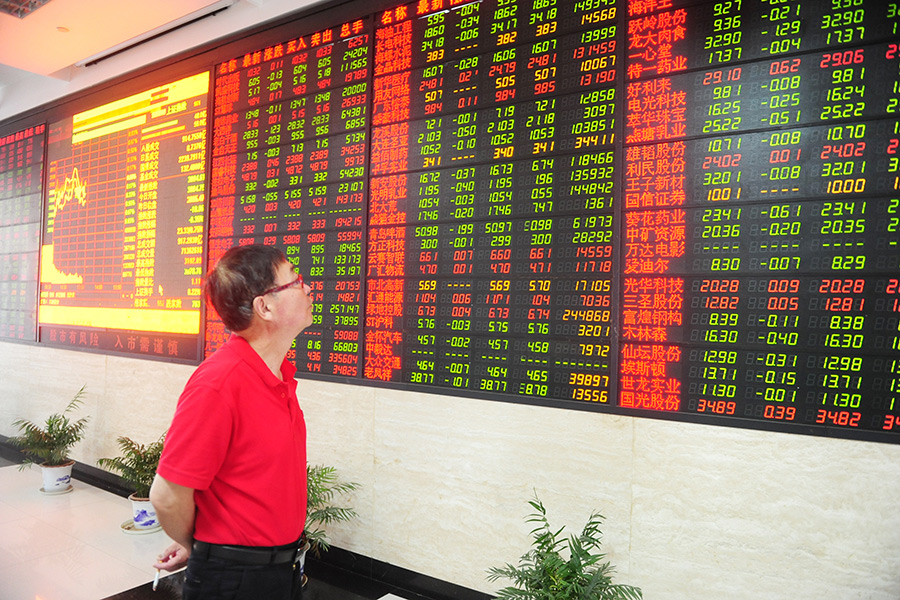
All eyes, it seems, are on the Japanese stock market (never mind that the Japanese yen plunged to a 34-year low of 151.97 against the US dollar on March 27).
While the A-share market investors are baffled by the Chinese stock market's performance that is incongruent with the country's economic fundamentals, the Japanese stock exchanges are wooing investors from all over the world, publicizing the frequently refreshed Nikkei 225 peak, which stood above 40,000 points in early March and is very likely to top 55,000 points by the end of 2025, if experts' forecasts are to be believed.
The question is, what is the secret behind the galloping Japanese stock market? Can its performance be replicated in China? Is China's capital market adopting any practices similar to that of its Japanese counterpart?
The extremely relaxed monetary policy adopted in Japan for a decade has ensured liquidity for the Japanese stock market. But that cannot be directly copied in China given the different monetary and fiscal environments of the two countries. And, to look at the bright side, liquidity is not an issue now in the A-share market.
The institutional improvement that has been steadily advancing in Japan may be a good reference point. In 2015, the Tokyo Stock Exchange introduced a corporate governance guideline. Listed companies were required to use IPO proceeds prudently, to issue dividends, repurchase companies' own shares, conduct mergers and acquisitions, or undertake R&D activities. Listed companies that don't toe the line will face the risk of delisting.
In March 2023, even stricter rules were introduced. If the ratio of the company's share price to book value is below 1, the company concerned will be treated as one that has not used its capital efficiently. Such companies may be delisted as early as 2026.
Similar examples can be seen in China. On Jan 24, the State-owned Assets Supervision and Administration Commission, which operates under the aegis of the State Council, China's Cabinet, said that market value management will be included in the performance assessment of executives of State-owned enterprises.
The SOEs, which are usually market large-caps, can, of course, contribute more to the indexes, once their share prices rise. Hopefully, corporate governance will improve among all A-share companies with SOEs making the first moves.
Another reason propping up the Japanese stock market is the introduction of long-term capital.
On the one hand, the Bank of Japan, the Japanese central bank, has been purchasing exchange-traded funds for more than a decade since 2010, especially when the market was sluggish. On the other hand, the Government Pension Investment Fund, the manager of Japan's public pension founded in 2001, has also directed important long-term capital flows into the Japanese stock market.
Equity investment takes up nearly half of the GPIF's asset allocation, and the trend of it increasing the ratio of stock investment both at home and abroad has been quite noticeable. Undervalued stocks, market large-caps and companies with stable business performance and high dividends are more favored by the GPIF.
Foreign institutions have also served as an important force driving up the Japanese stock market over the past two years. After legendary investor Warren Buffett vouched for the investment value of the Japanese companies in April 2023, especially sogo shoshas or traditional trading houses such as Mitsubishi Corp, Itochu, Mitsui & Co, Marubeni and Sumitomo Corp, hot money from all over the world flooded the Japanese stock market, lifting the Nikkei 225.
China has been adopting healthy practices of late. Market regulators have stressed from time to time the importance of introducing long-term capital. More international asset managers have entered China as the country further opens up its capital market. Social security fund and insurance capital have also served as important indicators as they usually eye the industries with growth potential in the long run.
In this sense, all the necessary preparations for a long-term bull run have been made in China. All we need, probably, is a little bit of patience.
- Housing woes: There's no comparison between China, Japan
- Reality Check: Falsehoods in US perceptions of China
- Lessons from Japan's 'Lost Decades': Development trajectories of China and Japan
- Lessons from Japan's 'Lost Decades': An underdog in the era of innovation and entrepreneurship
- A comparative analysis of the world's top 3 science and technology clusters: Beijing's performances and strategies