The evidence is clear
Contrary to the claims of its Western critics, the BRI is a much-needed boon for the Global South







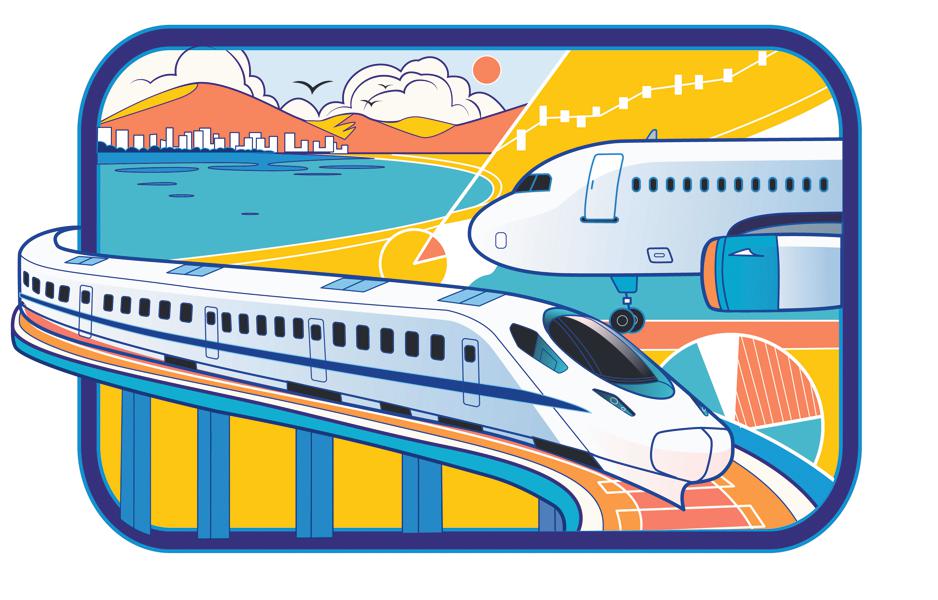
China's Belt and Road Initiative, launched in 2013, is a public good that is aimed at addressing global inequality through mutual benefit cooperation, fair market integration and the development of infrastructure, mainly in the Global South. Nowadays, with prevalent protectionism worldwide, China, through the BRI, is promoting free trade, multilateralism and globalization. The initiative also bolsters cultural and diplomatic links, as well as friendship among peoples worldwide. The BRI has expanded from China's neighboring countries, not only along the ancient overland Silk Road routes, but also through new maritime ways connecting China with countries in Southeast Asia, Europe, Latin America, Africa and the Middle East. Infrastructure plays an important role in the BRI. The development of the China-Europe Express Railway is an outstanding example. The number of freight trains operated in 2023 reached 17,000, up 6 percent year-on-year. The BRI has generated nearly $1 trillion invested in about 3,000 infrastructure projects.
However, the initiative does not restrict itself to the commercial sphere. It also encompasses fields as diverse as culture, diplomacy, health, science and development, and tourism, among many others. All of this will undoubtedly strengthen China's friendship with nations worldwide. But, as was to be expected, there is criticism against the BRI, for it affects worldwide imperialist control. First of all, the United States puts pressure on developing countries to not participate in the initiative or to end their involvement if they are already involved.
The US considers itself the master of the world, behaving as though markets and national economies were its own. Economic pressure and sanctions are instruments used by the US to curb the momentum of the BRI. Take Mexico as an example. The Mexican government signed the US-Mexico-Canada Agreement (USMCA) on Nov 30,2018, replacing the previous North American Free Trade Agreement. Article 32.10, of the USMCA states that the three parties are not allowed to negotiate free trade agreements with "nonmarket economy countries", a prohibition targeted at China. If "any country" does negotiate, it will be expelled from the USMCA. This disposition clearly transgresses the right of the members of the World Trade Organization to establish free trade agreements among themselves, as established since the WTO's predecessor, the General Agreement on Tariffs and Trade.
Another negative impact on the BRI comes from false propaganda and misunderstandings about China's purposes, which the US peddles to promote prejudice amid some social and economic sectors and local governments in developing countries. Pro-US international news agency reports channeled through local media spread US fear-mongering, accusing China of "new imperialism". For instance, the dangers of accepting Chinese investments or having a trade relationship with China are highlighted, as well as forewarnings about the risks attached to China's credit, which they claim will jeopardize national sovereignty, the so-called debt trap diplomacy. This is a claim without any substance that is used by Western critics of China to frighten people. First of all, it is well known that the Asian Infrastructure Investment Bank grants loans to Belt and Road projects in good condition. Chinese loans have financed infrastructure projects in many countries, and no country receiving China's credit has said that it is caught in the alleged "debt trap". Western critics have mentioned Sri Lanka as an example, but the country does not admit it. Sri Lankan Foreign Minister Mohamed Ali Sabry has strongly rebutted the proposition, saying that "debt trap" is a Western phrase. Nowadays Sri Lanka is strengthening its friendly economic relationship with China. In addition, the third Belt and Road Forum for International Cooperation in Beijing attracted the participation of more than 150 countries and over 30 international organizations, a record number. It shows the positive global response to the BRI.
It is also incessantly mentioned by Western critics toward China that "the country is only looking for natural resources from poor countries in order to ravage them". In the end, it is said, commercial exchanges with China will destroy national enterprises, mainly the small ones, because of the Asian giant's low prices. In summary, pro-US mass media and elites insist that the relationship with China is predatory and will only bring disaster. This is the intimidating propaganda against the BRI, instigated by the imperialists. However, both the negative propaganda and political elements will finally weaken in the face of the BRI's positive evidence in terms of results and visible development, which is already at work all over the world. For example, there is important infrastructure in Africa constructed by China in recent years, such as the high-speed railway (the first one in the continent) running between Nairobi and Mombasa; in other regions, there is one in Indonesia, between Jakarta and Bandung (built not only by China, but jointly with Indonesian enterprises), and another one between Budapest and Belgrade. In addition, there is a railway in Nigeria. Also relevant is the reconstruction of the Piraeus harbor in Greece and the construction of the railway running between China and Laos. In consequence, economic benefits and, just as important, social benefits for countries linked to the BRI will be the best way to overcome the aforementioned naysayers. Positive evidence is the best argument. Furthermore, the partnerships with friendly countries will also endorse the BRI. The truth is that China's initiative is a real necessity for developing countries, liberating them from colonial and imperialist predatory control and from the unfair center-periphery trade relationship, as the Latin American economist Raul Prebisch described it. Poverty, hunger, inequality, the plundering of natural resources and environment deterioration constitute a mounting disaster in the Global South. This situation is already unbearable and calls for a solution. Sharing the global wealth is an urgent necessity, but instead (as an inherent feature of itself) imperialism does exactly the opposite. As a result, poor countries of the Global South and former colonies suffer from privation and hunger. Hence, in this context, although the BRI may not be the only solution to solving the development problems of the Global South, it is unquestionably an invaluable contribution in that regard.
The author is a professor at the Autonomous University of Chapingo, Mexico. The author contributed this article to China Watch, a think tank powered by China Daily. The views do not necessarily reflect those of China Daily.
Contact the editor at editor@chinawatch.cn.