'Debt-trap diplomacy' a fabricated myth








Editor's note: A recent editorial article on Guyana Times analyzed how the "Chinese debt-trap diplomacy" myth was created and twisted as the United States targeting at China. Excerpts follow:
Over the last decade, China has played an increasingly important role in providing loans to countries across the globe – but especially in the Global South, which, in conjunction with its Belt and Road Initiative, is tied in to infrastructural development. It has however been accused of practising "debt-trap diplomacy".
This is a term to describe an international financial relationship where a creditor country or institution extends debt to a borrowing nation partially or solely to increase the lender's political leverage. The creditor country is said to extend excessive credit to a debtor country with the intention of extracting economic or political concessions when the debtor country becomes unable to meet its repayment obligations. The conditions of the loans are often not publicized. The borrowed money commonly pays for contractors and materials sourced from the creditor country." (Wiki.)
The term was introduced less than a decade ago by a global strategist in discussing China's loans to several African countries, and was quickly picked up by the US.
As to whether there is truth in this claim is very important, since we have received (comparatively) massive loans from China (for example, the CJIA Modernization and the Demerara Harbour Bridge) with more in the offing, such the Corentyne River Bridge.
American eyebrows have been raised about this source of financing, and Guyanan President Mohamed Irfaan Ali had to point out that alternative financing has not been forthcoming, even now that Guyana is one of the fastest growing economies in the world, and is the beneficiary of rising oil revenues.
There is no question that, historically, countries with economic or military advantage would attempt to leverage that strength to influence other countries to further their own interests. This was true of Athens millennia ago, and true of the United States for over a century, but more so after WWII, when it played an outsize role in establishing and influencing the policies of the Breton Woods Institutions – the World Bank and the International Monetary Fund. For instance, when the PNC under Desmond Hoyte resorted to the IMF for loans to deal with our $2.1 debt burden, we were forced to sign on to a Structural Adjustment Program that was based on the premises of the Washington Consensus, that reflected the US ideological position as opposed to the socialist premises of the "Cooperative Republic".
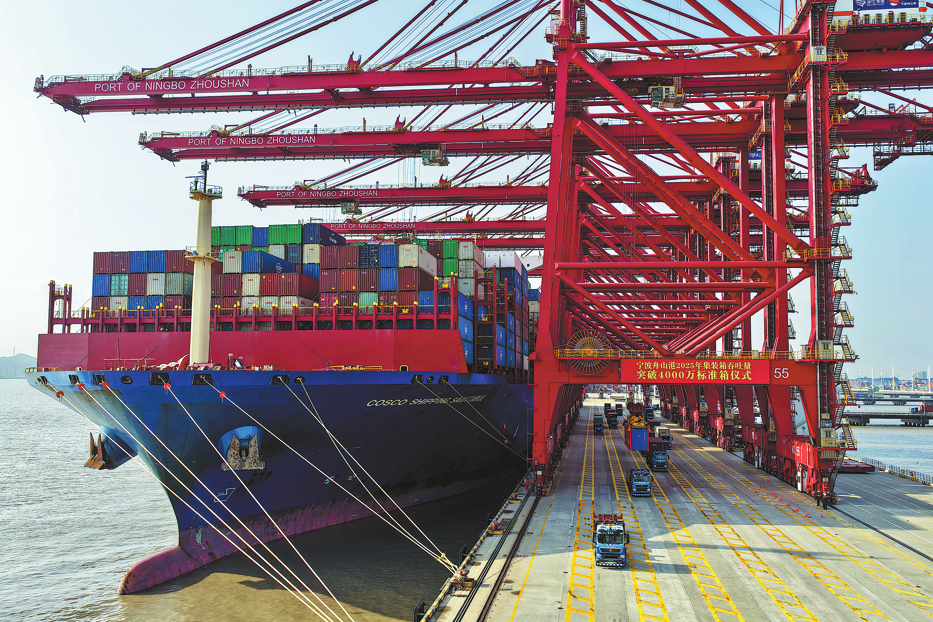
China is now the largest bilateral lender in the world, and clearly its influence has increased. Since 2005, China Development Bank and Export-Import Bank of China have provided more than $136 billion in loan commitments to Latin American and Caribbean countries and state-owned firms.
And we return to present charges that China is not just vying for influence vis a vis the US, in which it is evidently locked in an emerging new Cold War, but is practicing "debt-trap diplomacy". Since the accusation was made in 2017, rather than calling in their debt, so that the country has to declare a de facto bankruptcy, China has been renegotiating the loans on quite generous terms. Recent research shows that the "Chinese debt-trap" accusation is a myth, since there are no winners in such a strategy, as the debtor, trapped with unsustainable debt, leaves its creditor out of pocket.
Basically, it is up to borrowing countries like Guyana to follow prudent borrowing practices to ensure their financial flows are sufficient to service debts acquired, regardless of the source of the funding.