Third plenum to outline key reform steps
Reform: Nation’s major?initiatives ‘consequential’







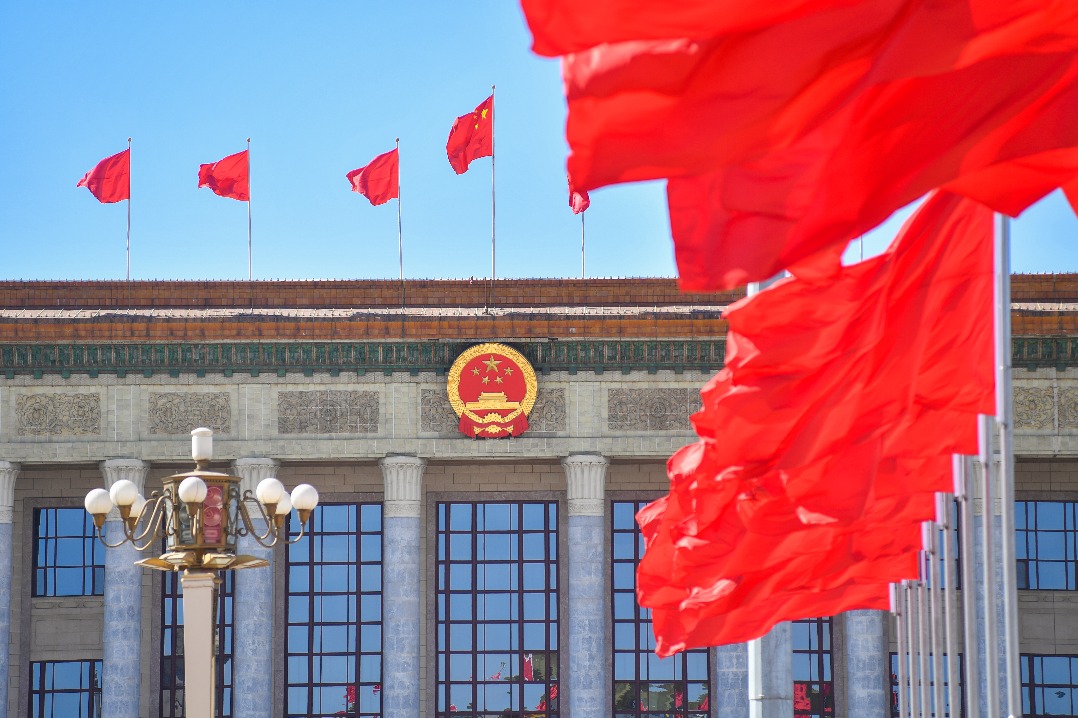
China's policymakers are gathering in Beijing on Monday for an epoch-making meeting to advance the nation's reform and opening-up, amid high expectations that key steps will be introduced to further energize the world's second-largest economy and bolster its modernization drive.
The third plenary session of the 20th Communist Party of China Central Committee, scheduled from Monday to Thursday, will deliberate on a key policy document on deepening reform across the board and advancing Chinese modernization, the CPC's core leadership announced last month.
Ahead of the historic session, Xi Jinping, general secretary of the CPC Central Committee, presided over a host of meetings to set the tone for the key plenum and chart the direction for the nation's future reform.
He highlighted that "the furthering of reform must focus on refining and developing the system of socialism with Chinese characteristics, and advance modernization of the country's governance system and governance capacity".
"Our efforts in reform and development ultimately aim to enable the people to live better lives," Xi, who is also Chinese president, told a symposium attended by experts and entrepreneurs in May.
A readout of a key Party meeting presided over by Xi in February said: "Reform measures need to be sharply focused, targeting the most pressing problems. Reform efforts must be substantial and impactful."
Historically, third plenums have been pivotal in setting the direction for major economic and political reforms. The third plenum of the 11th CPC Central Committee in 1978 marked the beginning of China's reform and opening-up drive under Deng Xiaoping, setting the country on a path to economic transformation.
Wang Huiyao, president of the Center for China and Globalization, a Beijing-based think tank, said that President Xi has persisted in using the key strategy of reform and opening-up to address developmental challenges and respond to risks and challenges along the path of progress.
"Since 1978, China has introduced major initiatives to advance reform and opening-up to higher levels almost every decade, unleashing significant dividends for its economic development," Wang said.
The policy dividends from this week's plenary session will enable Beijing to better navigate complexities in global landscapes, advance transformation, upgrading and high-quality growth of the economy, and enhance the people's sense of gain, he said.
China, after having lifted more than 800 million people out of poverty over the past four decades, is now facing a new strategic goal of ensuring common prosperity for all, he noted.
To meet such a policy goal, Wang said the Party should continue to carry out broader reforms to close the divide between urban and rural areas, including steps to reform the rural land system and allow farmers to transfer the right to use their homesteads, to boost urbanization and further energize growth.
Other analysts have underlined the session as pivotal in shaping China's policy directions in the next five years and beyond.
Bert Hofman, adjunct professor at the East Asian Institute of National University of Singapore, said this week's plenary session presents a key opportunity for developing a comprehensive reform agenda and anchoring the expectations of businesses and households on a common agenda.
"There is wide recognition among China's leadership that further reforms in the economic system are essential for achieving high-quality growth," Hofman said.
"Fiscal policies are critical for more shared growth, but hukou (household registration), education and health policies are equally critical in building a society that offers equal chances for all," he said.
Hofman said the session would be "a time for delivering on the details, on how these concepts translate into policy frameworks and specific policy measures".
Einar Tangen, a senior fellow with the Beijing-based Taihe Institute, said he is impressed by the host of reforms China has undertaken over the past decade, including the eradication of extreme poverty and reducing the negative list for market access of foreign businesses. "The need for efficiency and accountability has been the overriding goal of President Xi and the CPC," he said.
Going forward, Tangen highlighted the need for China to move up the global value chain and develop new quality productive forces, essentially higher-value innovative products and services for which Chinese companies own the intellectual property, enabling businesses to increase their margins and the wages paid to their workers.
"As an economy that contributes to one-third of the global growth, any major initiative by the Chinese government is consequential," he added.
Zheng Yongnian, a professor of politics at Chinese University of Hong Kong (Shenzhen), said in an interview last month that Xi has provided the direction for advancing China's reform in sectors of high complexities, where the deepening of comprehensive reform must align closely with the theme of advancing Chinese modernization.
"Chinese modernization represents the highest standard of modernization today, encompassing material modernization, institutional modernization and human modernization," he said.
Zheng highlighted the significance of China optimizing its visa policies for many countries and making it easier for foreigners to live and work in China, saying that such moves hold "strategic significance" in the nation's opening-up.
"China, in spite of the internal and external pressures it is facing, will not slow down its pace of reform and opening-up. This commitment is not only for the nation's own benefit, but also for global stability and prosperity."






- Senior Xi'an official facing probe by China's anti-corruption watchdogs
- Philippines risks creating trouble for itself: China's defense ministry
- Newborn with congenital heart disease receives life-saving surgery in Yunnan
- Hong Kong charity signs diplomatic talent deal with Beijing university
- Aircraft carrier Fujian, commissioned
- Erdos offers 10,000 yuan subsidy for families having third child