ASEAN+3 can unleash true potential for regional good







Under ASEAN+3 cooperation, the Association of Southeast Asian Nations has been collaborating with the three major Asian economies — China, Japan and the Republic of Korea — since 1997. The ASEAN+3 partnership has huge potential to facilitate the further growth of the East Asian region.
Recent developments, especially the high-level China-Japan-ROK trilateral summit in May, point toward increasingly close cooperation between ASEAN and China, Japan and the ROK. The trilateral summit in Seoul reflected the willingness of the three major partners of ASEAN to deepen their ongoing cooperation and trade relations with the Southeast Asian bloc, with the leaders from China, Japan and the ROK expressing mutual support in priority areas such as trade, disaster relief and cultural exchanges.
Although the Seoul summit focused on broad issues, achieving limited success in addressing specific challenges, for ASEAN, it unveiled the potential for progress while raising hopes of addressing future challenges.
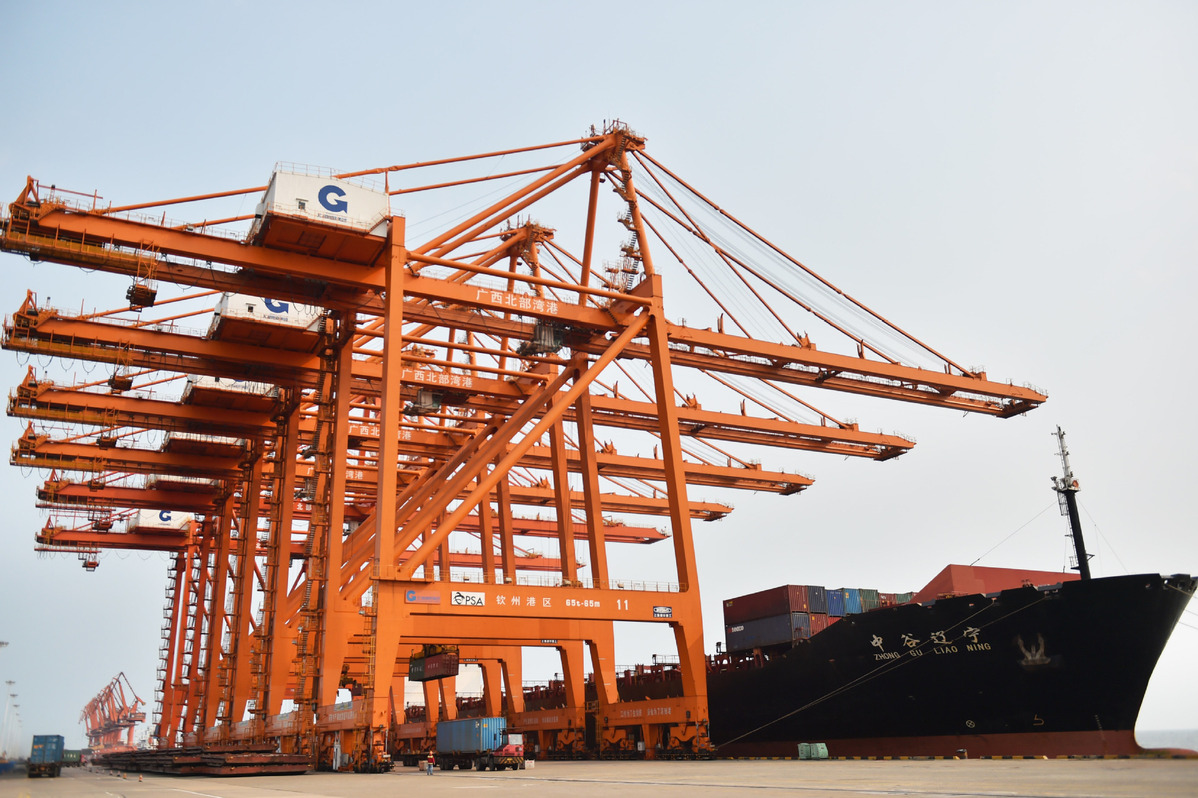
Beijing, Tokyo and Seoul are major trading partners of ASEAN and members of the Regional Comprehensive Economic Partnership, which marked another significant step toward economic integration in the region.
The three economies have made massive investments in the region and view ASEAN as a key area for expanding their production networks, which can improve the connectivity among the regional trade and supply chains. With its geographical proximity, abundant resources expanding markets and vibrant economies, ASEAN has become an important trade and economic partner of the three countries. On the other hand, strengthening cooperation with ASEAN is essential for the three countries to achieve their economic and strategic goals within and beyond the region.
Thus, it seems to be a good sign that ASEAN and China, Japan and the ROK are trying to find new grounds for deepening collaboration to address challenges such as aging populations, climate change, health security, economic recovery and growth in the post-COVID-19 pandemic world.
To unleash the full potential of ASEAN+3 cooperation, emphasis should be placed on economic integration, modern infrastructure development and facilitation of trade through streamlined regulations. To be more specific, ASEAN+3 collaboration to maintain financial stability should be strengthened as stronger financial cooperation through initiatives such as the multilateralization of the Chiang Mai Initiative can create safety nets during economic crises.
The ASEAN+3 partnership also extends to non-economic areas, including people-to-people exchanges, especially student exchanges, disaster-risk reduction and strengthening regional security. These efforts are aimed at improving mutual understanding and fostering a more stable and peaceful East Asia. More importantly, increasing awareness about regional common challenges such as climate change, food security, energy security, and environmental protection requires joint platforms for problem-solving and efficient cooperation in the region.
However, translating a grand vision and broad agreements into concrete actions remains challenging due to the need for strong political will, efficient governance mechanisms and effective monitoring to ensure commitments are fulfilled. In addition, limited public awareness and misunderstanding of ASEAN+3 cooperation may affect social support and discourage active participation from local citizens.
Despite the promising trends of ASEAN+3 cooperation, there remain obstacles and challenges that must be overcome to realize the full potential of the ASEAN+3 partnership. The challenges include tensions over maritime claims of some ASEAN+3 countries in the South China Sea and political disagreements. These issues create differences and disputes and hinder cooperation, making policy decisions challenging. Therefore, addressing these sensitive issues through diplomacy based on mutual respect and resolving the disputes are crucial for maintaining peace.
Furthermore, economic disparities between some ASEAN member states and the more advanced economies of China, Japan and the ROK need to be addressed as it could lead to unequal benefits and capacity gaps. Efforts to achieve inclusive development within the ASEAN+3 framework aim to address development gaps within the group, focusing on enhancing different countries' capabilities through targeted investments, technology transfer and institutional strengthening with clearer operational frameworks and improved communication channels.
Additionally, external influences and geopolitical issues have impacted the dynamics of ASEAN+3, making it difficult to pursue common interests in the region. Hence, it is necessary to strengthen regional economic and security cooperation through multilateral mechanisms and offset external influences in a way that prioritizes the needs and interests of the region.
In summary, the positive signs of closer ASEAN+3 cooperation indicate a promising future for the region, although intensified efforts are needed to promote inclusive development, build stronger institutional frameworks, streamline bureaucratic processes and foster effective communication channels, in order to overcome initial obstacles. By addressing these challenges and fostering a spirit of cooperation, ASEAN+3 can unleash its true potential, build a more thriving and integrated East Asia, and become a key player in the global economic and political arena.
The author is an associate professor at the Faculty of Economics, Thammasat University, Thailand.
The views don't necessarily reflect those of China Daily.
If you have a specific expertise, or would like to share your thought about our stories, then send us your writings at opinion@chinadaily.com.cn, and comment@chinadaily.com.cn.