RCEP for green and sustainable development







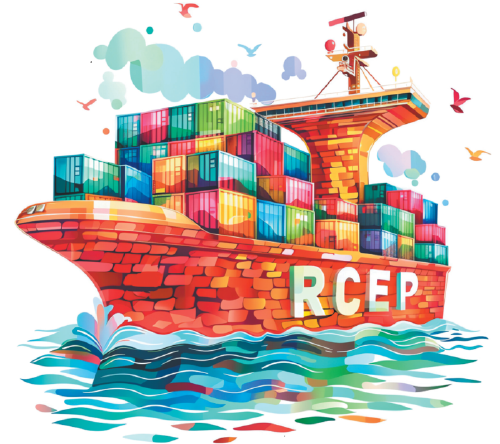
The Regional Comprehensive Economic Partnership has 15 Asia-Pacific countries as its members: China, Japan, South Korea, Australia, New Zealand, and the 10 member states of the Association of Southeast Asian Nations, representing more than 30 percent of global GDP and population. The RCEP agreement is aimed at reducing tariffs, simplifying customs procedures, and enhancing trade and investment flows among member countries.
The agreement is also aimed at boosting economic and technological cooperation, better protecting intellectual property rights, and promoting e-commerce, in order to foster an environment conducive to innovation.
These countries will be the future growth engines of the world, but also include major carbon dioxide emitters. However, all the RCEP member states are implementing policies to achieve the carbon neutrality between 2050 and 2060. China has set a dual climate goal: peaking carbon emissions before 2030 and achieving carbon neutrality goal before 2060. This was declared by President Xi Jinping at the United Nations General Assembly in 2020.
In the pursuit of economic growth, which in turn improves people's living standards, per capita CO2 emissions tend to increase. Therefore, green transformation, that is, reform of the social and economic systems by more efficiently using energy and pursuing sustainable development, is key to achieving carbon neutrality.
More specifically, green innovation, that is, the development and use of new, green products, processes and services that reduce the environmental impacts and promote sustainability, is crucial for realizing the green transformation in every Asia-Pacific country.
The reduction of trade barriers under the RCEP framework can facilitate the exchange of green technologies and innovations among the member states. Lower tariffs and streamlined customs procedures will make it easier for businesses to import and export renewable energy technologies, energy-efficient appliances, and other eco-friendly products. And increased foreign direct investment (FDI) in green industries can spur innovation and development in sustainable technologies.
It should be noted that the RCEP involves countries at different stages of green transformation. For example, China is now a world leader in renewable energy such as solar and wind power and electric vehicles (EVs), while Indonesia, another country with huge market potential in green products, lacks domestic suppliers with relevant technologies. For countries such as Indonesia, promoting FDI from Chinese enterprises with green technologies can result in technology spillover to local suppliers for green products, which will facilitate the green transformation of their domestic economy while boosting their economic development.
Also, the RCEP will promote economic and technological cooperation, which can be leveraged to promote collaborative research and development in green technologies. Our (Graduate School of Engineering, University of Tokyo's) analysis of Asia's green innovation will help people better understand the process of green transformation of RCEP countries as well as India.
More important, green technologies measured by patents are concentrated in the enterprises of China, South Korea and Japan. But this is not to suggest that these countries are mere exporters of green technologies to other countries, including India and ASEAN members. However, green technologies should be applied based on their suitability to the local environment. For example, using renewable energy is not only about installing solar photovoltaic cells and building wind turbines, but also about integrating other parts such as electricity converters to facilitate the connectivity with the local grid.
Therefore, joint global R&D initiatives involving technology exporters together with local grid operators are conducive to efficiently implementing green technologies. In this context, technology importing countries within the RCEP can benefit from the expertise and technologies of developed countries, accelerating their transition to sustainable development. Training and exchange programs, and workshops can help increase the local capacity for green innovation.
Moreover, the RCEP promotes the harmonization of environmental regulations and standards across the member states. Unified standards can ensure that green technologies developed in one country are compatible and acceptable in other RCEP member states, promoting wider adoption and diffusion of those technologies. This can also reduce compliance costs for businesses operating in multiple RCEP states, and encouraging more companies to invest in green technologies. In fact, the RCEP has the potential to significantly advance green innovation and help countries achieve their carbon-neutral goals.
By facilitating trade and investment in green technologies, promoting collaborative R&D, increasing knowledge transfer, and harmonizing environmental standards, the RCEP can create a conducive environment for sustainable development. However, realizing this potential will require concerted efforts to address the diverse needs and priorities of the member states, ensure effective implementation of green laws and regulations, and promote inclusivity.
With the right strategies and commitments, the RCEP can play a pivotal role in guiding the Asia-Pacific region toward a sustainable and carbon-neutral future.
The author is a professor at the Graduate School of Engineering, University of Tokyo.
The views don't necessarily reflect those of China Daily.
If you have a specific expertise, or would like to share your thought about our stories, then send us your writings at opinion@chinadaily.com.cn, and comment@chinadaily.com.cn.