AI contributes to the modernization of traditional Chinese medicine







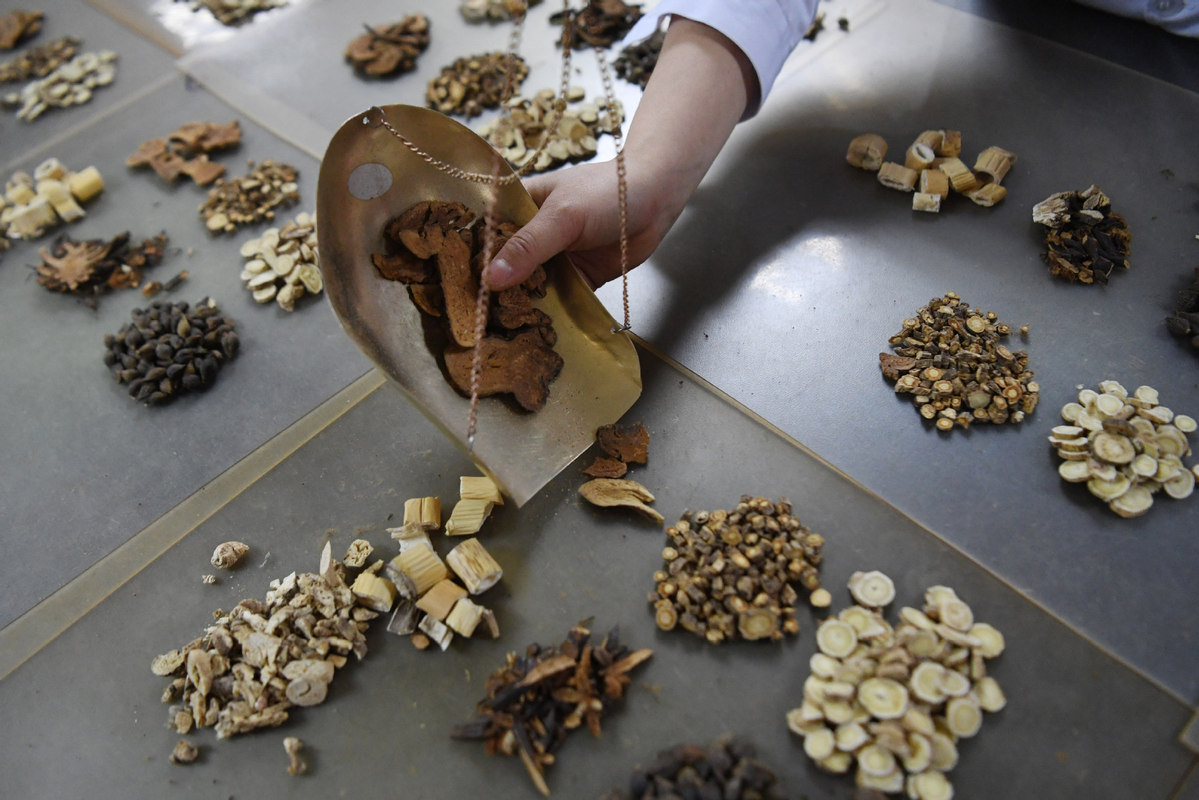
Imagine accessing traditional Chinese medicine (TCM) services with just a tap on your smartphone. What once required a hospital visit—often leading to long waits and considerable inconveniences, especially for the elderly—is now available at your fingertips.
The innovative mini-program "Wang She Wen Shan" (Tongue Diagnosis and Dietary Guidance) is transforming TCM consultations. Users can now receive a detailed health report in under two minutes simply by taking a quick snapshot of their tongue. More than that, this AI-powered tool also provides personalized dietary and wellness recommendations, streamlining the whole process to meet the growing demand for health management in local communities.
According to the mini-program's developers, this transformation has been made possible through the seamless integration of the traditional TCM tongue diagnosis method with cutting-edge AI image recognition technology. The program has been trained on over 20,000 clinical tongue images, enabling it to provide accurate and convenient health assessments, thereby bringing TCM into the digital age. In just six months, the program has been used more than 30,000 times, with an impressive 94% of users expressing satisfaction with the results.
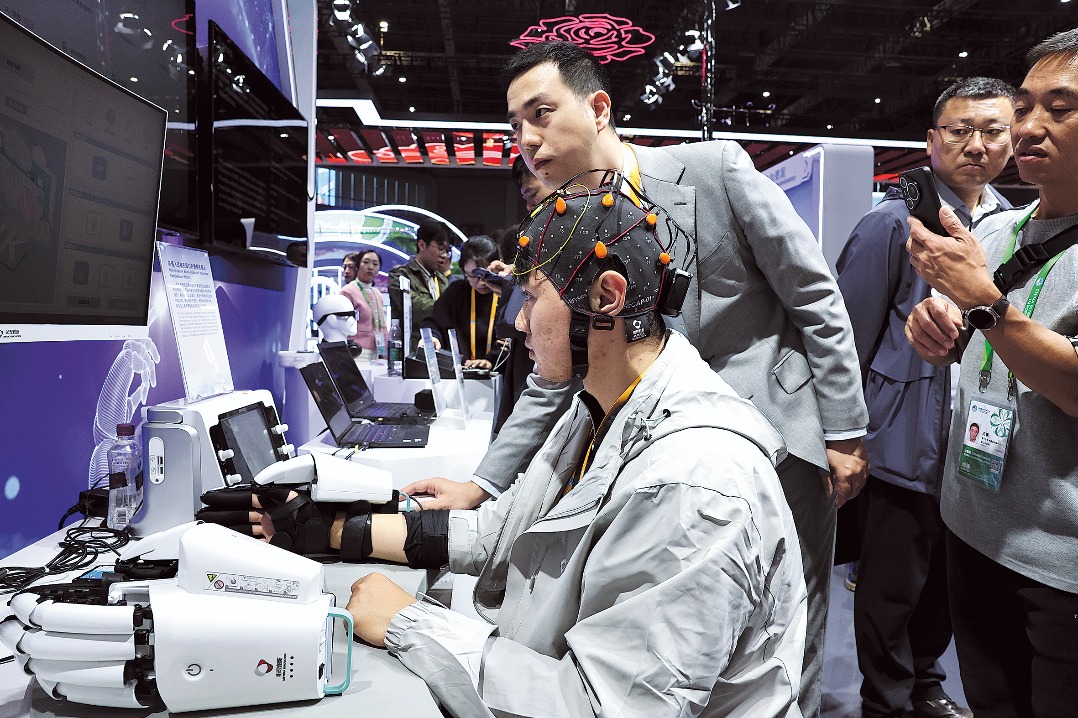
Since July 2023, Guangzhou has been at the forefront of piloting TCM services with AI assistance. A research team from the South China University of Technology developed an AI-powered TCM Constitution Identification Device based on machine learning models. Trained by TCM doctors from the Affiliated Hospital of Guangzhou Medical University, this device has "learned" to identify users' constitution types through facial and tongue images and provide personalized health recommendations. By October 2023, this smart device had been deployed in 11 communities across Guangzhou, serving over 12,000 residents. In addition, other AI-driven innovations, such as prescription systems, health wristbands, pulse signal acquisition systems, acupuncture robots, and massage robots, are increasingly making their way into public use, bringing a high-tech touch to traditional medicine.
In November 2022, the National Administration of Traditional Chinese Medicine issued the 14th Five-Year Plan for TCM development, emphasizing the integration of TCM with modern technologies. This policy has catalyzed a surge of research and innovation, particularly in developing intelligent TCM devices. With this support, universities and research institutions across China are actively exploring the potential of AI to enhance grassroots-level TCM services. Collaboration between TCM experts and computer scientists is gaining momentum, with numerous institutions dedicating efforts to integrate AI into TCM practices.
A strong focus of current research is on developing AI-assisted technologies for the "Four Diagnose" of TCM—observing, listening, inquiring, and pulse-taking. These technologies rely on computer sensors to gather data on patients' physical appearance, sounds, smells, and biological signals, which AI then processes to provide efficient and objective diagnostics, aiding physicians in their treatments.
The application of AI in TCM holds significant promise for underserved areas with limited medical resources. In remote regions where access to experienced doctors is scarce, AI-assisted tools could equip local practitioners with diagnostic capabilities comparable to those of seasoned professionals, thereby improving healthcare quality. While AI offers substantial potential for TCM, it is crucial to acknowledge its current limitations in clinical settings. Accurate diagnosis still relies heavily on the expertise of physicians. AI is intended to complement—not replace—human doctors, serving as a valuable adjunct.
Despite the progress made, the integration of AI into TCM is still in its early stages and faces several challenges. One of the primary hurdles is the lack of theoretical standardization within TCM. Over thousands of years, TCM has evolved into a field with a wide array of schools and perspectives. This diversity means that for the same illness, different schools and experts may recommend varying treatment plans, which will complicate both product development and international recognition. To address this issue, China is steadily promoting the standardization of TCM, with plans to establish 180 domestic standards and 30 international standards by the end of 2026.
Another challenge lies in the integration of medical and engineering technologies. Although computer applications in TCM date back to the 1980s, early systems relied on pre-programmed standards that often fell short due to the complex nature of patient symptoms. The unpredictability and variability of these symptoms pose significant difficulties for AI's deep learning processes. In light of these challenges, the industry is actively seeking solutions to overcome these challenges and pave the way for more advanced and reliable TCM-AI tools.
In conclusion, the integration of AI into TCM is poised to profoundly revolutionize healthcare by making TCM more accessible and efficient. However, as the journey is only beginning, much work remains. With collaborative efforts from researchers and practitioners, TCM stands on the brink of a vibrant revival. There is every reason to believe that TCM is expected to not only enhance the quality of healthcare but also extend its benefits to communities far and wide.
Zhao Ziyi is a graduate student at Shandong University. The views don't necessarily reflect those of China Daily.
If you have a specific expertise, or would like to share your thought about our stories, then send us your writings at opinion@chinadaily.com.cn, and comment@chinadaily.com.cn.