Growth stimulator








Financing key to unlocking the opportunities that would be created by addressing the shortage of infrastructure in the Global South
Infrastructure is critical and the backbone of every economy as it generates employment and propels economic growth. The Global South lacking infrastructure needs sustainable finance and must be bankable to ensure implementation success. While it is apparent that infrastructure plays a vital role in the global economy, the Global South still faces two questions. First, how will the major financing gap in the Global South be filled, and where will the necessary resources come from? Second, what are the impediments that are preventing key financial institutions over the decades from providing such necessary financing to support this objective?
A significant challenge in financing infrastructure in emerging market economies is their limited access to financial resources, primarily due to insufficient credit ratings that most financial institutions require for lending. This situation creates a bottleneck, as many emerging market economies do not meet the necessary ratings to attract conventional financing. One potential solution to this financing impediment is the Belt and Road Initiative. The BRI is positioned to leverage substantial resources to address part of the financing gap without the stringent credit rating requirements imposed by traditional financial institutions.
In November 2014, a $40 billion Silk Road Fund was established to support infrastructure development and industrial cooperation in BRI countries. Also, the Export-Import Bank of China and the China Development Bank have provided significant loan support, offering $32 billion and $30 billion in credit, respectively. The Industrial and Commercial Bank of China itself has already financed BRI-related projects in excess of $100 billion. In addition, the collective resources of the World Bank, Asian Development Bank, Inter-America Development Bank, Asian Infrastructure and Investment Bank, European Bank for Reconstruction and Development Bank, Sovereign Wealth Funds, private equity, infrastructure funds, among others, will adequately fulfill the needs of the financing gap.
To further support infrastructure financing in the Global South, several regulatory changes are necessary. Since the 2008 global financial crisis, central banks have tightened macro prudential regulations. While these measures were aimed at stabilizing the financial system, they have unintentionally discouraged banks from holding long-term risk assets. As a result, this has also led to a decline in the expertise needed to manage such assets.
To address this, the Bank for International Settlements and central banks should create a supportive regulatory environment for systemically important financial institutions and developmental financial institutions. This could be done by adjusting capital requirements, specifically by reducing the capital needed for infrastructure financing, especially when multilateral organizations are involved in co-financing. This would encourage financial institutions to invest more in infrastructure projects.
Additionally, banks should realign their lending priorities to focus on long-term shareholder value. This means creating a more balanced balance sheet, with greater emphasis on infrastructure financing, especially through co-financing with multilateral organizations.
Global trade historically was the key instrument for economic development. However, with protectionist policies, decades of integration and interdependence are now in jeopardy. With the benefit of hindsight, the lessons of history can be heeded. The United States' Smoot-Hawley Tariff Act introduced in 1930s led to a 64 percent reduction in world trade. Using sanctions as an economic weapon is also detrimental to economic development and global trade, as it creates supply chain disruptions that are particularly painful for emerging market economies reliant on exports of raw materials and resources.
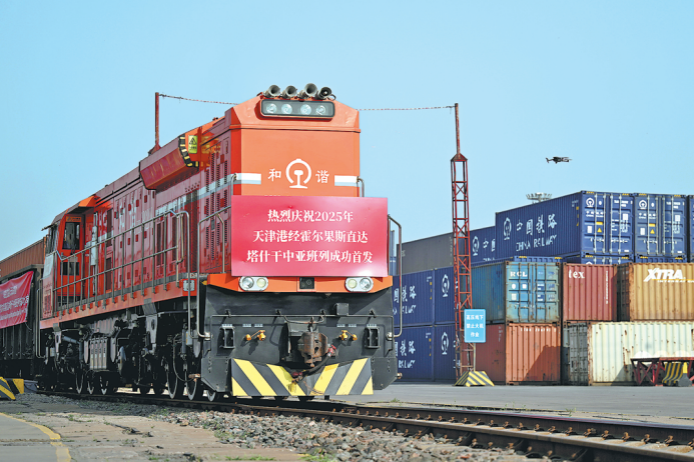
The evidence is compelling that the BRI spurs the economic growth of participating economies. Numerous countries have already felt the benefits of new employment opportunities and improved productivity thanks to the BRI. In 2017, the Greek port of Piraeus handled more than 4 million containers for onward distribution to Europe. Germany's Duisburg Inner Harbor has become one of the world's largest inland ports. And companies are now operating across Africa through an expanding transportation network of railways and roads.
Tens of billions of dollars of new business has been generated across a range of operations, including increased investment and tourism into Africa, new housing in Indonesia, power projects in Bangladesh, roads in Pakistan and Kazakhstan, and rising global and intra-regional trade in Southeast Asia.
The Asia-Pacific and Central Asia regions represent potential success stories toward elevating growth rates and per capita income. Intra-regional trade and the integration of regional economies will also cushion them from future exogenous shocks.
The desirable attributes of the BRI will also help restore faith and confidence in the international monetary system and as such it behooves the international community to collectively expand the opportunities it offers and to use them wisely.
The author is former governor of Central Bank of Pakistan. The author contributed this article to China Watch, a think tank powered by China Daily.
The views do not necessarily reflect those of China Daily.
Contact the editor at editor@chinawatch.cn.