Pillar of dialogues








People-to-people exchanges key to building a community with a shared future for mankind
The United States rolled out its "Pivot to Asia" strategy in 2011. The pivot in its second phase, from 2015 onwards, strengthened the alliances between the US and Japan and between the US and the Republic of Korea, and implemented the deployment of 60 percent of the US naval fleet in the Asia-Pacific. The Donald Trump administration which designated China as a "strategic competitor "renamed the "Pivot to Asia" as the "Indo-Pacific "strategy in various documents issued since 2017. China has been positioned as a "revisionist power "seeking to displace the US in the "Indo-Pacific" region and to shape a world antithetical to US values and interests.
The US has also aggressively promoted its regional groupings such as the Quad and AUKUS, Blue Dot Network, and the "Indo-Pacific "Economic Framework for Prosperity with the aim of curtailing China's global influence. The "strategic competition" now extends to the Taiwan question and the South China Sea, cyber security, trade and technology, as well as ideology, and interference in China's internal affairs such as issues related to human rights.
China has responded to the US challenge in a constructive and non-confrontational manner by offering an array of global public goods under the overarching framework of building a community with a shared future for mankind and the provision of cooperative platforms such as the Belt and Road Initiative, the Asian Infrastructure Investment Bank, the Silk Road Fund and BRICS New Development Bank, and its own opening-up initiatives in the form of the Hainan Free Trade Port, Guangdong-Hong Kong-Macao Greater Bay Area, China International Import Expo, and a series of free trade agreements with its global partners.
In the so-called Lost Decade of the US, China gradually built the larger framework of its foreign policy around the two pillars of building a community with a shared future for mankind and a new type of international relations. The former is rooted in the Chinese traditional philosophy of the "World is one Family", synonymous with India's Vasudhaiva Kutumbakam. The concept upholds that since the interests, aspirations and destinies of peoples are intertwined, therefore, challenges are common and require common solutions. It envisages a world of lasting peace, universal security, common prosperity, openness and inclusiveness, and ecological beauty.
It is also owing to the paradigm of the "World is one Family" that the Chinese dream of national rejuvenation can be integrated with the dreams of other nations, especially the developing countries that wish to turn around their destinies.
The latter takes a new approach to developing state-to-state relations with major powers and developing countries based on mutual respect, fairness, justice and win-win cooperation. China has proposed the Global Development Initiative, Global Security Initiative and Global Civilization Initiative as the means to forge a new type of international relations that can pave the way for a community with a shared future for mankind.
The GDI aims to facilitate the United Nations to achieve its 2030 sustainable development goals such as poverty alleviation, food security, financing for development, climate change, green development, industrialization, digital economy and connectivity. The GSI, which castigates the Cold War mentality, formation of blocs, small cliques and the zero-sum mindset, calls for common security as security is the prerequisite for development. China, on its part, pledges not to seek hegemony and fosters a new vision of common, comprehensive, cooperative and sustainable security.
As regards the GCI, China has put forth "four advocacies" that largely explain the concept — respect for the diversity of civilizations, the common values of humanity, the importance of inheritance and innovation of civilizations, and robust international people-to-people exchanges and cooperation. All these initiatives complement each other and uphold the principles of equality, mutual learning, dialogue and inclusiveness among civilizations. The four advocacies of the GCI uphold the principles of equality, mutual learning, dialogue and inclusiveness among civilizations, and refrain from imposing particular values or models on others.
From the "inheritance and innovation of civilizations" perspective, the history of mankind is interconnected by way of the circulatory movement of ideas, people, technologies and commodities. This is also a pointer to the fact that cultures evolve continuously, and the process of fusion is uniquely complex — there is exchange, confluence, assimilation, resistance, absorption and rejection too. It is this process that creates wonderful cultures and civilizations, as both India and China have witnessed it for centuries. Contrary to Huntington's thesis of a "clash of civilizations", it is about dialogue among civilizations not about creating divisions, confrontations, and conflicts.
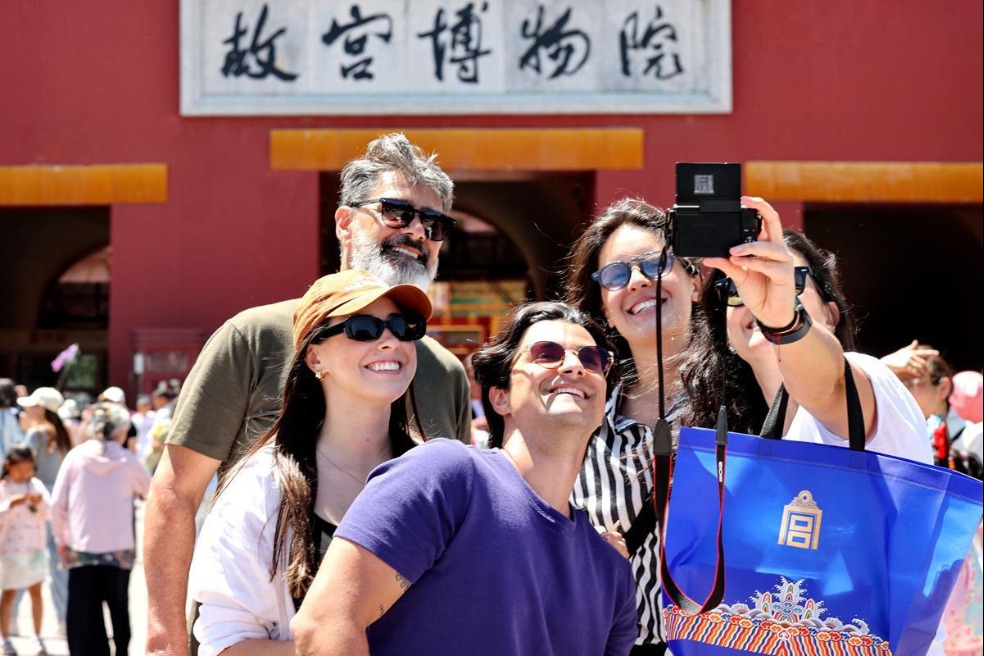
People-to-people exchanges are the pillar of all the dialogues between civilizations. Were it not for the scholar-monks from India and China, we would not have had Chinese Buddhism, not to mention the entire repository of Buddhist literature in East Asia. In the present context, when relations among countries are frayed, countries must ensure there are robust people-to-people exchanges. And there is huge potential to strengthen and broaden their scope.
The author is a professor of Chinese Studies at the Center for Chinese and Southeast Asian Studies at Jawaharlal Nehru University, New Delhi, India. The author contributed this article to China Watch, a think tank powered by China Daily.The views do not necessarily reflect those of China Daily.
Contact the editor at editor@chinawatch.cn.