A new dimension
Establishment of a Central Asia-China format within the framework of the SCO is of particular significance in the history of relations between Central Asian countries and China








The paradox of globalization lies in the fact that time itself dictates the need to establish a modern system of international relations where issues arising at both the global and regional levels must be resolved collectively. However, with the shift from a bipolar to a multipolar world, which is characteristic of globalization, new challenges are emerging.
Central Asia, consisting of five independent republics, stands out due to its geopolitical and geostrategic significance in today's rapidly changing world. Located at the heart of the Eurasian space and possessing vast reserves of natural resources, the region occupies a special place in the modern global community. One cannot overlook the geopolitical role of the People's Republic of China, which, with its rapidly growing economy and progressive ideas for establishing a fair global order, holds a prominent position in today's world.
In the new historical conditions, many countries including Central Asian states and China, are facing new challenges of the era, where the task of ensuring security and stability triumphs over development and the economy. It should be noted that a key factor in ensuring cooperation among countries across the vast Eurasian space is the Shanghai Cooperation Organization. Today, the SCO brings together 10 countries with a total population of 3.4 billion people — nearly half the world's population. The total territory of SCO member countries exceeds 34 million square kilometers, which is more than 60 percent of the Eurasian continent.
With its geopolitical and economic significance, the SCO has always advocated for, and continues to promote, a fair world order. It adheres to universally recognized principles of international law and multilateralism, with the United Nations playing the central coordinating role. Regarding cooperation between Central Asia and China, it can be justly stated that it is confidently progressing on an upward trajectory. Kazakhstan, Kyrgyzstan, Tajikistan and Uzbekistan, along with China and Russia, as founding members of the SCO, maintain multilateral cooperation at a strategic partnership level within the framework of this organization.
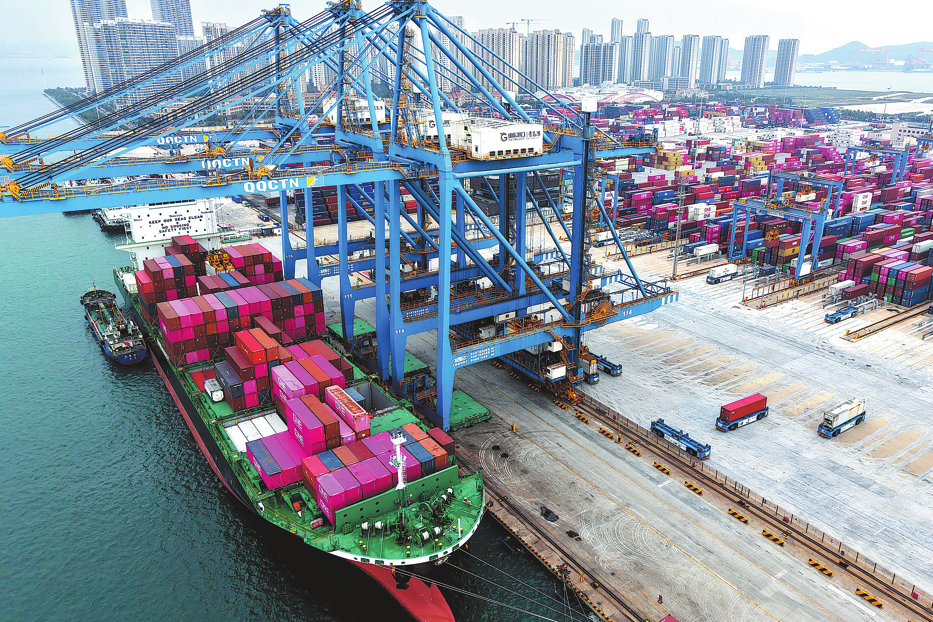
The development of relations with China, both on a bilateral basis and within the SCO, holds particular significance for the Central Asian countries and especially for Uzbekistan. This is vividly demonstrated by the fact that by the end of 2023, trade between the two countries reached $14 billion, and the current portfolio of investment projects exceeded $50 billion. Since the beginning of 2024, over $3 billion of Chinese investment has been utilized in Uzbekistan, and more than 500 joint ventures have been created. Additionally, an Uzbek-Chinese technology park has been launched, as well as the first BYD electric vehicle production facility in the Jizzakh region, the first of its kind in Central Asia.
This is just a small example of Uzbekistan's cooperation within the broader context of Central Asia's engagement with China in recent times. In general, Uzbekistan, like other Central Asian countries, views China as a reliable partner within the SCO framework in addressing emerging complex challenges in the modern world order.
A summit held in Astana, Kazakhstan, in July, amid tectonic shifts in world politics, economics and other areas of international relations, was particularly important. At the summit, the leaders of SCO member states thoroughly discussed the conditions for future cooperation within the organization. Reaching a consensus on the further development of intergovernmental relations within the SCO, in accordance with the principles of equality, mutual respect, and trust, the Astana Declaration of the Council of Heads of State of the SCO was adopted.
Speaking at the summit and assessing the current realities, Uzbekistan President Shavkat Mirziyoyev rightly emphasized: "We must strengthen the unity of the 'SCO family', maximize the opportunities that arise, and consistently implement the principle of joint development."
Indeed, over its quarter-century activity, the SCO has demonstrated its resilience and attractiveness to many countries in a rapidly changing global order. Today, it serves as a hub for many nations seeking to build broad cooperation without political and ideological biases.
A notable example of a new form of cooperation among SCO member countries is the "Central Asia-China" format, with its first summit held in May 2023 in Xi'an, Northwest China's Shaanxi province. This summit resulted in the achievement of 54 key points of consensus and cooperation initiatives, including the creation of 19 multilateral cooperation platforms and the signing of nine documents on multilateral cooperation within the summit framework. Additionally, an agreement was reached to use the summit as an opportunity to officially establish a mechanism for regular meetings of the heads of state of Central Asia and China, to be held every two years alternately between Central Asian countries and China.
Thus, the establishment of the "Central Asia-China" format within the framework of the SCO is of particular significance in the history of relations between Central Asian countries and China. Furthermore, it serves as an example of the creation of qualitatively new forms of interaction among states based on the principles of strengthening mutual trust, friendship and good neighborliness in the context of a multipolar world.
The author is director and a professor of the World History Department with Tashkent State Pedagogical University named after Nizami in Uzbekistan. The author contributed this article to China Watch, a think tank powered by China Daily. The views don't necessarily reflect those of China Daily.
Contact the editor at editor@chinawatch.cn.