AI a frontier for education and innovation








The world is currently witnessing the fourth industrial revolution, marked by the rapid development of AI. In light of these technological advancements, it is imperative for BRICS members to unite, capitalizing on their respective technological strengths to create customized AI solutions that serve the interests of their populations. Moreover, the convergence of education, technology, and sustainable growth in the digital age stands out as a critical concern that demands immediate attention.
While the digital age presents many opportunities, it also risks widening the social gap between the rich and the poor, potentially exacerbating inequalities or giving rise to new inequalities. To seize the opportunities and mitigate the risks, the application of science and technology, as well as collaboration and significant structural changes are essential.
The deep and growing friendship between Brazil and China stands as a testament to the power of international cooperation, particularly in education and technology. Our mutual efforts in these fields have the potential to create lasting global impact and demonstrate that collaboration between countries is key to addressing the complex challenges of our times.
Both China and Brazil agree that education is the foundation on which sustainable development and technological advancement are built. With Brazil and China continuing to deepen cooperation — especially through educational exchanges, technological innovation and shared research initiatives — their partnership is showing the world how international cooperation can shape the future.
China has made remarkable strides in education, achieving significant progress at both the basic and higher education levels. China's commitment to blending traditional educational excellence with innovation makes the country a global leader in education. China's experiences offer valuable lessons for Brazil, which faces challenges in terms of universal access to quality education, particularly in remote areas.
China's focus on STEM(science, technology, engineering and mathematics), for instance, provides a road map for Brazil as the latter works to expand its capabilities in these critical fields. By learning from China's approach, Brazil can accelerate its own efforts to train the next generation of scientists, engineers and artificial intelligence specialists who will drive future technological innovations.
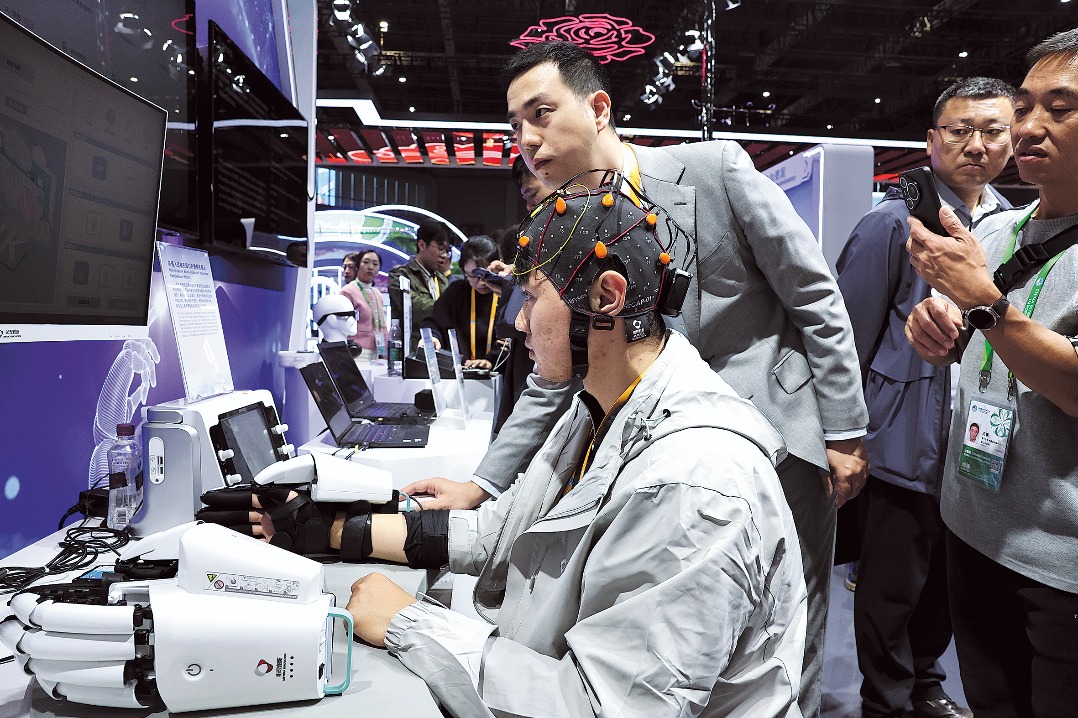
China has become a global leader in technological innovation, with advancements in AI that are among the most cutting-edge in the world. Brazil, on the other hand, with its robust academic community and growing technology sector, has also made significant strides in innovation. The two countries complement each other in their strengths. Brazil, with its diverse population and natural resources, offers an ideal landscape for implementing and testing AI solutions, while China provides expertise in AI research, development and large-scale implementation.
For Brazil, integrating AI into its education system could help resolve longstanding issues, such as inequality in access to quality education. AI-powered learning platforms could allow students in remote areas to access the same educational resources as those in urban centers. China, which has already integrated AI into many aspects of its education system, offers a valuable model for how Brazil can scale these technologies to ensure equitable and effective education.
However, Brazil-China cooperation goes beyond AI. Student exchanges, joint research projects and collaborative academic programs have further strengthened the bond between both nations. These exchanges foster not only technological advancements but also cultural understanding, creating a dynamic environment for sharing innovative educational practices.
As the world becomes increasingly interconnected, the importance of international cooperation in technology, AI and education cannot be overstated. The Brazil-China partnership, encompassing various forms of collaboration within different frameworks like BRICS, stands out as a shining example of how cooperation can fuel innovation, overcome shared challenges, and create new opportunities for growth. By continuing to build on this relationship, Brazil and China are not only paving the way for their success but also contributing to a more inclusive and sustainable global community.
With the right focus and commitment to cooperation and collaboration, Brazil and China can help shape a future where technology and education work hand-in-hand to foster equitable and sustainable development for all.
The views don't necessarily reflect those of China Daily.
The author is rector of IESB University, Brazil, and former Brazilian minister of education.
If you have a specific expertise, or would like to share your thought about our stories, then send us your writings at opinion@chinadaily.com.cn, and comment@chinadaily.com.cn.