Thai and Chinese youths discover shared heritage








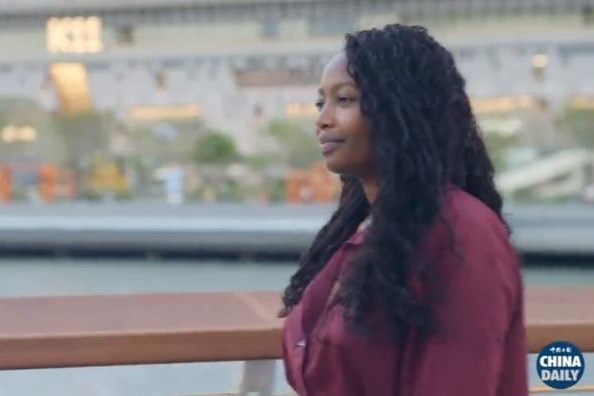
"This character 'fu' looks exactly like my grandfather's writing," said Ngamsasisakulchai Warisara during a calligraphy class at Shenyang Ligong University. "My grandfather is Chinese, and he used to tell me many stories about China. Now I can finally write the Chinese characters he taught me."
Warisara was among 11 Thai youths who participated in a three-week study camp from Oct 10 to 31 at Shenyang Ligong University in Liaoning province.
During the event, young people from both China and Thailand were fascinated by the resemblance between the two cultures.
In one cultural exchange class, for example, Warisara explained to her Chinese peers that when meeting teachers, Thai people press their palms together, with the height of the pressed palms signifying respect: for elders, hands are raised to chest level; for peers, they remain at the abdomen.
"Thai greeting etiquette is as nuanced as our traditional custom of bowing to elders," said Zhang Yunshan, a Chinese student at Shenyang Ligong University. "The deeper the bow, the greater the respect shown."
In an art class, Warisara presented a series of traditional Thai dance masks and pointed to a red one, explaining that it represents the Hindu monkey god Hanuman, as red symbolizes bravery and loyalty. "In Thai traditional performances, mask colors convey character traits," she said.
The art teacher, who was introducing Peking Opera facial masks, lit up and responded, "This is remarkably similar to Peking Opera masks, where red also stands for loyalty and courage, as seen with Guan Gong (a martial god), while black symbolizes integrity, like Bao Zheng (a judicial officer from the Song Dynasty)."
In addition to these similarities, the young guests were also captivated by the cultural contrasts. When tasting Shenyang's Laobian dumplings, Warisara noted that in Thailand, dumplings typically use rice paper wrappers with shrimp and cilantro fillings and are served with a spicy sauce. "The Laobian dumplings are completely different — they have a chive and pork filling, the wrapper is made from dough that's thin yet chewy, and the vinegar dipping sauce is so unique," she said.
Warisara was also struck by the visit to the Shenyang Imperial Palace, a UNESCO World Cultural Heritage site where the first three Qing emperors lived from 1625 to 1644.
"The layout of Dazheng Hall in the palace is fascinating," she said. "Our teacher explained that it combines Ming Dynasty palace guidelines with Manchu architectural elements. It reminds me of Bangkok's Grand Palace, which blends traditional Thai and European architectural styles."
Speaking of the stone lions at the hall's entrance, Warisara added excitedly, "Thai temples also have guardian creatures at their entrances. Although they look different, they serve the same purpose: protecting sacred spaces."
The modern Chinese lifestyle left a strong impression on the Thai students as well. Warisara recorded a video for her friends back home when she hired a shared bicycle via her phone for the first time. "Bangkok has shared bikes too, but they're not this convenient," she said.
The smart dining system in the campus cafeteria particularly amazed her. "On our first day, we were confused at the counter, but Chinese students showed us how to scan, order, pay, and pick up our food — all within two minutes. It's incredible," she said.
Before departing, Warisara carefully packed the "fu" character she wrote in class into her backpack. "This is a gift for my grandfather," she said. "But the best gift is sharing my experiences in China with him — the familiar traditions and the exciting new discoveries."
Liu Shicheng contributed to this story.
WU YONG in Shenyang