Multilateralism a sustained momentum








The fundamental driving force in the new era is the overarching collective rise of the Global South and their claim to global governance
The Asia-Pacific Economic Cooperation and G20 summits are being held successively in Peru and Brazil this month in the backdrop of continuing bloc confrontation and Donald Trump's re-election as president of the United States.
In recent years, the confidence deficit has been the biggest challenge for global governance. The US' refusal to appoint new members to the World Trade Organization Appellate Body has partially disabled the international trade dispute resolution mechanism. With Trump returning to the White House, concerns have grown that the US may once again launch trade wars that disrupt the international economic order through retaliatory tariffs and withdraw from the Paris Agreement on climate change once more. As important regional and global multilateral governance platforms, APEC and the G20 should contribute to leading cognitive thinking and policy innovation in economic cooperation, thus restoring confidence and order in the world.
First, in the new era, the primary driver of global economy and international relations is the collective rise of the Global South, rather than rivalry among great powers or a new Cold War. The number of United Nations member states has increased from the initial 51 to 193, with around 160 of them being emerging and developing countries of the Global South. These constitute the majority of the international community. The basic standpoint and starting point for understanding international relations should be what the Global South thinks and wants. The G20 was established because the G7 was no longer able to continue to dominate global economic governance. The participation of emerging countries not only signifies a change in international power dynamics, but also allows their claims to enter global governance.
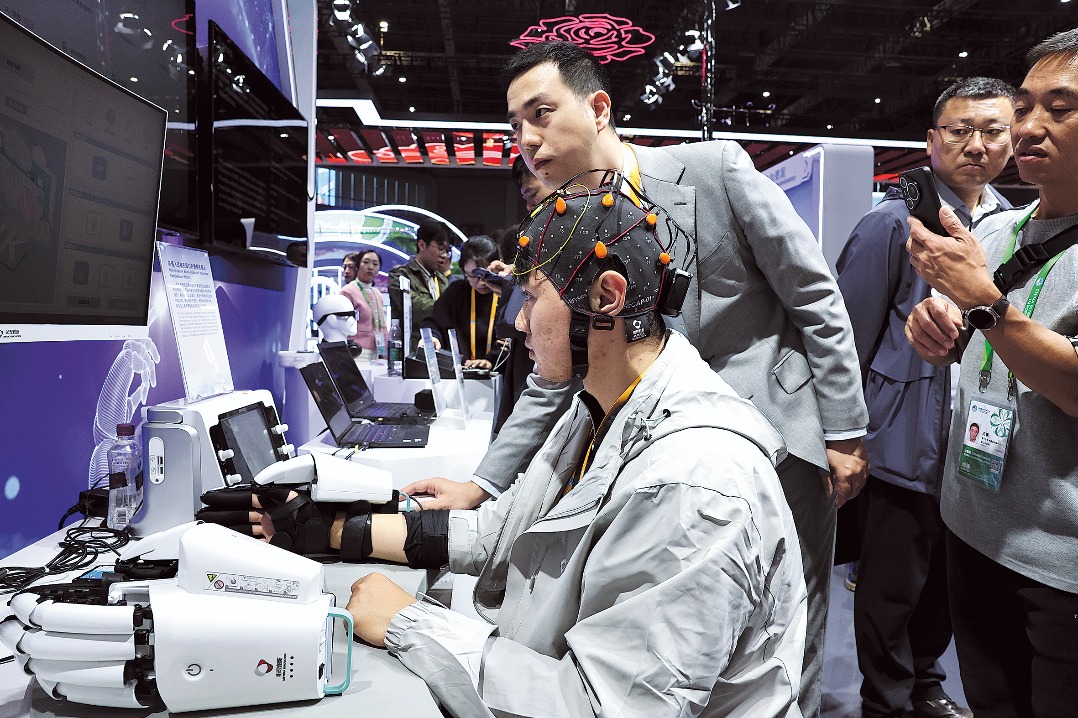
Second, the fundamental guarantee for reviving global confidence lies in the collective modernization of the vast number of countries in the Global South. Take China for example. The Chinese path to modernization is an important representative of the collective modernization of the Global South. China's giant market, strong innovation capabilities and tightly integrated industrial and value chains within the Asia-Pacific region and the world play a pivotal role in curbing the counter-globalization and anti-globalization trends.
The Ministerial Meeting of the G20 Task Force for a Global Alliance Against Hunger and Poverty in Rio de Janeiro on July 24 reviewed and adopted the inception document "Global Alliance Against Hunger and Poverty". China put forward three proposals: prioritize development and take concrete measures to help developing countries enhance their sustainable food production capacity; stick to a people-centered approach, promote exchanges and cooperation in poverty reduction, and enrich anti-poverty theory and practice; and uphold true multilateralism and work tirelessly to build a community with a shared future for mankind featuring zero poverty and common development.
In just more than four decades, China has lifted nearly 800 million rural people out of absolute poverty, achieving the building of a moderately prosperous society in all respects. Building upon this foundation, China has not only consolidated its poverty alleviation achievements but also realized high-quality development in electric vehicles, high-speed railways, and renewable energy.
High-speed railways and electric vehicles, which have long been considered unattainable "luxuries" for developing countries, are becoming popular in the Global South. Take Indonesia's Jakarta-Bandung High Speed Railway as an example. After completion, it has reduced travel time from over three hours to 46 minutes, with a maximum daily occupancy rate of 99.6 percent.
China's achievements on its path to modernization are a great encouragement to the Global South. As President Xi Jinping said in his keynote address at the opening ceremony of the 2024 Summit of the Forum on China-Africa Cooperation, "China and Africa account for one-third of the world population. Without our modernization, there will be no global modernization".
Third, the history of peace and development in the Asia-Pacific region proves that successful regional governance is the fundamental source of confidence for regional countries to actively participate in global governance. The collective rise of emerging and developing countries in the region over the past few decades has been due to the emphasis on development as a priority, with economic growth and livelihood improvement as the top tasks. Behind this is a common understanding that countries strive to maintain regional peace and stability, actively promote regional integration, and oppose regional divisions and bloc confrontation to create a favorable external environment for growth.
A prominent issue in global economic governance today is insufficient market demand. The substantive conclusion of China-ASEAN Free Trade Area 3.0 upgrade negotiations not only means the comprehensive connection of China's market of 1.4 billion people with Association of Southeast Asian Nations' market of 600 million people, but also represents a high-quality upgrade, with digitalization, green development, and urbanization being advanced simultaneously.
Despite the temporary dysfunction of global multilateral organizations such as the United Nations and the WTO, the development of regional governance entities will ultimately help restore confidence in global governance. Most Asian nations refuse to join military alliances and do not participate in economic blockades and embargoes. Dissolving the "iron curtain" of regional division with cooperative regionalism and socioeconomic integration is a successful experience in Asia-Pacific regional governance. Regional countries' confidence in a cooperative rather than confrontational regional order and multilateralism will provide sustained momentum for them to promote the reshaping of the UN and global multilateral mechanisms.
Amid great changes, the confidence in global governance will be continuously revived and strengthened among and by the Global South countries, especially China's march toward modernization and building a community with a shared future for mankind.
The author is an associate professor of international relations at Niigata University in Japan and a nonresident senior fellow at the Center on Contemporary China and the World at the University of Hong Kong. The author contributed this article to China Watch, a think tank powered by China Daily. The views do not necessarily reflect those of China Daily.
Contact the editor at editor@chinawatch.cn.