EU must improve business climate, and do it soon to be competitive








When I first joined China Daily in Beijing in the late 1980s as a reporter for its Business Weekly, much of the coverage was about how China was trying to expand foreign trade and attract foreign investors by focusing on improving the business climate.
China was not well prepared for the arrival of foreign investors. The government red tape, poor infrastructure, from roads to power supply, and a scarcity of professionals were among the major complaints.
The launch of China Daily in 1981 was partly to help improve the soft investment environment for foreigners coming to work and live in China. The same was the case for Shanghai Star, a China Daily tabloid launched shortly after the city's Pudong New Area project kicked off in 1990.
Probably no one had foreseen then that 30 years later Pudong would boast one of the most futuristic skylines in the world.
Despite the fact that Shanghai was already China's most modern city compared with other Chinese cities, foreign ventures then complained about issues such as a shortage of electricity, transport bottlenecks and the numerous chops required for business approval.
I returned to Shanghai in 1988, just before Zhu Rongji became the mayor. One of his many efforts was to push for the "one stop" service so that foreign companies didn't have to run from place to place to get the many chops.
The catchphrase then was to learn and adopt international practices. A straight talker, Zhu "criticized" my fellow Shanghainese for being "shrewd but not wise". Basically he argued for making a bigger cake. So even if you get just a slice of the cake, that slice could still be bigger than the earlier entire small cake.
For decades, foreign investors in Chinese joint ventures got a lion's share of the profits due to their expertise from technology to marketing. Many foreign business executives received outrageous salaries, often equivalent to the sum of 30 or even 100 Chinese employees.
It was a time before 2000, when China's economy was smaller than Italy's.
Fast forward to today and China's GDP is now eight times the size of Italy's. Chinese companies have made great strides in research and development and have fast moved up in the global supply chains. Many have also become peer competitors of Western multinationals.
China's electric vehicle industry is a typical example that has taken many in Europe and North America by surprise. Equally impressive are China's world-class infrastructure such as ports, airports, high-speed railways, bridges and e-commerce.
The trendy Chinese word, nei juan, or intense competition, means that foreign companies no longer have the luxury as they had in the 1980s when they could afford to ignore Chinese competition.
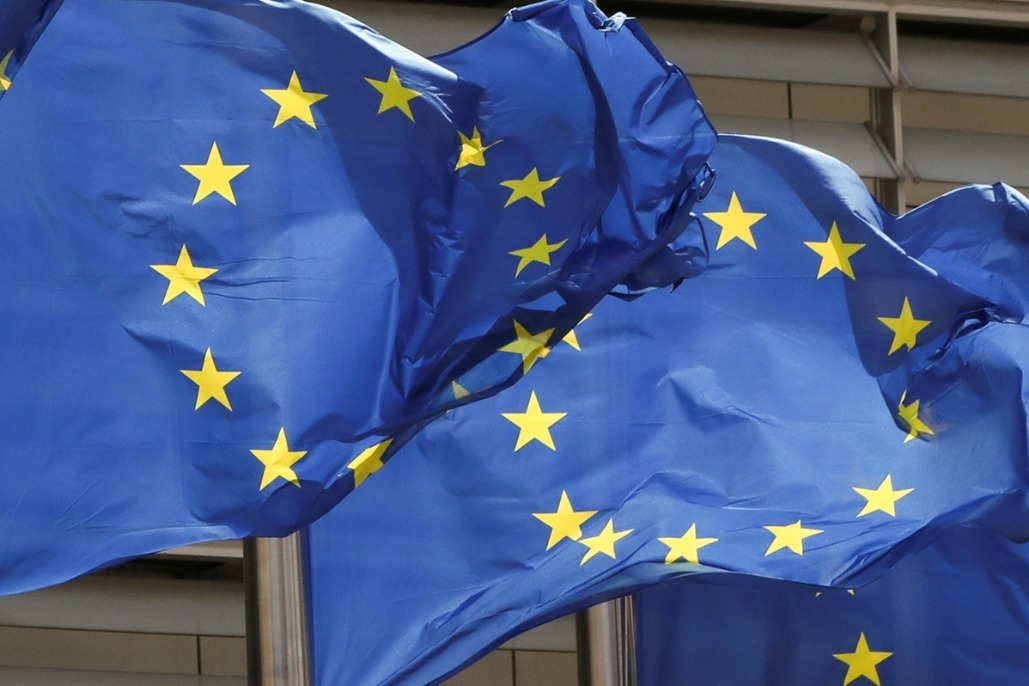
The fact that the EU's future competitiveness report by former European Central Bank president Mario Draghi says that the EU is lagging behind not just the United States but also China shows exactly the new reality today.
Despite the phenomenal progress, China still has a lot to improve in its business environment, and eagerness to learn has been vital to China's success story.
Ever since I came to Brussels six years ago, I also found that improving the business climate has become no less urgent in the bloc than in China.
The China Chamber of Commerce to the EU, in its annual survey report released on Monday, warned that Chinese companies' rating of EU business climate has declined for the fifth year consecutively. Uncertainty caused by EU regulations and practice, discrimination against companies of Chinese origin and the politicizing of trade and investment are among key concerns.
To me, that is partly why the EU has become less competitive in the past years. EU leaders like to tout the bloc as the most open market, but if the Draghi report is an indication, the EU faces a daunting task to improve its business climate, in particular in welcoming Chinese companies and treating them fairly.
The author is chief of China Daily EU Bureau based in Brussels.
chenweihua@chinadaily.com.cn