


Time to raise a glass to baijiu
World's top-selling alcoholic drink, by volume, enjoys growing international demand for its unique flavor, Yang Yang reports.







Amiddle-aged Chinese cardiologist friend told me two years ago that after tasting alcohol from different countries, he could finally appreciate baijiu, a name that encompasses the whole spectrum of different Chinese spirits.
My own epiphany with baijiu happened much earlier at a senior middle school reunion during university. Until then, I'd hated the smell of what my grandfather, father and uncles all called the "aroma" of baijiu, especially when mixed with the aromas of multiple dishes, and the loud drunken shouts, laughter, and sometimes quarrels, and the endless rounds of toasting that marked all my childhood festivals.
However, when Derek Sandhaus, who comes from the United States, started promoting baijiu overseas — even though it is the best-selling alcohol in the world by volume, it is little known outside of China — the rituals of drinking baijiu in a festive setting became a selling point.
"One of the funniest things is that I found it much easier to get someone who has never been to China, with no exposure to ganbei (toasting) culture, like baijiu by teaching them the rituals of drinking, like how to clink glasses and try ensure your glass is lower than the other persons'. They love it, like, for them that's the most exciting thing about learning about baijiu," he says, after hearing my complaints about Chinese drinking culture.
"So maybe the lesson there is not that drinking culture is good or bad, but that there's a good and a bad way to do it," adds the author, in his early 40s.
Sandhaus' first encounter with baijiu was not pleasant. At a Thanksgiving dinner in Shanghai in 2006, his friend brought a green bottle, which "smelled as if someone had wrung a garbage bag of soiled gym shorts into a bucket of fish sauce, stirred in an equal measure of Drano, rotten fruit and blue cheese, and left it to marinate a few days".
When he moved to Chengdu, capital of Sichuan province, with his US diplomat wife in 2011, he met the Scandinavian baijiu magnate Johan Simonsson, who guided him through the world of baijiu and inspired his interest to know more about this liquor that sells nearly 11 billion liters a year, 99 percent of it in China.
After crossing the taste threshold for the liquor (drink enough of anything that is undrinkable at first, then you eventually start enjoying it), he set off on a journey to explore.
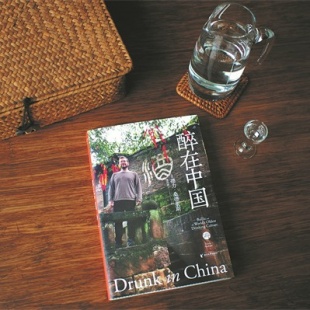
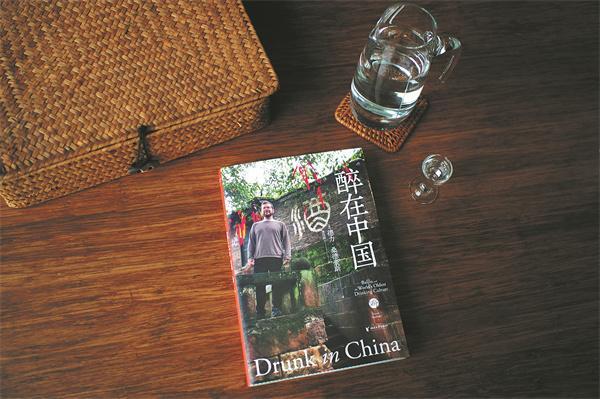
In 2015, Sandhaus published Baijiu: The Essential Guide to Chinese Spirits and Drunk in China in 2019, which recounts his exploration of the liquor. A Chinese translation of the book was released by Guomai Culture & Media Co last year.
Now an expert on baijiu and all the drinking rituals, Sandhaus will walk up to you, raise a small cup and say "I will finish. You can do as you please", just like any Chinese man.
When asked which baijiu he loves the most, Sandhaus says that the question itself is not accurate, for the alcohol, most of which is made from sorghum, is also made from many other grains and comes in regional variations, each with distinct qualities and production methods.
It also varies in aroma. There are main categories, such as soybean, strong, light and rice aromas, and also minor ones like ginger or sesame.
"Which is my favorite baijiu? It's like we're talking about 15 different things," Sandhaus says.
"It's not Chinese vodka, or Chinese whisky. It doesn't have a parallel anywhere else in the world," he adds.