Green fashion turns old plastics into profits
As awareness of the climate crisis and environmental issues grows, consumers warm to living more sustainable lifestyles







Shift in mindset
Supa, who co-founded Shanghai-based sustainable fashion brand HowBottle, said there has been a noticeable shift in consumer attitude toward clothes made from recycled materials.
"When HowBottle was established in 2016, we were excited about the idea that plastic bottles could be regenerated into polyester thread. However, few people knew this technology then," she said.
"At that time, many consumers didn't have a good understanding and awareness of environmental protection, and when we said that our products were made from recycled plastic bottles, the first thing they would ask was whether they were clean and safe," said Supa.
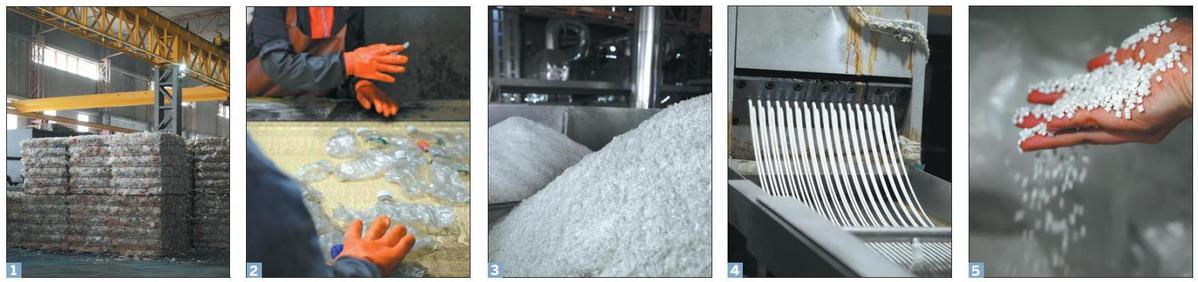
The recycled fabric feels the same as regular fabrics, and it's soft, durable and comfortable to wear. Compared with conventional polyester made from petroleum, recycled polyester can save about 45 percent of water and 40 percent of natural gas, and reduce carbon emissions by about 42 percent.
Things were not easy for Supa at first, but she noticed a change in public perception in 2019, when Shanghai's mandatory waste sorting policy came into effect.
"Suddenly, everyone was very curious about where the garbage would go after classification, and they discovered that plastic bottles could be made into clothes and bags. As a result, our sales started booming," she said.
"Nowadays, many of our customers are aware of technology. They want to dig deeper into where the plastic bottles come from, what the recycling process is like, and are even curious about the latest bio-based recycling technologies," she added.
HowBottle sells its products online and offline, with the main consumer groups including university students and young workers at around 25 years old, and mothers around 35 years old who want to cultivate awareness of sustainability in their children, Supa said.
"What our customers buy are not only the products, but also the concept behind them. They think what they wear should reflect their values."
HowBottle has partnered with the Palace Museum to release a series of cultural and creative products, including leather-like bracelets that are made from recycled fallen leaves and branches.
At Bottloop, it has also incorporated recycling technology with traditional craftsmanship. The company invited Zhao Sijin, an inheritor of the intangible cultural heritage of Daoming bamboo weaving, to weave environmentally friendly bags using traditional weaving skills.
Liu from Bottloop said: "Zhao has been weaving baskets with bamboo all his life, so we thought he may not accept materials other than bamboo. However, to our surprise, he was very happy to make plastic bags after learning that recycled plastic strips are conducive to sustainable consumption."
Public awareness and a willingness to participate in low-carbon consumption are on the rise. According to the 2024 Sustainable Consumption Report by consultancy SynTao Co and Shanghai-based Jiemian News, over 87 percent of the respondents in China had engaged in low-carbon consumption.
It said almost a quarter of consumers are willing to buy sustainable sports and outdoor equipment, clothing, shoes and bags.
Aesthetic design and utility are key to gaining consumer favor, according to Supa. "I firmly believe that it's not that people don't care about our environment, but rather that there are not enough choices provided. A product needs to be attractive, useful, well-designed, and the concept behind it appealing."
Sai Hang, 31, who works at a university in Shanghai, recently bought a camera bag made from recycled materials. He said: "If a product boasts its sustainability, then it's lifted to another level. Between two products that are both reasonably priced, good-looking and of good quality, I would consider purchasing the recycled product."
Xu Nuo contributed to this story.




- Fujian county's rural development becomes a big draw for Taiwan investors
- Nobel laureate in chemistry: Give young scientists more independence
- Are Asians really better at math?
- How to navigate the potential competition engendered by AI?
- Xi to attend opening ceremony of National Games, declare Games open
- Rare bird spotted for second time in Hainan county