RCEP an FTA with 'low ambition' but high potential








The Regional Comprehensive Economic Partnership agreement that entered its third year on Jan 1 is a significant rules-based trade and economic framework for the Asia-Pacific region.
Although the negotiations for the RCEP, which comprises the 10 ASEAN member states and five of ASEAN's trade partners (China, Japan, the Republic of Korea, Australia and New Zealand), were concluded in November 2019, the agreement came into effect on Jan 1, 2022, because different members ratified the rules of the agreement at different times.
In its present form, the RCEP represents roughly one-third of the global population and world GDP, making it the largest free trade agreement in the world in terms of the number of people and markets that it covers.
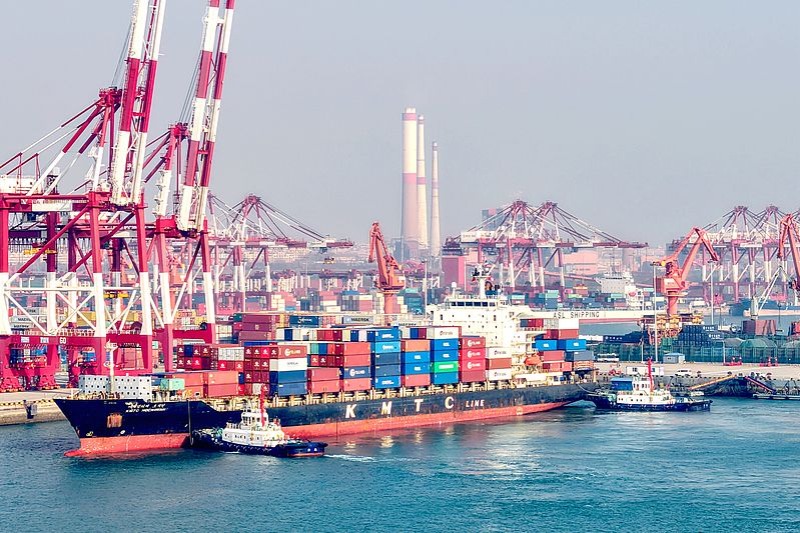
In the two years since coming into effect, the RCEP has played an important role in advancing industrial production in the Asia-Pacific. It has done so by eliminating tariffs on more than 90 percent of the goods that are traded between the member states, and significantly reducing the non-tariff barriers on the movement of goods between countries. This has helped make transit of goods across borders cheaper.
The overall result has been a noticeable decline in the cost of trade. Lowering the cost of trade is a significant achievement of the RCEP at a time when the overall trade cost is increasing due to a variety of reasons. These include the rising US dollar in past several years, the high crude oil prices due to the Russia-Ukraine conflict, and the higher cost of booking containers due to irregular supply after the Israel-Palestine conflict broke out.
Besides, the RCEP is working as an ASEAN++ framework, as it is a combination of ASEAN+1 FTA countries. India is the only country that has an FTA with ASEAN but opted to stay out of the RCEP. As a mega ASEAN+1 FTA, the RCEP has helped ASEAN to scale up its trade and investment liberalization agenda, setting an important example for the rest of the world to follow.
However, the RCEP has been criticized for being a "low-ambition" agreement, particularly when compared with the Comprehensive and Progressive Agreement for Trans-Pacific Partnership.
The CPTPP and the RCEP, nonetheless, have several common members, including Japan, Australia, Brunei, Malaysia, New Zealand, Singapore and Vietnam. These countries have been working according to the rules of both FTAs. It is noticeable, though, that the CPTPP does not include any less-developed economy. The RCEP, on the other hand, has three less-developed economies from ASEAN — Cambodia, Laos and Myanmar.
The inclusion of these low-income member states is one of the major reasons why the RCEP is being criticized for being less ambitious than the CPTPP. It is not possible for less-developed countries to commit to as much market liberalization as their advanced counterparts. Indeed, even with respect to tariff liberalization, the RCEP allows greater flexibility to less-developed member states. This makes the RCEP a truly inclusive FTA, a rare example.
However, the RCEP needs to address two major challenges.
First, the RCEP will have to develop the capacity to respond to some of the major new-generation issues, including the challenge of ensuring environmental sustainability for its member states. The RCEP must also ensure that its rules are consistent with the efforts of the member states to reduce carbon emissions and environmental pollution.
That would require the rules to facilitate easy transfer of green and clean-technology products and services among member states, meaning the RCEP rules ought to focus on harmonizing the quality standards of clean products, liberalizing commitments on cross-border transfer of environmental services, and making intellectual property rights protection rules flexible for quick transfer and greater intra-bloc trade of green and clean-tech products.
The second challenge the RCEP needs to meet is of adapting to the complicated geopolitics that is impacting global and regional trade. The RCEP must ensure that political disagreements between member states do not impact trade and economic relations. This is essential for it to remain a cohesive and productive rules-based framework.
It is also important for the RCEP, as an economic bloc, to be prepared to address the uncertain outcomes of major political developments, such as the return of Donald Trump to the White House. The possibility of more conflicts in the world, including in Asia, cannot be ruled out, and the potential conflicts could be disruptive for trade. Hence, the RCEP must be strong and flexible enough to handle these disruptions.
The author is a senior research fellow and research lead (trade and economics) at the Institute of South Asian Studies, the National University of Singapore.
The views don't necessarily represent those of China Daily.
If you have a specific expertise, or would like to share your thought about our stories, then send us your writings at opinion@chinadaily.com.cn, and comment@chinadaily.com.cn.