China-EU cooperation vital for inclusive global growth







The year 2025 marks the 50th anniversary of diplomatic relations between China and the European Union (EU). At a time when global economic growth is slowing and the return of Donald Trump to the White House has heightened instability and uncertainty, China and the EU—as two of the world's largest economies and staunch supporters of economic globalization and trade liberalization—can offer stability and certainty for inclusive global economic growth through strengthened cooperation.
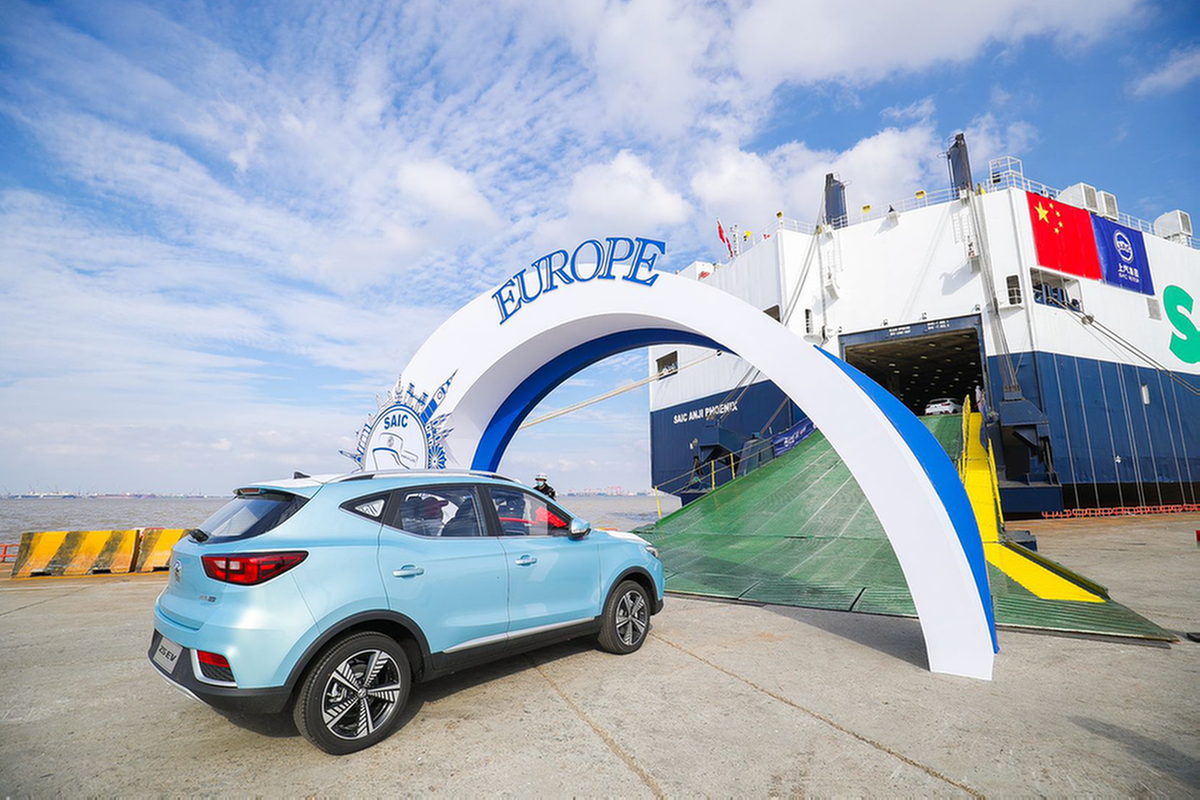
China and the EU are each other's key economic and trade partners. Amid a complex and severe international landscape, fraught with risks and uncertainties, China-EU economic and trade cooperation has continued to develop rapidly, demonstrating remarkable resilience.
In terms of bilateral trade, according to China's customs, the total import and export of goods between China and the EU in 2024 was US$785.8 billion, up 0.4 percent year on year, of which China's exports to the EU amounted to US$516.4 billion, up 3.0 percent year on year, and imports from the EU stood at US$269.4 billion, down 4.4 percent year on year. The EU is China's third-largest export destination and second-largest import source; while China remains the EU's largest import source and third-largest export destination, according European to statistics.
In terms of investment cooperation, two-way investment flows between China and the EU have continued to grow in recent years, demonstrating good momentum. Between 2020 and 2023, EU foreign direct investment (FDI) flows to China rose from US$5.69 billion to US$10.58 billion, with their share of China's total inward FDI rising from 3.8 percent to 6.5 percent. According to European data, China's FDI inflows to the EU grew from EUR 6.27 billion in 2020 to EUR 8.06 billion in 2023, with greenfield investment reaching EUR 5.3 billion in 2023—an increase of 48 percent compared to 2022. In contrast, the EU as a whole recorded negative net FDI inflows for three consecutive years from 2021 to 2023, with 2020 being the only year to see a positive inflow.
The development of both China and the EU requires stronger cooperation between the two sides. China has consistently advocated for building a partnership with the EU centered on peace, growth, reform, and progress of civilization. It regards the EU as an important partner for Chinese modernization, emphasizing win-win cooperation. However, in recent years, the EU has increasingly characterized China as a "competitor" and "systemic rival", prioritizing security concerns over economic interests and adopting a de-risking approach in its trade and economic relations with China.
Despite this, as an export-oriented economy, the EU's economic growth remains dependent on access to China's vast and expanding market. During the European sovereign debt crisis, robust export growth to China and the influx of Chinese capital were instrumental in driving the EU's economic recovery. According to statistics from both China and Europe, bilateral trade supports employment for around 3 million people in the EU and 6 million people in China.
In terms of investment, mutual investments between the two sides have boosted profits for European companies and supported the development of green industries in Europe. Thanks to this cooperation, by 2024, half of Volkswagen's sales, one-third of BMW's sales, and 36 percent of Mercedes-Benz's global sales were generated from the China market. Additionally, Hungary is expected to become Europe's largest, and one of the world's top five centers for new-energy battery production by 2030.
Global economic growth requires cooperation between China and Europe. Amid escalating geopolitical tensions and structural challenges such as an aging population, weak investment, and declining total factor productivity, global economic growth has struggled to find sufficient endogenous impetus in recent years. Some countries have embraced protectionist policies, building "a small yard and high fences" and pursuing "decoupling from China", while simultaneously implementing beggar-thy-neighbor strategies in trade and industry. These actions have further constrained global economic and trade growth.
According to the International Monetary Fund, the global economy is expected to grow by just 3.2 percent in 2024, marking the lowest growth rate since 2021. According to the World Trade Organization, while global trade has seen a year-on-year growth of 2.7 percent, an improvement over the 1.1 percent decline in 2023, it has fluctuated between growth and decline in recent years, with increasing fragmentation. The role it once played as a key engine of economic growth before the 2008 global financial crisis has significantly diminished. Together, China and the EU account for more than a third of the global economy. In 2023, China's economy grew by 5.2 percent year on year, while the EU's economy expanded by 0.4 percent. Together, they contributed 1.1 percentage points to global growth, accounting for 33 percent of the total. In 2024 China's GDP grew 5 percent year on year, while the EU's economy is expected to expand by 0.9 percent, according to the latest forecasts by the European Commission. The combined contribution of China and the EU to global economic growth and trade development is expected to become even more significant.
Global economic governance requires cooperation between China and Europe. In recent years, economic globalization and trade liberalization have been hindered by the rise of unilateralism and protectionism. At the same time, the lack of global consensus on rules and policies for emerging areas like green trade and digital trade has created a gap in generating new momentum for global economic and trade growth. There is an urgent need to revitalize global development through improved governance. As the United States shifts away from multilateralism toward unilateralism under its "America First" policy, global trade faces the risk of fragmentation and instability. Both China and the EU support the multilateral trade system with the WTO at its core.
Maintaining a healthy, stable, and predictable global trading environment is in the interest of both parties—and the vast majority of economies worldwide. In response to the US "tariff stick", China and the EU have a shared responsibility to explore ways to maintain normal international trade exchanges while balancing the development of their respective industries. They must oppose the politicization of trade and ensure that trade returns to its economic essence, which will reignite its positive role in driving economic growth. Both China and the EU are active practitioners in tackling climate change. They must fully leverage their respective internal market strengths to spearhead global trade, investment, technological cooperation, and rule-making in green and low-carbon sectors. As two major economies, this is not only their responsibility but also essential to their shared development.
Yao Ling is director of the European Institute at the Chinese Academy of International Trade and Economic Cooperation under the Ministry of Commerce, and Xia Chuanxin is an associate researcher with the same institute
The views don't necessarily represent those of China Daily.
If you have a specific expertise, or would like to share your thought about our stories, then send us your writings at opinion@chinadaily.com.cn, and comment@chinadaily.com.cn.