DeepSeek shrugs at Sputnik metaphor







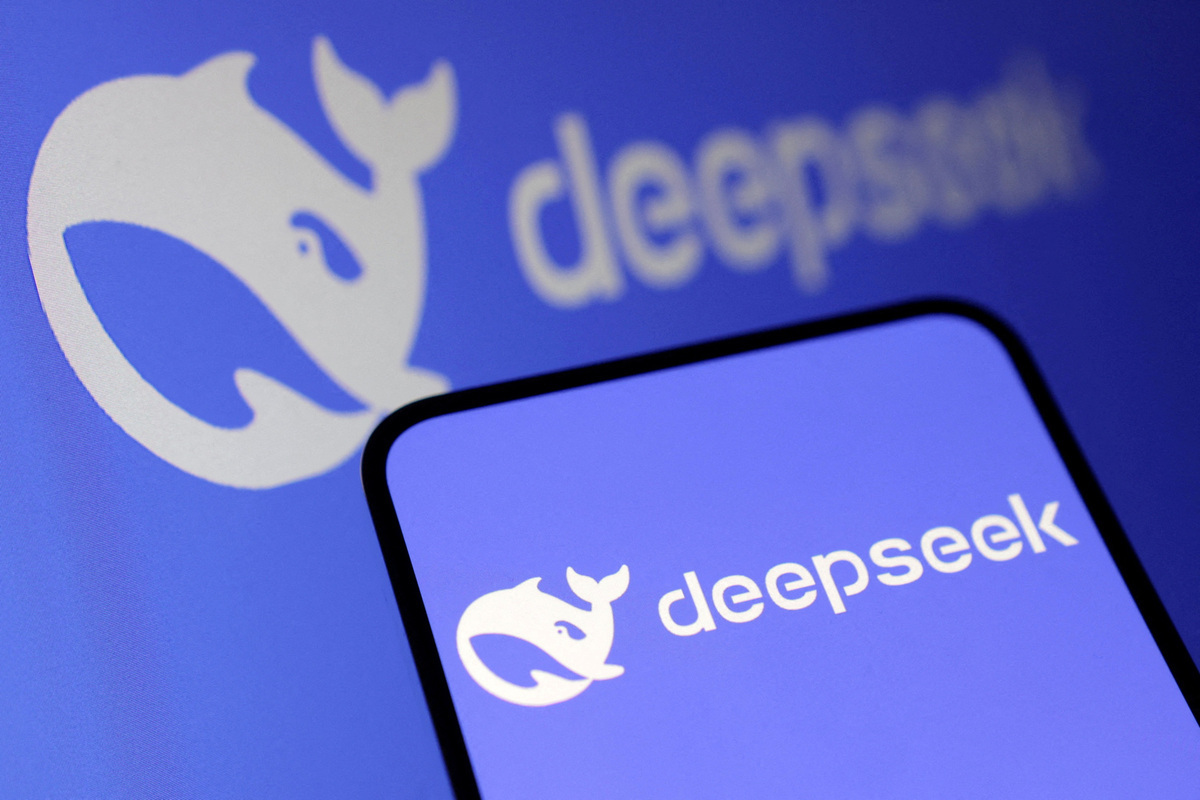
After DeepSeek's groundbreaking debut, some commentators likened its significance to a "Sputnik Moment", highlighting its epochal impact. But the state-of-the-art Chinese-made generative AI model itself seems unimpressed by the analogy.
Intriguingly, when asked about its view on DeepSeek marking a "Sputnik Moment" in AI, the model acknowledged the symbolic importance of the technological breakthrough and a shifting competitive landscape, saying China has risen from being a "follower" to a "parallel runner" or even a leader in certain AI domains. Yet it emphasized the need to "avoid being swayed by label-based narratives", urging people to "stay calm amid possible over-praise or rhetoric meant to talk China down" and stressing that "the inclusive nature of technology is of more historical significance than narratives of mere competition".
Of course, the model's response does not represent the official stance of the Chinese AI company. Nevertheless, it offers valuable insights. As an algorithmic synthesis of comprehensive online discourse analysis, the answer carries symbolic weight.
Sputnik, the first artificial satellite launched by the Soviet Union in 1957 — along with the country's intercontinental missile tests that same year and Yuri Gagarin's Vostok 1 spaceflight four years later — constitutes what historians call the "Sputnik Moment". That marked a pivotal shift in defense technology and arms race during the Cold War. The 83.6-kilogram satellite orbiting Earth delivered a psychological blow to and put strategic pressure on the US, because it meant the US lagged behind the Soviet Union in critical space technology.
The space race that ensued not only intensified Cold War rivalries but also catalyzed, even if unintentionally, a new technological era centered on space exploration. Though driven by competition, breakthroughs in aerospace, computing, and materials science laid the foundation for modern infrastructure such as global communications and weather monitoring, profoundly influencing socioeconomic progress.
Labeling current developments as a "Sputnik Moment" may not inherently carry malice, but it aligns with Western media's penchant for dramatizing events. While the Cold War is history, the vision of a shared human future endures. If DeepSeek signals a new phase in AI development and competition, let us hope that innovation will bring transformative benefits to humankind's broader well-being.
Some Western outlets have also likened DeepSeek's rise to an "earthquake", claiming it has "lifted the veil of secrecy shrouding AI", "collapsed the US narrative of computational supremacy" and "shattered Western illusions of containing China". Such rhetoric inevitably evokes China's recent advancements in the sixth-generation fighter aircraft, Huawei's semiconductor breakthroughs and its unparalleled tech-manufacturing ecosystem.
For the Chinese public weary of "small yard, high fence" restrictions and "decoupling" attempts, the technological and cultural milestones around Chinese New Year have indeed been a morale booster. But one thing is certain — attempts to "contain China" will be futile, because its rise is unstoppable. With a 5 percent growth rate, China leads the world's major economies and continues to account for about 30 percent of global growth, despite the economic challenges at home. Simultaneously, the country is becoming a hub for top global talents and innovations, steadily advancing toward the frontiers of science and technology.
More encouragingly, DeepSeek's feedback reflects a growing, measured confidence within China's public discourse. As one Chinese economist noted, DeepSeek's success is not about "China surpassing the US", but rather "open-source models surpassing closed systems". This open ethos, mirrored in China's expanding unilateral visa-free policies, signals a maturing embrace of global collaboration.
DeepSeek's co-founder Liang Wenfeng describes his entry into AI as a natural progression for an engineer driven by curiosity about machine learning's limits. The model embodies boundless exploration and relentless innovation. Liang once said, "Our criteria for talent have always been passion and curiosity ... Many care more about research than money." Such values will have profound implications for China's tech trajectory.
To conclude, a poignant remark from DeepSeek-R1 to a user bears repeating: "The long march of technology has no finish line, only successive starting points. Maintaining 'crisis awareness while leading' far outweighs basking in 'applause while catching up' — for truly great innovations are born not in celebratory toasts, but in laboratories where the champagne stays unopened."
The author is chief research fellow, China Watch Institute, China Daily.