Foreign R&D centers contribute to China's innovation








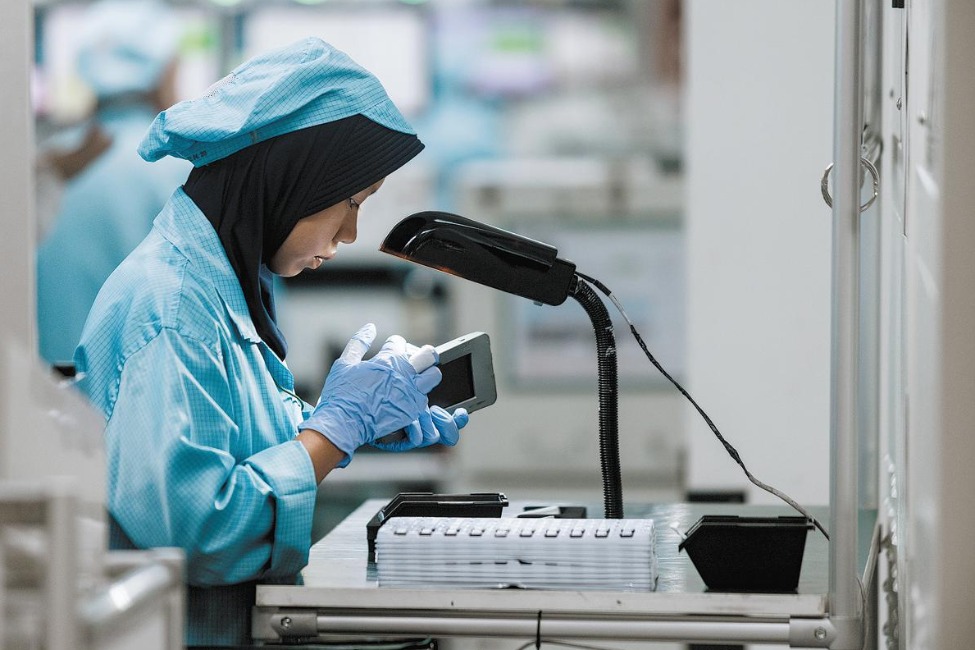
Foreign-funded research and development (R&D) centers have become an integral part of China's innovation ecosystem, playing a crucial role in introducing cutting-edge international technologies, attracting top talent, and enhancing industrial technological levels and innovation capabilities. In recent years, these centers have been rapidly developing, particularly in major international innovation hubs like Beijing, Shanghai, and the Guangdong-Hong Kong-Macao Greater Bay Area. By recruiting talent from China's market and supporting industrial upgrades, foreign-funded R&D centers and China's industries benefit mutually, injecting sustained momentum into China's technological advancement.

Moreover, foreign-funded R&D centers serve as bridges, helping China integrate into global innovation and industry chains. These centers closely collaborate with their parent companies and other global R&D institutions, facilitating technical sharing and talent exchanges. With their global reach, they connect China with the world's technological advancements. Large foreign-funded R&D centers can also drive local companies to enhance their technological and innovative capacities. This collaboration within China's industry chain boosts innovation and promotes overall industrial upgrades, achieving mutual benefits.
As global tech competition intensifies, China needs to seek more advantages and resources in this race. Foreign-funded R&D centers, with their strong innovation capabilities in foundational and frontier fields, play a critical role in China's technological innovation and high-quality development. However, with China's innovation system continuing to evolve, the high-quality development of foreign-funded R&D centers also faces several challenges. These include difficulties in transferring intellectual property abroad, with unclear definitions and varying review standards across regions.
Furthermore, foreign-funded R&D centers are disproportionately concentrated in the eastern part of the country, leaving the western regions underserved despite their rapid economic growth and the urgent need for R&D support in manufacturing upgrades. Additionally, foreign-funded R&D centers receive limited government funding, and there is a shortage of substantial industry-academia-research cooperation projects, preventing them from fully utilizing local policy resources.
In early 2025, the State Council issued an action plan to stabilize foreign investment, which proposes practical measures to stabilize and expand foreign investments. Relevant government departments can pay more attention to foreign-funded R&D centers, implementing multifaceted strategies to support their high-quality development.
First, a unified standard for reviewing transfer of intellectual property rights (IPR) abroad should be established. Government departments should lead the efforts to consider factors such as technological value, application potential, and competition, clearly defining terms like "impact on national security" and "impact on innovation in key technologies". This would provide a solid foundation for local implementation guidelines. Additionally, national science and IPR departments can collaborate to create a database of critical national technologies and supervise their protection. This would support local review processes, ensuring they are scientific, standardized, and consistent.
Second, central and western regions can accelerate the development of specialized policies for foreign-funded R&D centers, increasing their appeal to foreign investors. Currently, only a few provinces in these regions have implemented relevant policies, and a comprehensive policy system has yet to be formed. Most foreign R&D centers frequently engage in cross-border exchanges. If these regions model their policies after Shanghai by optimizing systems for cross-border R&D, personnel mobility, and immigration, while addressing gaps in cross-border financial services and IP protection, these regions can leverage cost and computing power advantages to attract more foreign-funded R&D centers.
Last, creating smooth channels for foreign enterprises to participate in the innovation ecosystem and deepening industry-academia-research collaboration are essential. Local science and technology departments should be encouraged to form professional service teams to offer guidance on policies, promptly announce government science and technology projects and subsidy plans, and assist with application challenges.
Through these solid measures, China can create a more favorable environment for foreign-funded R&D centers, enabling them to deeply integrate into the country's innovation system. This collaboration will drive mutual development, injecting powerful momentum into China's innovation-driven growth and ensuring a thriving, competitive future for the nation.
Furthermore, supporting foreign-funded R&D centers in establishing postdoctoral research stations, joint laboratories with research institutes, along with providing government funding for key projects, improving supporting services, and creating a more international and law-based innovation environment will help accelerate the transformation of scientific research into commercial applications.
Through these solid measures, China can create a more favorable environment for foreign-funded R&D centers, enabling them to deeply integrate into the country's innovation system. This collaboration will drive mutual development, injecting powerful momentum into China's innovation-driven growth and ensuring a thriving, competitive future for the nation.
The author is chair of Deloitte China and a CPPCC National Committee member. The views don't necessarily represent those of China Daily.
If you have a specific expertise, or would like to share your thought about our stories, then send us your writings at opinion@chinadaily.com.cn, and comment@chinadaily.com.cn.