Modernizing farming can tackle rural challenges







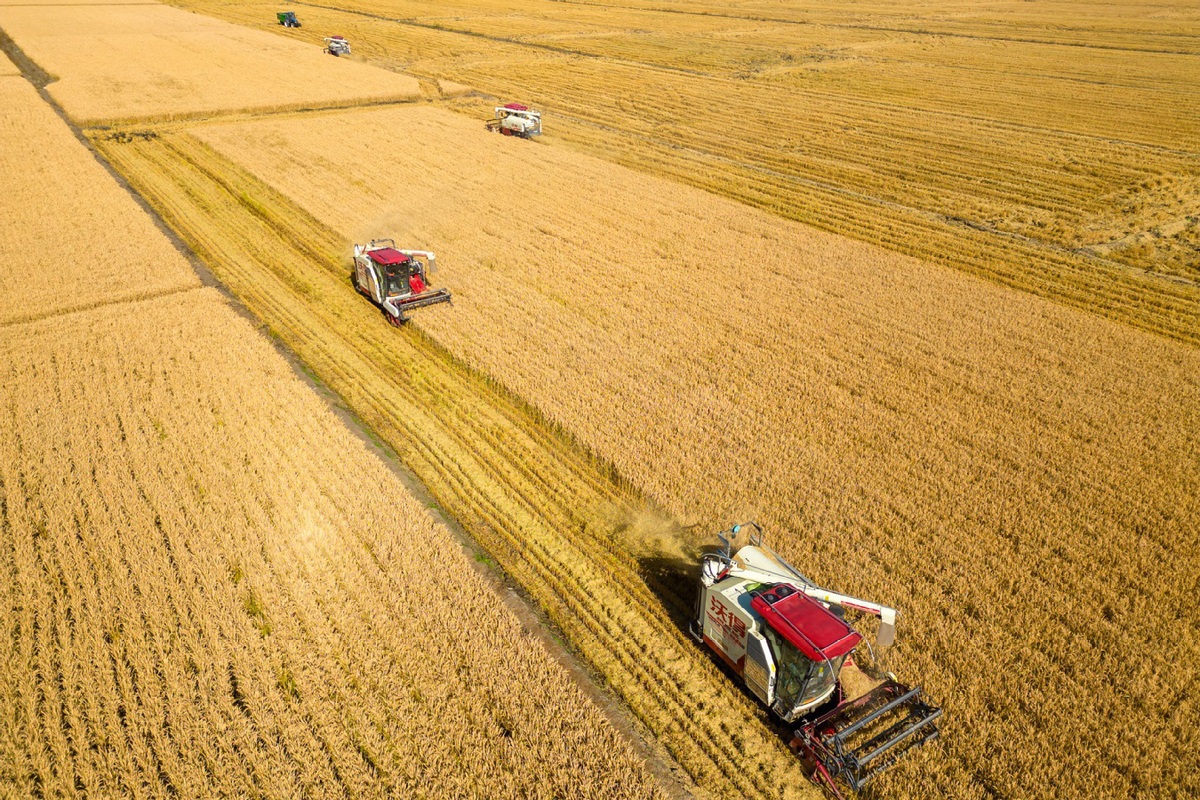
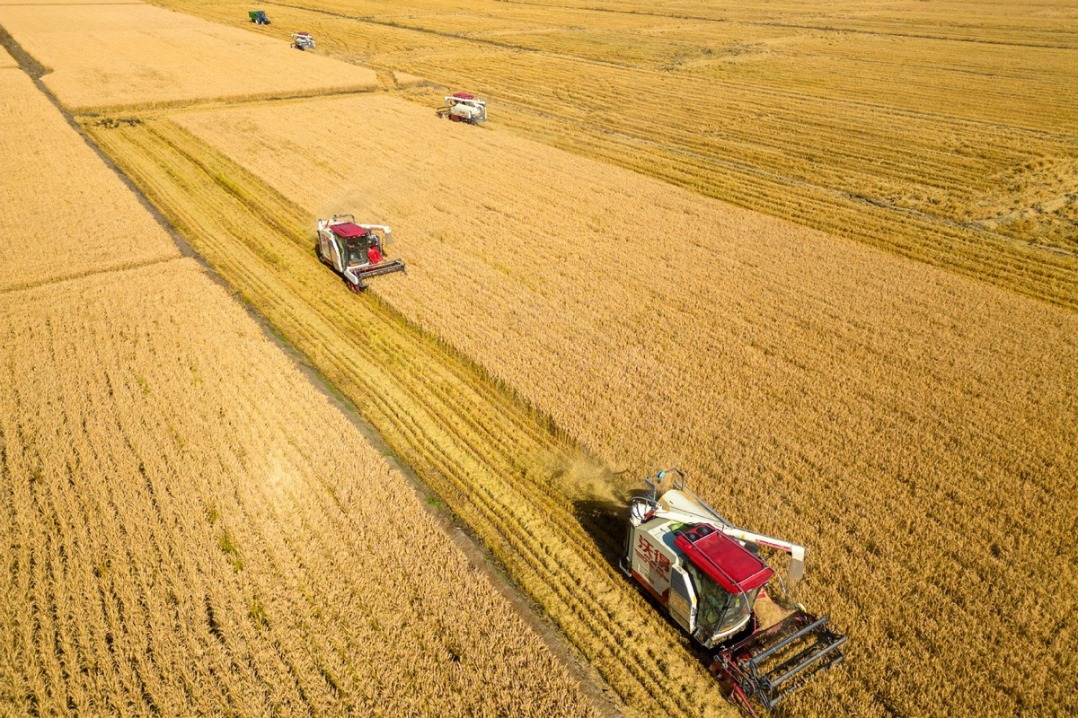
China has made remarkable progress in modernizing its agricultural sector and rural areas. Over the past decades, farms across the country have become significantly more productive, supported by better machines, more efficient inputs and higher-yield crop varieties.
A government campaign that is creating millions of hectares of high-standard farmland is complemented by efforts in research and development to upgrade the country's seed sector and develop better technologies, including drones, biotechnology and high-tech greenhouses, through which high-quality fruits and vegetables are grown on relatively small plots and with less labor. At the same time, substantial investments have been made to improve rural infrastructure, expand internet access even to remote villages, and beautify rural areas.
Despite these achievements, the farm sector faces several challenges. Soil degradation, water scarcity and biodiversity loss are posing real challenges to farmers across the country. Also, extreme weather events due to climate change are becoming more frequent.
In addition, rural areas are struggling because of a shortage of farm laborers as people continue to move to cities in search of better-paying jobs and many older farmers are no longer interested in farming, with only a few youths interested in filling the gaps.
Moreover, as living standards improve across the country, there are rising concerns over food safety, with consumers demanding healthier, more diversified foods. Experts and policymakers agree that China must transition to a more sustainable model of agricultural modernization — a model that can help produce sufficient, healthy and nutritious food for all without damaging or depleting natural resources and agricultural ecosystems that future generations need to grow their own food.
What would such a new model of agricultural modernization look like? Recent policy documents suggest that "green" and "ecological" practices are likely to play a significant role in guiding China's agricultural development. For example, policymakers are encouraging farmers to shift from chemical fertilizers and pesticides to more environmentally-friendly alternatives, such as organic fertilizers and biological pest control methods. These are important measures to reduce the overuse of chemical fertilizers and other chemical inputs, which has long been the norm for many farmers in China.
Additionally, advancements in machinery and biotechnology are being explored to improve resource efficiency. Conservation tillage, soil testing and growing climate-resilient crop varieties are new trends gaining popularity across the country.
Besides, rural areas are experimenting with circular economy approaches — recycling farm waste such as straw and manure to return nutrients to the soil and enhance organic matter. This not only improves soil health but also promotes low-carbon agricultural development by reducing emissions and enhancing carbon sequestration, turning farms into carbon sinks.
Beyond farmland, China is also developing zero-carbon villages — communities designed to eliminate or offset carbon emissions — by enhancing the use of renewable energy resources and improving energy efficiency.
The shift toward greener farming practices not only enhances environmental sustainability but also plays a crucial role in rural industrial upgrading. As demand grows for high-quality, sustainably produced food, rural areas have an opportunity to diversify their economies by developing new industries linked to green agriculture. Organic and specialty food production, the adoption of digital technologies to connect rural producers and urban consumers, as well as eco-tourism can create higher-value jobs that attract young talents back to rural areas.
Moreover, investments in renewable energy projects such as biogas production and solar-powered irrigation systems can support low-carbon rural energy generating systems while creating new business opportunities for local enterprises.
A more diversified agricultural system that relies less on chemical inputs is also inherently more resilient to climate change, strengthening overall food security. Diverse cropping systems improve soil health, enhance water retention and foster natural pest control. And cultivating a wider range of climate-resilient crops ensures that food production remains stable even under extreme weather conditions such as droughts, floods or extreme temperature fluctuations.
China is not alone in shifting toward a greener model of agricultural modernization. In Germany, too, policymakers and scientists are developing strategies and policy support measures aimed at encouraging farmers to integrate more environmentally-friendly measures into their practices. The shared goal of an agriculture sector that is ecologically and socially sustainable while ensuring food security for all creates more opportunities for collaboration.
At the Global Forum for Food and Agriculture in Berlin in January, the agriculture vice-ministers of the two countries signed a joint declaration to strengthen agricultural cooperation and promote ecological farming. Their joint action plan for agricultural development calls for taking shared actions to tackle the climate and biodiversity crises, and reduce soil degradation — measures in which farmers and rural communities will play a pivotal role.
In addition, platforms for collaboration such as the Sino-German Agricultural Week held every year at different venues across China can add momentum to the dialogue on new and innovative solutions that will support the shift toward sustainable agri-food systems.
To pursue a greener model of agricultural modernization, ecologically sustainable farming methods must also be economically viable for farmers. In this regard, China and Germany have much to learn from each other. Targeted subsidies, certification and labeling systems that encourage consumers to pay premiums for eco-friendly products, and mechanisms that reward the ecosystem services provided by sustainable farming — such as healthier soil, cleaner water and enhanced biodiversity — can all play a key role in sustainable agricultural development.
Linking ecological benefits with economic incentives for farmers and rural communities is necessary to drive the sustainable transformation of agriculture which our planet urgently needs.
The author is the deputy managing director of the Sino-German Agricultural Centre. The views don't necessarily reflect those of China Daily.
If you have a specific expertise, or would like to share your thought about our stories, then send us your writings at opinion@chinadaily.com.cn, and comment@chinadaily.com.cn.