How not to conduct diplomacy: Lessons from a White House dispute







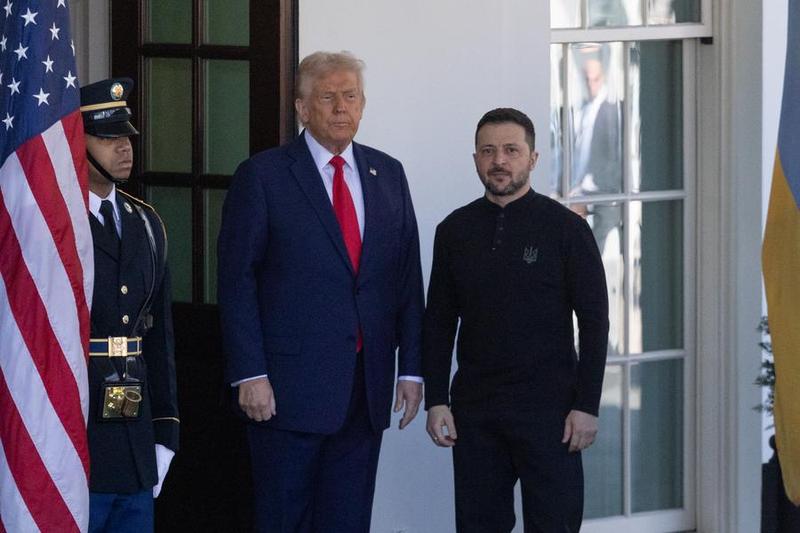
The televised confrontation at the White House between Donald Trump and J.D. Vance on one side, and Volodymyr Zelensky on the other has captured global attention, adding further complexity to the situation in Ukraine. While the immediate political drama may dominate headlines, its deeper implications for the war and its resolution deserve calm scrutiny.
The situation remains fluid, and interpretations vary depending on perspective. However, some general observations can be made. Rhetoric and reality do not always align. Trump's previous claim that he could bring peace to Ukraine within 24 hours has now been exposed as political posturing rather than a viable plan. The idea of an immediate resolution was always unrealistic given the deep-rooted and multi-dimensional nature of the conflict.
This point is crucial as it highlights how the Trumpian approach underestimated the complexity of the Ukrainian situation in an era of unprecedented interconnectedness. It is a fallacy to assume that peace in Ukraine hinges solely on a bilateral agreement between the American and Russian presidents. Any such agreement, even if it existed before the Trump-Zelensky meeting at the White House, would have been detached from the broader geopolitical realities.
Diplomacy and negotiation are inherently linked, and in a war as complex as Ukraine's, any meaningful peace process will inevitably require compromise. Compromise, however, is difficult — especially when conducted in the public eye. This is precisely why diplomatic negotiations are traditionally held behind closed doors, allowing for the difficult concessions necessary to reach a resolution without the pressure of public scrutiny or political grandstanding. When negotiations become spectacle, as was the case in the White House confrontation, the risk of posturing overtaking substance increases dramatically.
Arguably, reality is shaped less by the "art of the deal'' and more by the art of compromise. Compromise requires patience and a willingness to find common ground, often making it a quieter yet more effective path to resolution. Unlike flashy, one-sided victories, agreements built on compromise tend to be more sustainable, fostering long-term cooperation and stability. In most situations, the right balance of concessions from both sides is what ultimately paves the way for meaningful and enduring solutions.
Effective diplomacy thrives in an environment removed from media sensationalism. Turning negotiations into reality TV undermines their seriousness and reduces the chances of constructive dialogue. While public debate has its place, serious diplomatic efforts must remain focused on achieving a sustainable and just resolution, not scoring political points or fueling controversy.
The conflict in Ukraine is now in its fourth year, and its toll has been devastating. While not as prolonged as World War I or World War II, Russia-Ukraine conflict has already brought immense suffering and devastation. The urgency for a diplomatic resolution cannot be overstated.
Despite the drama of the White House confrontation, what truly matters is the long-term process of negotiation. While this moment may have been discouraging or even shocking, it should not derail efforts toward peace. If anything, it should serve as a lesson in how not to conduct diplomacy. The priority must be securing a peace agreement while preventing further loss of life.
Ultimately, the rhetoric dispute in Washington is just one episode in a much larger process. It may shape perceptions and influence strategies, but it should not dictate the final outcome. All parties involved, as well as the international community, must stay committed to the broader goal: a negotiated peace that brings lasting stability to Ukraine, Europe, and the world.
David Gosset, a specialist in global affairs and sinology, is the founder of the China-Europe-America Global Initiative. The views don't necessarily reflect those of China Daily.
If you have a specific expertise, or would like to share your thought about our stories, then send us your writings at opinion@chinadaily.com.cn, and comment@chinadaily.com.cn.