Boao facilitates Asia's cooperation facing tariff threats







Scheduled for March 25-28, the Boao Forum for Asia will be held at a time of extraordinary challenges and opportunities. Ever since its launch in 2001, the forum has both reflected and shaped vital structural shifts, including China's entry into the World Trade Organization (2001), its "peaceful rise" (from 2004), overcoming the global financial crisis (2009), antidotes to the US tariff wars (2018), and the China-proposed Global Security Initiative amid external attempts to divide Asia (2022).
For the past two decades, the forum has been promoting regional economic integration by helping to bring Asian countries closer to their economic goals, even against economic headwinds.
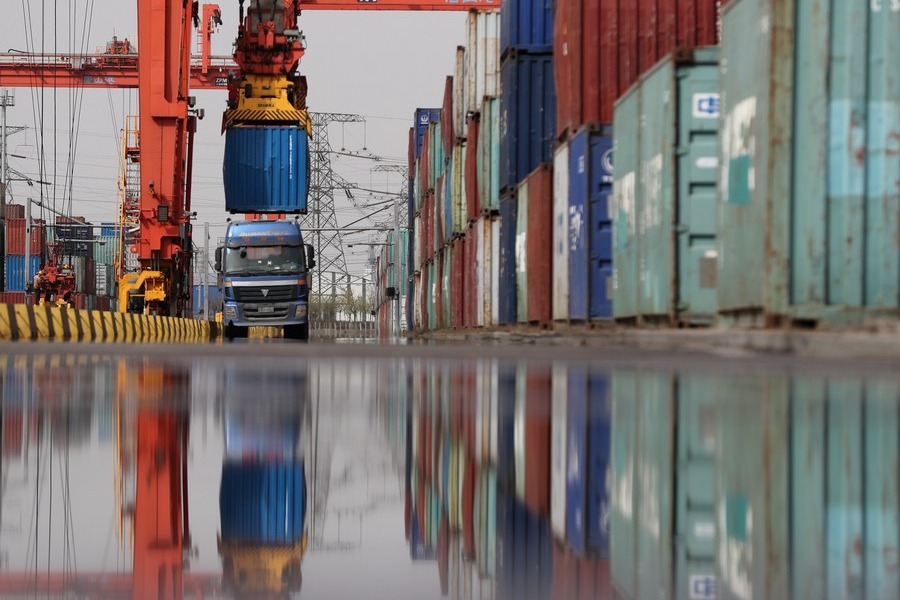
More than half a decade ago, the tariffs imposed during Donald Trump's first presidency on almost $400 billion worth of Chinese goods affected more than 90 percent of Sino-US trade. Today, the first round of the US' tariff war against Canada, Mexico and China alone will affect trade worth more than $1.3 trillion.
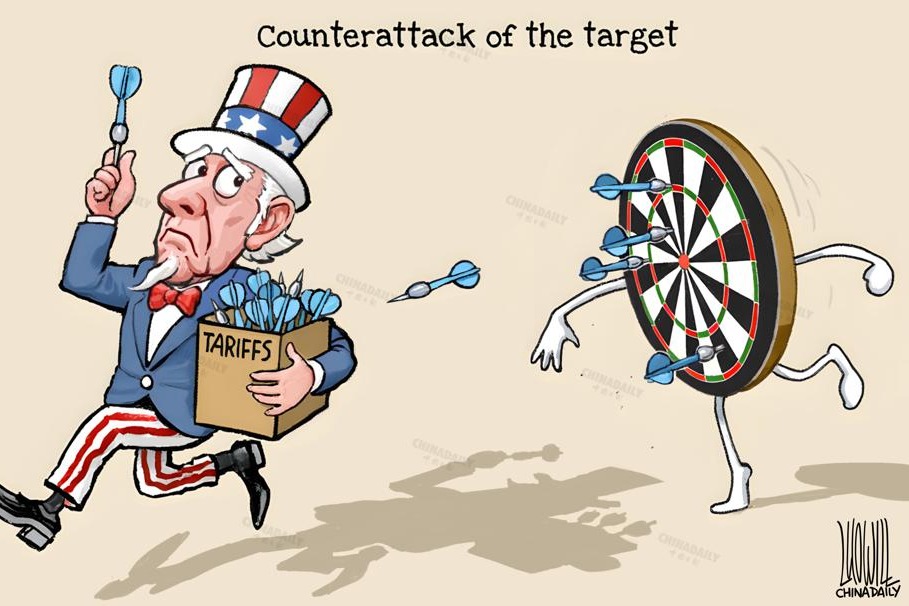
As evidenced by US President Trump's threats to launch new tariffs and consequent reversals, economic rationality has given way to geopolitical saber-rattling. Unchallenged, these measures will further escalate trade tensions, disrupt trade flows, and impair complex and integrated supply chains in Asia.
Vietnam and China's Taiwan island are most exposed to higher US tariffs because of their high export-to-GDP ratios with the US (30 percent and 15 percent respectively). Apart from Thailand, Malaysia, Singapore and the Republic of Korea, Asian economies with large trade surpluses with the US — the Chinese mainland and China's Taiwan island, Vietnam and Japan — also risk facing further US tariffs.
As the Trump administration's tariffs move from countries to target sectors, including semiconductors, pharmaceuticals, steel and aluminum, over a quarter of exports from the ROK, Japan, Malaysia, the Philippines and China's Taiwan island is likely to be affected. Worse, Trump has vowed to take "reciprocal tariff" measures on imports from every country that taxes US products. Additionally, the US administration could resort to non-tariff measures including charging value-added tax, tightening import regulations, and tweaking the currency exchange rates.
Devoid of any economic rationale, such actions would impose on the world US-style deregulation, privatization and dollar manipulation.
Being targeted by unwarranted and likely illicit tariffs by the US is the negative "shared future" of Asia. But no threat comes without a silver lining.
Asian countries and regions can deepen regional integration and strengthen trade ties with countries other than the US, particularly in the Global South, to offset the effects of US tariffs.
Asian economies can deepen inter-regional integration with the European Union. The greatest economic growth opportunities are in emerging Asia and other parts of the Global South, as intraregional trade in Asia has increased by 43 percent over the past four decades. More than half of Asian trade is regional, with foreign direct investment showing a similar trend.
Further, increasing trade diversification fosters complex and globalized supply chains. But in its misguided tariff wars, the US, keen to reduce its reliance on Chinese pharmaceuticals, has bought from countries like India. But the Indian companies, which supplied almost half of all generic prescription medicines to the US in 2022, purchase the bulk of their pharmaceutical ingredients from China.
The cost of tariffs is typically borne by supply chains and end buyers. The West, especially the US, has been making efforts to "reshore" multinationals and major industries. But that's a costly game, for it severely penalizes businesses and consumers. The tariffs on goods from Canada, Mexico and China alone will cost an average US household an additional $1,200 a year.
As the global trade in goods flattens, the flow of services in Asia is surging; the service sector now employs more than twice as many workers as in 1990. According to the International Monetary Fund, Asia's labor productivity in financial services is four times higher than in manufacturing, and twice as high in business services.
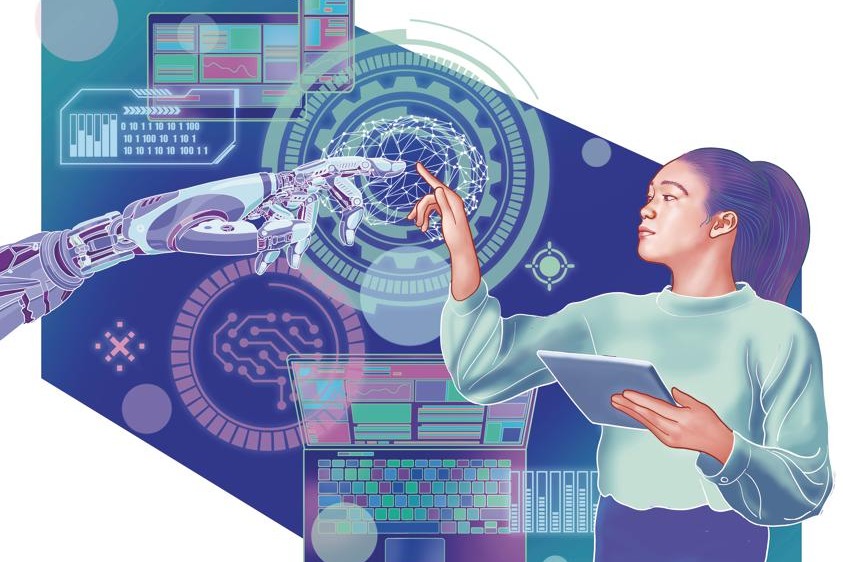
Finally, Asia is benefiting from the dramatic acceleration of digitalization and artificial intelligence, and sustainable development.
The above are but a few promising signs for Asia.
Besides, a month ago, President Xi Jinping gave a strong push to the private sector by holding a meeting with the founders and CEOs of tech giants such as Huawei, BYD, Will Semiconductor, Unitree Robotics and Xiaomi. These Chinese tech giants are both scaling up innovation and trendsetting Asia's shared future in advanced services, digitalization and AI, and sustainable development.
As for green technology, China is already moving to fund the country's climate transition through a variety of innovative financing mechanisms. With its pivotal role in the global economy, it is expediting the process of green transition and offering new development potential.
Aside from pioneering high-tech and equipment manufacturing industries in electric vehicles, solar cells and industrial robotics, China is fostering "industries of the future", including bio-manufacturing, quantum technology, embodied AI, and 6G. And China's DeepSeek, which along with other Chinese companies, has developed sophisticated generative AI models at a much lower cost, sidelining leading US artificial intelligence companies in January.
Spurring the expeditious adoption of AI, China is helping AI technology play a bigger role in global economic growth. The greater the regional integration, the stronger will be the acceleration effect across Asia, which today "contributes over 50 percent of global growth", as IMF chief Kristalina Georgieva said recently.
In promoting such a shared future, the Boao Forum for Asia could prove historical, since what happens in Asia doesn't stay in Asia.
The author is founder of Difference Group and has served at the India, China and America Institute (US), Shanghai Institutes for International Studies (China) and the EU Center (Singapore).
The views don't necessarily reflect those of China Daily.
If you have a specific expertise, or would like to share your thought about our stories, then send us your writings at opinion@chinadaily.com.cn, and comment@chinadaily.com.cn.