Beijing an upholder of trade system centered on WTO







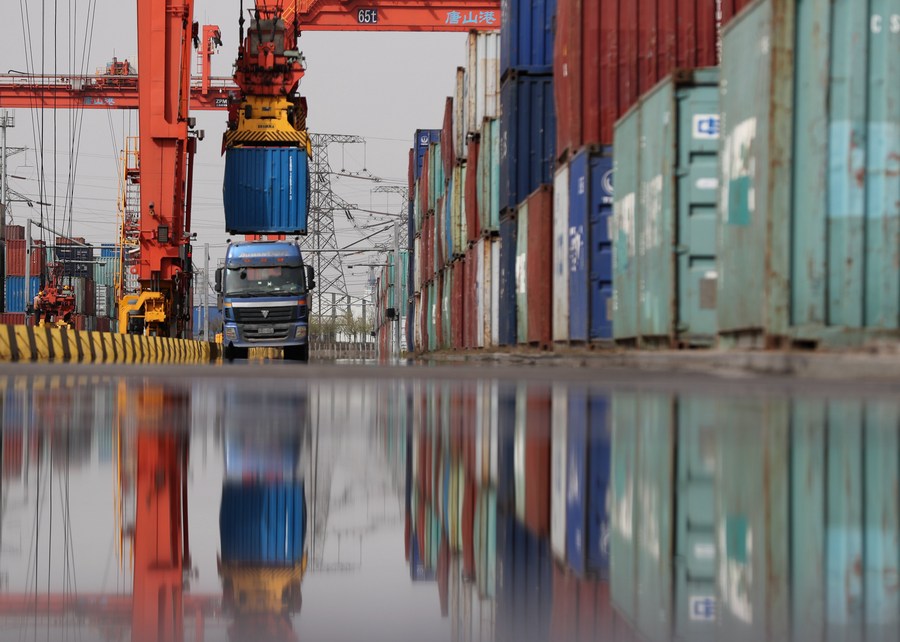
Unilateral measures, be they tariffs or economic sanctions against a particular country or particular countries, are often not compatible with World Trade Organization rules. Among all the countries, the United States has taken by far most of the unilateral measures against other countries, be they its perceived adversaries or longstanding allies like Canada and the European Union.
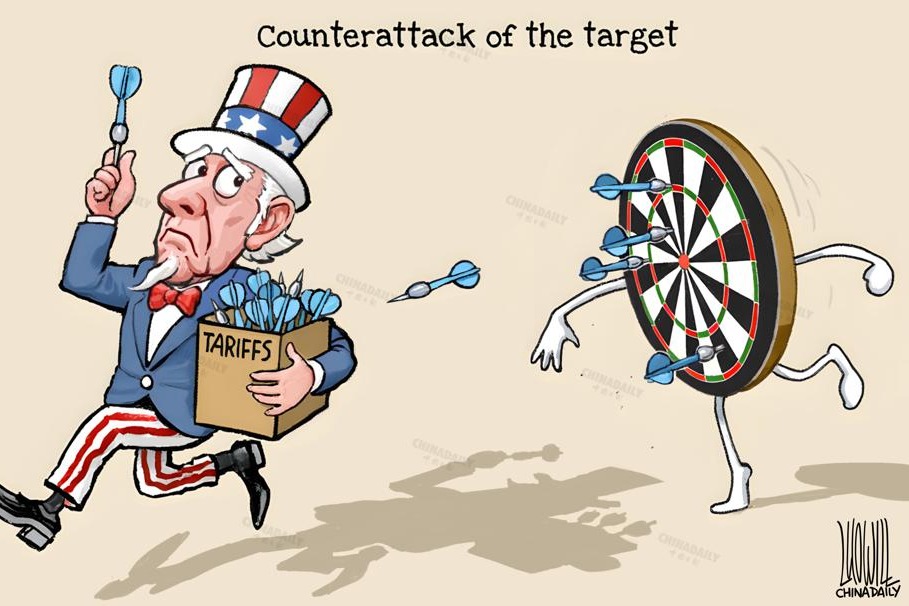
On Feb 1, for example, the US imposed sweeping tariffs on imports from Canada, Mexico and China. These include 25 percent tariffs on most goods from Canada and Mexico, 10 percent on energy imports from Canada, and 10 percent on all Chinese goods. In March the US administration announced to double tariffs on all Chinese imports to 20 percent in excuse of so-called fentanyl abuse.
The moves are in violation of the US' obligations under the General Agreement on Tariffs and Trade 1994 of the WTO. The General Agreement on Tariffs and Trade 1994 as specified in Annex 1A of the WTO is legally distinct from the General Agreement on Tariffs and Trade established in 1947, which was replaced by the WTO in 1994.
The unilateral imposition of punitive tariffs by a WTO member is against its binding tariff obligations under the Schedules of Concessions of GATT 1994. According to their binding commitments, WTO members can only reduce their tariff rates. The exorbitant tariffs imposed by the US on Canada, Mexico and China therefore contravene its tariff commitments to the WTO.
What's more, the US' unilateral tariffs violate the principle of most-favored-nation under GATT 1994. The principle of most-favored-nation requires WTO members to treat products from all other members equally. By imposing tariffs on specific countries, the US has denied their products from enjoying the same tariff rate as products from other WTO members, which is discriminatory and a contravention of this principle.
GATT 1994 allows a WTO member to deviate from its obligations on the ground of national security, provided the member proves that certain products are a threat to its national security, the imposition of tariffs is necessary to safeguard national security, and there is no moderate but equally effective means to deal with the issue.
But without making the slightest of efforts in this regard, the US has imposed unilateral tariffs, thereby violating the WTO agreement. Any other WTO member would have meticulously elaborated the applicability of the GATT 1994 exception clause before citing the exception. For example, such a member would have carefully examined what the real cause of the so-called fentanyl abuse crisis is and whether the fentanyl crisis is relevant to national security according to WTO rules before claiming the selected countries are responsible for fentanyl trafficking, and the national security exception clause is applicable.
The US did not bother doing so. In fact, the US imposed tariffs on Canada and Mexico as they have long been "abusive" of US, referring to the US' trade imbalance with the two countries. But a trade imbalance is the result of trade among countries based a trading system promoting free trade, the US-Mexico-Canada Agreement in this case.
It is clear that national security is merely a pretext for the US administration to ignore its obligations toward Canada and Mexico according to the USMCA, and launch a tariff war against them. As a matter of fact, the US administration is using tariffs as a means to address domestic issues, including illegal immigration and fentanyl trafficking.
The US is hell-bent on ruling the world, by ruthlessly resorting to unfair measures to target other countries, especially those that it perceives as "rivals" or "competitors". This US logic, which has shaped the country's approach to international trade, is facing a legitimacy crisis now.
In contrast, Beijing, despite Washington imposing punitive tariffs on Chinese goods, has approached the WTO dispute settlement mechanism to resolve the issue. China has taken countermeasures against the US, though, just in accordance with general international law.
When a WTO member facing an unjustified trade war launched by another member turns to the WTO dispute settlement mechanism, instead of taking unilateral measures, to resolve the issue, it actually lends the biggest support to the WTO system. As a major player in the WTO, China has always emphasized that trade disputes be resolved through the WTO dispute settlement mechanism and opposed taking unilateral measures.
At a time when the US is out to wreck the multilateral trading system, China's upholding of the WTO rules will inspire other WTO members to adhere to the established trade rules. One has reason to believe that other WTO members will stand up to the US' unilateral trade measures and work together to reform the WTO and reenergize the WTO dispute settlement mechanism, and ensure the US' unilateral tariffs do not undermine the foundation of the multilateral trading system.

The views don't necessarily represent those of China Daily.
If you have a specific expertise, or would like to share your thought about our stories, then send us your writings at opinion@chinadaily.com.cn, and comment@chinadaily.com.cn.