US on the horns of a dollar dilemma







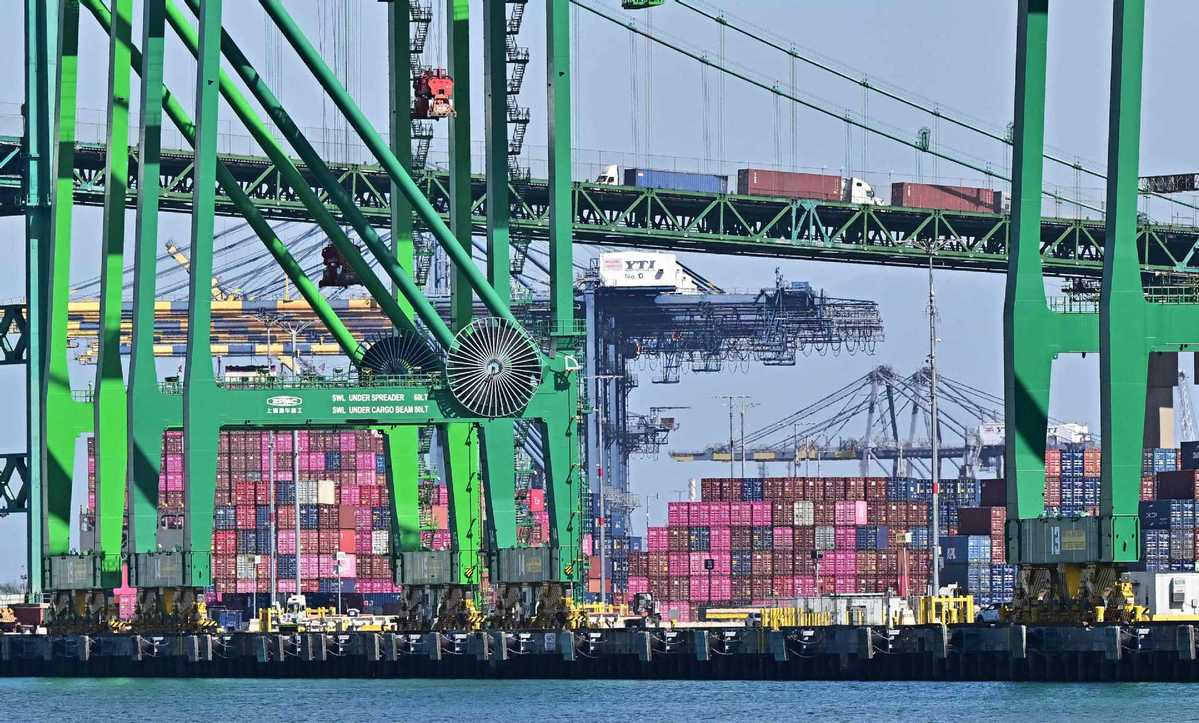
US President Donald Trump has threatened to impose substantial tariffs on imports from the United States' major trading partners to, what he claims, correct the trade imbalance with them. At the same time, he has vowed to preserve the dollar's status as the global reserve currency, threatening to impose 100 percent tariffs on imports from BRICS countries, which he alleges pose a challenge to the US' dominance in the global financial sector.
But his strategy is paradoxical, economically speaking, because the very strength of the dollar as the global reserve currency is based on expanding US trade deficit. Any attempt to artificially balance the US' trade through aggressive tariffs will only increase the financial pressure on US consumers, lead to inflation and constrict the dollar's use in global trade and financial markets. It will also diminish the dollar reserves held by other countries, undermining the greenback's status as the primary global currency.
The Bretton Woods system, established after the end of World War II, laid the foundation of the international monetary order, cementing the US dollar's role as the global reserve currency. Over the decades, the dollar's dominance as the world's reserve currency has been intrinsically tied to the US' perpetual trade deficit. Hence, far from being a weakness, the trade deficit is a necessity for the dollar to maintain its hegemonic status.
The US' major trading partners such as the European Union, Mexico, China, Canada and Japan accumulate dollar reserves despite exporting goods to the US at competitive prices and thus facilitate global currency circulation. These economies then channel their dollar reserves into global trade, enhancing dollar liquidity and promoting the global flow of goods and services.
Should the US seek to eliminate its trade deficit, the global supply of the dollar would shrink, reducing other countries' dollar reserves, and prompting them to build their foreign exchange reserves on other currencies. In such a scenario, the global demand for the US dollar will dwindle, threatening the greenback's status as the world's leading reserve currency. Measures aimed at correcting the US' trade imbalance — such as imposing high tariffs or restricting imports — will impede the flow of the dollar into the global economy, thereby eroding the very foundation of the dollar's global dominance.
Efforts to maintain the dominant global status of the greenback while eliminating the US' trade deficit are like trying to be the world's banker while keeping all the cash locked in a vault.
The huge advantage the US enjoys because of the dollar's global status prompted former French President Valéry Giscard d'Estaing, when he was France's finance minister in the 1960s, to coin the term "exorbitant privilege" to describe it.
The dollar enables the US government to borrow money at significantly lower costs. Besides, countries with big dollar reserves often reinvest them in US Treasury bonds, and a part of those reserves flows into the US' real estate and other assets, further bolstering its domestic development.
Moreover, conducting international transactions in dollars allow US businesses and the government to circumvent the complexities and costs of currency conversion, while other businesses and governments have to exchange their local currencies for dollars, often incurring huge losses. This asymmetry not only gives the US a substantial economic edge but also augments the dollar's dominance in the global financial system.
Most important, the dollar's status as the world's primary reserve currency gives the US unparalleled geopolitical leverage. By controlling access to the global payment system, the US exerts significant financial influence, imposing sanctions on other countries, businesses and individuals, cutting off their access to financial networks and seizing their dollar assets.
By doing so, the US isolates its perceived adversaries, disrupts dollar-dependent transactions and compels those entities reliant on the dollar for cross-border trade to comply with its demands. This not only enables the US to shape global diplomacy, deter threat and enforce international norms but also consolidate its position as the preeminent global power.
While often viewed as a negative economic indicator, the trade deficit has not only strengthened the dollar's status as the global reserve currency but also benefited the US in other ways. These subtle but substantial advantages are frequently ignored by US politicians who seek trade equilibrium.
One key advantage of the US' trade deficit is its free access to affordable, high-quality goods. By importing goods from countries with comparative advantages, the US helps its citizens enjoy a higher standard of living by paying relatively less for everyday items. This not only boosts the US people's purchasing power but also helps mitigate the inflationary pressure on the US. As such, by abruptly raising tariffs to reduce the trade deficit, the US will likely drive up consumer prices and exacerbate inflation, instead of alleviating it.
The trade deficit also allows the US to hoard resources and attract human capital. By importing goods from other countries more efficiently, the US can strategically reallocate its resources to industries where it holds a comparative advantage, such as technology, finance, entertainment, education and other high-value services. Its focus on knowledge-based sectors fosters innovation, drives economic growth, and consolidates the US leadership in key global industries.
By focusing on its most competitive areas, the US strengthens its soft power, consolidating its geopolitical standing. In essence, the trade deficit not only supports the US' domestic economic dynamism but also strengthens its role as a global leader in innovation and strategic industries.
The author is a professor at the Foreign Studies College and director of the Center for Global Governance and Law, Xiamen University of Technology. The views don't necessarily represent those of China Daily.
If you have a specific expertise, or would like to share your thought about our stories, then send us your writings at opinion@chinadaily.com.cn, and comment@chinadaily.com.cn.